As residential cinema technology advances toward 8K projection and immersive Dolby Atmos spatial audio, the physical environment of the home theater has become a critical component of the viewing experience. Selecting the appropriate seating is often a complex challenge for homeowners and designers, as it requires balancing aesthetic luxury with the physical requirements of long-duration ergonomics. While many retail options offer basic comfort, premium residential cinemas require seating that can withstand heavy use while providing integrated technology and customizable configurations. This guide examines the top solutions in the market, based on manufacturing standards, material quality, and seat-side features, to help streamline the selection process for high-end installations.
To provide a clear overview of the market landscape, the following list highlights the top four manufacturers currently leading the luxury residential seating sector.
Comprehensive List of Top Luxury Seating Brands
- Leadcom Seating
- CinemaTech
- Fortress Seating
- DreamSeat
Each of these brands serves a specific niche within the luxury market, ranging from high-capacity custom manufacturing to boutique, hand-crafted bespoke solutions.
Market Comparison for Luxury Cinema Solutions
The table below summarizes the core offerings and primary advantages of each brand to assist in initial comparisons.
| Brand | Key Product Series | Primary Features | Best For |
| Leadcom Seating | VIP Recliner Series | Motorized lumbar, cooling cup holders, modular design | High-end custom residential projects |
| CinemaTech | Valentino, LeGrande | German engineering, ACT acoustic systems | Ultra-luxury acoustic environments |
| Fortress Seating | Bespoke Collection | Custom dimensions, concealed storage | Unique room layouts and specific sizing |
| DreamSeat | Custom Home Recliners | X-Zip interchangeable covers, logo embroidery | Multi-use media rooms and branded spaces |
These manufacturers represent the highest standards of durability and comfort currently available for private cinema environments.
Detailed Brand Evaluations
1. Leadcom Seating
Leadcom Seating has established a significant presence in the global market through a vertically integrated manufacturing process that allows for extensive quality control and customization. Unlike many competitors that outsource components, this company manages the production of its steel frames, foam cushioning, and upholstery in-house. This capability ensures that Leadcom Seating products meet consistent standards for durability and mechanical reliability.
Their luxury residential line, particularly the VIP recliner series, focuses on the intersection of ergonomic support and modern convenience. The seating often features dual-motor or triple-motor mechanisms, allowing users to independently adjust the footrest, backrest, and headrest to achieve an anatomically correct viewing angle. For enthusiasts building high-specification rooms, Leadcom Seating home cinema options provide integrated technology such as USB charging ports, LED-lit cup holders with cooling functions, and intelligent return-to-base sensors that reset the chair when the user departs. The use of high-density cold-molded foam ensures the seat maintains its shape and support levels over years of use, preventing the sagging often associated with standard residential furniture.
Key Features:
- Space-Saving Design: Many models utilize a “wall-hugger” mechanism, requiring minimal clearance from the back wall to fully recline.
- Material Variety: Options range from premium top-grain leathers to high-performance synthetic fabrics designed for acoustic transparency.
- Smart Accessories: Availability of swivel tray tables, flexible reading lights, and wine glass holders.
Use Case: Ideal for homeowners seeking a professional cinema-grade feel with a high degree of technological integration and durability.

2. CinemaTech
CinemaTech is widely recognized for its emphasis on the technical intersection of seating and room acoustics. Based in Germany, their engineering focuses on the “ACT System” (Acoustic Control Technology), which ensures that the bulky mass of a leather recliner does not negatively impact the sound reflections within a calibrated theater room.
Their products, such as the Valentino series, are characterized by a classic European aesthetic and heavy-duty construction. The brand prioritizes the “luxury” aspect of the experience, utilizing high-grade hides and intricate stitching. While their price point is among the highest in the industry, the longevity of their mechanical components and the sophistication of their designs cater to the ultra-high-net-worth market.
Key Features:
- Acoustic Treatment: Seating designed to minimize sound absorption and reflection issues.
- Patented Incliner Mechanisms: Smooth, silent operation designed for distraction-free viewing.
- Custom Finishes: Wide range of luxury Italian leathers.
Use Case: Best suited for dedicated, professionally calibrated home theaters where acoustic performance is the absolute priority.

3. Fortress Seating
Fortress Seating distinguishes itself through a “built-to-order” philosophy. While other brands offer modular components, Fortress allows for the modification of actual chair dimensions. If a client has a specific width requirement or needs a chair designed for a taller-than-average user, Fortress can adjust the frame specifications accordingly.
Their designs often lean toward the traditional, but they are pioneers in concealing modern technology within that aesthetic. This includes hidden compartments for remote controls, pop-up touchscreens, and even integrated subwoofers (tactile transducers) built directly into the seat frame to provide haptic feedback during action sequences.
Key Features:
- Dimensional Customization: Chairs can be widened or narrowed to fit specific floor plans.
- Niche Features: Options for motorized storage, healthcare-grade lifts, and specialized upholstery.
- Bespoke Styling: Ability to match existing room decor or specific architectural themes.
Use Case: Recommended for rooms with unusual dimensions or for users who require highly specific physical dimensions and unique concealed features.

4. DreamSeat
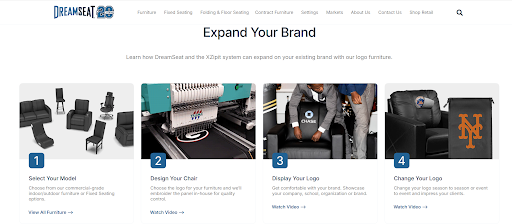
DreamSeat occupies a unique niche by focusing on versatility and branding. They are well-known for their patented X-Zip system, which allows the upholstery covers on the back and seat to be zipped off and replaced. This is particularly useful in multi-use media rooms or for families who may want to update the look of their theater without replacing the entire chair frame.
While they offer luxury leather options, they are also a primary choice for sports-themed home theaters due to their licensing agreements with major professional leagues. Their seating provides a more casual luxury feel, often seen in high-end “man caves” or multi-purpose entertainment suites rather than strictly dedicated cinema rooms.
Key Features:
- X-Zip Technology: Interchangeable panels for easy maintenance or style updates.
- Branding Options: High-quality embroidery for sports logos or family crests.
- Modular Configurations: Easy to assemble layouts for sofas, loveseats, or curved rows.
Use Case: Best for multi-purpose media rooms, sports fans, or environments where the ability to easily clean or change upholstery is a priority.
Understanding these brand distinctions is the first step toward creating a functional and comfortable cinema environment.
Buying Guide: Criteria for Selection
When selecting high-end residential seating, the following criteria should be evaluated to ensure the investment aligns with the room’s requirements:
- Ergonomics and Support: A cinema seat must support the lumbar region and neck during a 2-3 hour viewing session. Look for multi-motor systems that allow for precise adjustments.
- Material Durability: For residential use, top-grain leather or high-rub-count synthetics are preferred. In a dedicated theater, the material should also be checked for its “sheen”—highly reflective leathers can catch the light from the screen and cause distractions.
- Technical Integration: Consider whether the chairs require power outlets (for motors and charging) and if those outlets are positioned correctly in your floor plan. Features like tactile transducers (butt-kickers) require additional cabling.
- Sightlines: Ensure the height of the backrest does not block the view of viewers in the row behind, especially in tiered seating layouts.
The right choice depends heavily on the specific balance between aesthetic preferences and the technical needs of the theater.
Final Verdict
The selection of a home theater seating brand depends largely on the specific goals of the installation. For those prioritizing a balance of professional manufacturing quality, modern smart features, and customization, Leadcom Seating provides a comprehensive solution that scales well across different project sizes. CinemaTech remains the benchmark for those focused on acoustic perfection and traditional luxury.
Meanwhile, Fortress Seating is the go-to for bespoke dimensional needs, and DreamSeat offers the most flexibility for multi-use or themed environments. By aligning the brand’s strengths with the room’s primary function, homeowners can ensure a cinema experience that is as comfortable as it is immersive.
Frequently Asked Questions (FAQs)
Q: How much space is typically required between rows of cinema seating?
A: For standard recliners, a minimum of 6.5 to 7 feet (approximately to meters) from the back of one row to the back of the next is recommended to allow for full extension and walkway space.
Q: Is leather always the best choice for home theater seats?
A: While leather is durable and aesthetic, some enthusiasts prefer microfiber or specialized acoustic fabrics because they are less reflective of both light and sound waves, potentially improving the room’s performance.
Q: Do these motorized chairs require professional electrical installation?
A: Most premium chairs run on standard power and can be plugged into wall outlets. However, for a clean look, floor-mounted outlets should be installed during the construction phase to hide power cords.