Edible Art: Mastering the Design, Technique, and Magic of Kazari-maki
The Architecture of an Edible Picture
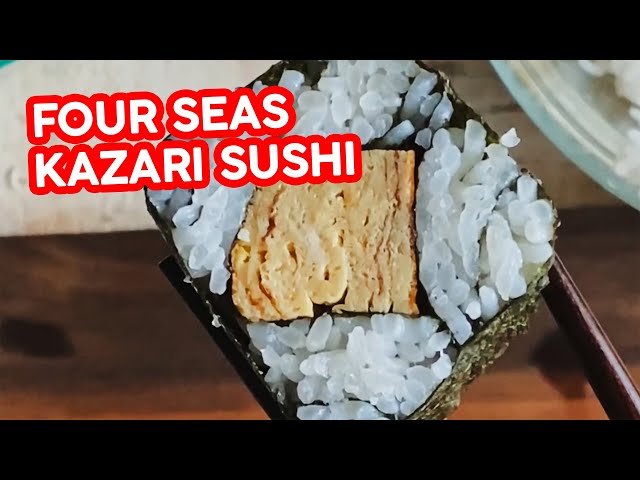
Creating a piece of kazari-maki is completely different from making a standard sushi roll. It requires a chef to think like an architect or a puzzle maker. Instead of simply piling ingredients into the center of a mat, the chef must build separate, tiny geometric pieces of the picture first.
For example, to create a simple flower design, the chef will roll five tiny individual cylinders of pink rice to act as the petals. They will also roll a long strip of yellow egg crepe to act as the center of the blossom. These small, separate pieces are then carefully arranged together on a larger bamboo mat, surrounded by white rice, and wrapped tightly inside a main sheet of toasted nori seaweed. When the heavy log is sliced into wheels, the cross-sections instantly reveal the flawless, colorful image hidden inside.
Natural Colors: Painting with Food
Because traditional Japanese cooking places a massive value on pure ingredients, chefs do not use artificial food dyes to color the rice in a kazari-maki. Instead, they rely entirely on natural, healthy foods to paint their edible pictures:
- Pink and Red: Achieved by mixing the sushi rice with sweet, flaked pink fish powder, bright beet juice, or finely chopped red pickled ginger.
- Yellow: Created by incorporating crumbled cooked egg yolks, sweet corn, or wrapping sections in a thin, yellow egg crepe.
- Green: Made by mixing the rice with vibrant green matcha green tea powder, finely chopped fresh parsley, or toasted sesame seeds.
- Brown and Black: Achieved by simmering rice in savory soy sauce broth or using strips of dark, sweet kanpyo gourd.
A Labor of Extreme Patience and Precision
Making kazari-maki takes a long time and requires an immense amount of patience, focus, and practice. The slightest mistake during the assembly process can completely ruin the final look of the picture. If a chef pushes down too hard on one side of the bamboo mat, the eye of an animal might get squished, or the petal of a flower might slide out of place.
Every single grain of rice must be placed intentionally. Because the assembly is so detailed, chefs often draw out their designs on graph paper before stepping into the kitchen, calculating the exact millimeter measurements of the rice layers and seaweed strips to ensure the final image comes out looking perfectly balanced and beautiful.
Tips for Practicing Kazari-maki at Home
If you want to try making decorative sushi rolls in your own kitchen, it is best to start with a very simple geometric design, like a basic three-petal flower or a colorful checkerboard pattern. The absolute most important tool you will need is a razor-sharp sushi knife.
Because kazari-maki contains so many small, delicate layers of seaweed inside the roll, a dull knife will press down too hard, dragging the ingredients downward and smearing the picture. Before making each individual slice, always dip the tip of your knife into a mixture of water and vinegar, letting the moisture run down https://www.sushioishii.com/ the edge of the blade. This stops the sticky colored rice from clinging to the steel, allowing you to slice straight through the seaweed cleanly and reveal your beautiful hidden artwork to your amazed guests.