Standard Flow vs High Flow for a Skid Steer Brush Cutter – What You Need to Know
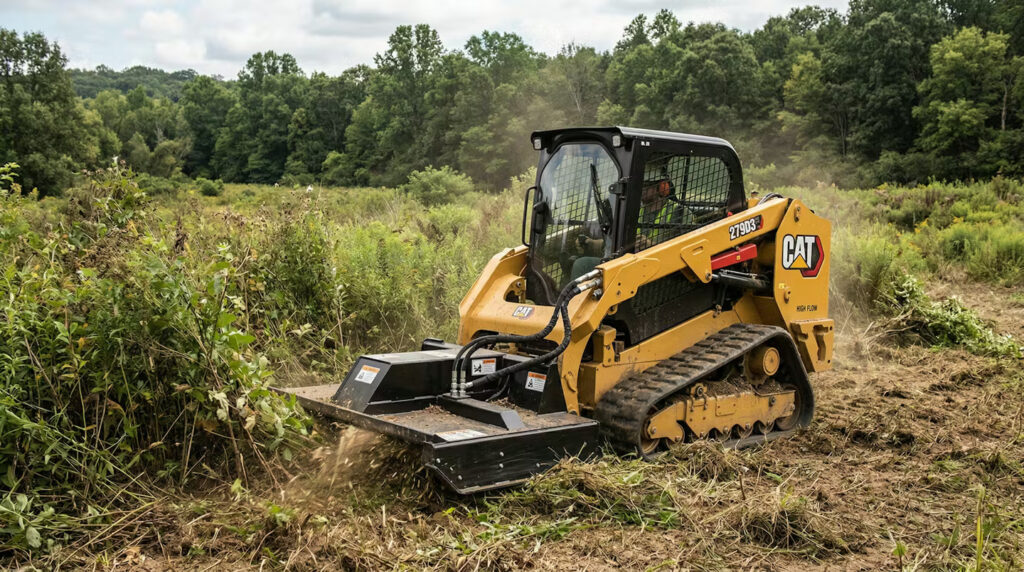
A lot of people get this wrong right at the start. They buy the attachment first… then try to figure out if their machine can even run it properly. That’s backwards. Flow matters. More than most think.
When you’re running a skid steer brush cutter, hydraulic flow isn’t just a spec on paper — it decides how the thing actually performs in the field. Cut quality, speed, how it handles thick material… all tied to that flow.
So yeah, let’s clear this up without turning it into a textbook.
What “Flow” Actually Means (In Simple Terms)
You’ll hear “standard flow” and “high flow” thrown around a lot.
All it really comes down to is how much hydraulic oil your machine can push through the attachment. More flow = more power to spin the cutter.
Standard flow machines usually sit somewhere around:
- 17–25 GPM (gallons per minute)
High flow setups jump up to:
- 30–45+ GPM
That difference might not look huge on paper. On a job site? It’s noticeable.
Standard Flow – Where It Works, Where It Struggles
Standard flow is fine. Let’s not pretend it’s useless.
If you’re running lighter jobs:
- Grass cutting
- Light brush
- Small saplings
- Maintenance work
A standard flow skid steer brush cutter will get through it. No problem. It’s also more common. Most machines out there are standard flow, especially smaller units. But once the material gets thicker… things change.
You’ll notice:
- Slower blade recovery
- Reduced cutting force
- More passes needed
It’s not that it can’t do the job. It just works harder to get there.
High Flow – More Power, But Not Always Necessary
High flow setups are built for heavier work. Plain and simple.
You’re dealing with:
- Dense brush
- Thick saplings
- Tree clearing
- Heavy land clearing jobs
The cutter spins faster, recovers quicker, and keeps momentum when hitting tougher material. That’s the real advantage — consistency. You don’t get that “bogging down” feeling as much. The attachment stays aggressive. But here’s the part people don’t always think about…
Not every job needs that much power.
The Real Difference Shows Under Load
On easy terrain, both setups feel similar. You might not notice much difference cutting grass or light brush.But push into thicker growth, uneven terrain, or long working hours — that’s where high flow separates itself. Standard flow starts to slow down. You compensate by:
- Slowing your travel speed
- Making extra passes
- Adjusting angles more often
High flow just keeps going.
That’s why contractors doing full land clearing lean toward high flow. Time matters more than anything.
Cost vs Output — Where Most People Hesitate
High flow machines cost more. Attachments designed for high flow also tend to be heavier-duty… and more expensive. So the question becomes: Are you actually going to use that extra power?
If your work is mostly:
- Property maintenance
- Light clearing
- Occasional brush work
Standard flow is enough.
But if you’re doing:
- Commercial land clearing
- Forestry-type work
- Heavy vegetation jobs
High flow starts paying for itself.
Faster jobs = more jobs done. That’s the math.
Machine Compatibility — Don’t Ignore This
This is where mistakes happen. You can’t just throw a high flow cutter on a standard machine and expect results. It won’t perform right. Same goes the other way — running a standard flow attachment on a high flow machine without proper setup can cause issues too.
Always match:
- Machine capability
- Attachment requirement
Simple, but people skip it. Brands like Spartan Equipment usually make this clear with their attachments, which helps. Still, it’s on you to double-check.
Operator Feel — It’s Not Just Numbers
You can tell the difference from the seat. Standard flow feels more controlled, but you’ll notice it slow down when pushed. High flow feels more aggressive. Faster spin, quicker response. Sometimes almost too aggressive if you’re not used to it.
There’s a bit of a learning curve with high flow. Not huge, but it’s there. Once you get used to it though, going back to standard flow can feel… underpowered.
What About Other Attachments?
This decision doesn’t just affect your brush cutter. If you’re running multiple attachments — say a skid steer blade attachment for grading or snow work — flow requirements might not be as demanding. That’s why some operators stick with standard flow. It handles a wider range of lighter attachments without overkill.
But for high-demand tools like cutters, mulchers, or trenchers… high flow starts making more sense. It really depends on your overall setup, not just one attachment.
Maintenance and Wear — Something People Forget
Higher flow means more stress on components. That’s just reality.
You’ve got:
- Faster moving parts
- More heat generation
- Greater wear over time
Does that mean high flow is bad? No. It just means maintenance matters more. Keep things serviced, check hydraulics, don’t ignore small issues. A well-maintained high flow setup will still outperform a neglected standard flow one every day.
So… Which One Should You Choose?
Here’s the honest answer. If your jobs are light to moderate, and you’re not pushing equipment hard every day — go standard flow. It’s simpler, cheaper, and gets the job done. If you’re running serious clearing work, dealing with thick material, and trying to move fast — high flow is worth it. No point overcomplicating it.
Final Thoughts
The skid steer brush cutter you choose is only half the equation. The machine running it matters just as much. Standard flow works. High flow performs. One isn’t “better” in every situation. It depends on how you actually work.
And yeah, while you’re thinking about cutters, don’t forget your other tools. A skid steer blade attachment might not need high flow, but it still plays a role in getting the job finished clean. Pick based on your real jobs, not specs on a page. That’s what saves time, and money, in the long run.