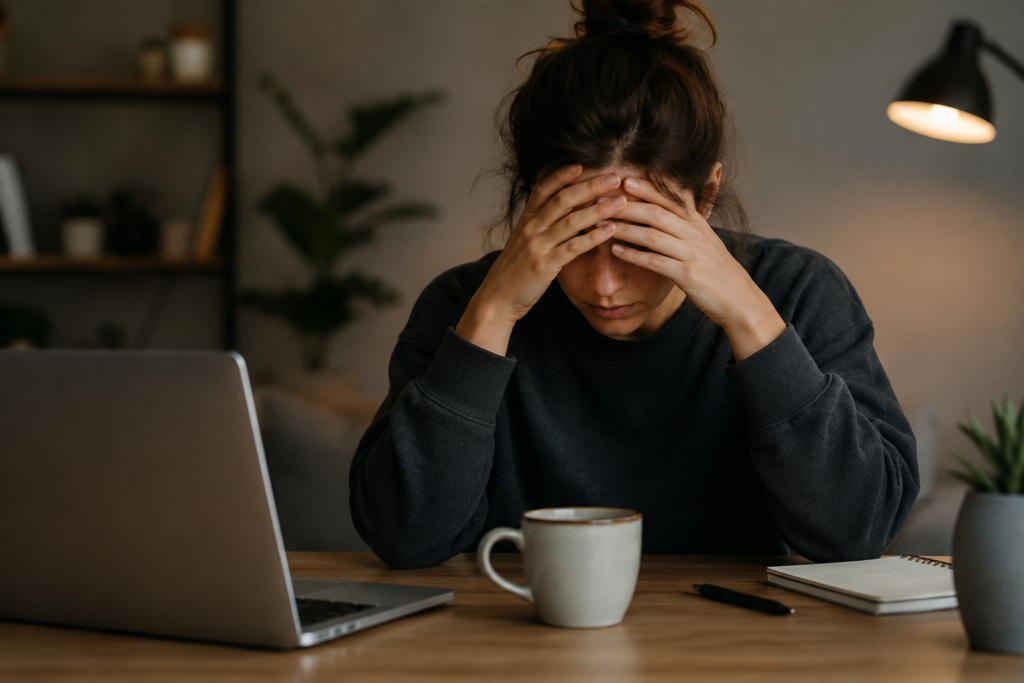
Stress is part of ordinary life. A demanding week, unexpected bill, family tension, medical appointment, or major deadline can leave anyone distracted, irritable, or exhausted. In many cases, the pressure eases when the situation improves and the body has time to recover.
The concern begins when stress no longer feels temporary. It may continue after the original problem has passed, affect several areas of life, or make basic responsibilities unusually difficult. This distinction matters in Canada, where more than five million people aged 15 and older met the criteria for a mood, anxiety, or substance use disorder in 2022. That figure does not mean everyday stress is automatically a disorder, but it shows why persistent changes should not be dismissed as “just a busy period.”
The following signs are not a diagnosis. They are practical indicators that your current coping methods may no longer be enough and that a conversation with a qualified professional could be worthwhile.
Normal Stress Usually Has a Clear Beginning and End
Everyday stress is commonly linked to an identifiable demand. You may feel tense before an exam, restless during a difficult project, or emotionally drained while managing a family problem. The response can be uncomfortable, but it usually becomes less intense when the pressure decreases.
Stress becomes more concerning when it is prolonged, difficult to control, or disconnected from a clear trigger. The World Health Organization notes that persistent stress symptoms can affect daily functioning at work, school, and home. Stress may also contribute to or aggravate anxiety and depression in some people.
Rather than asking only, “Am I stressed?” consider duration, intensity, recovery, and impact. How long have you felt this way? Are the symptoms getting stronger? Do restful periods still bring relief? Are your relationships, health, or responsibilities beginning to suffer?
1. The Stress Does Not Ease After the Situation Changes
A stressful response should gradually settle when the immediate challenge ends. You might still need a few days to recover, but your mind and body should begin returning to their usual rhythm.
Pay attention when tension continues for weeks, appears without an obvious cause, or quickly attaches itself to a new worry. Persistent apprehension is particularly worth discussing with a professional when it becomes hard to control or continues even when no immediate threat is present.
2. Sleep Has Become Difficult or Unrefreshing
Temporary sleep disruption is common during a stressful week. A more serious pattern develops when you regularly struggle to fall asleep, wake repeatedly, rise much earlier than planned, or sleep for long periods without feeling rested.
Poor sleep and emotional distress can reinforce each other. Stress may keep the mind alert at night, while insufficient rest can reduce patience, concentration, and emotional control the next day. Notice whether fatigue is interfering with work, parenting, driving, study, or personal care.
3. Concentration and Decision-Making Are Getting Worse
Stress can temporarily narrow attention because the mind is focused on a perceived problem. When pressure becomes prolonged, you may start forgetting appointments, rereading the same paragraph, losing track of conversations, or feeling unable to make simple decisions.
The Centre for Addiction and Mental Health lists difficulty concentrating, memory problems, constant worry, and trouble making decisions among common cognitive symptoms of stress. These changes matter more when they occur frequently or begin affecting your performance.
4. Your Emotional Reactions Feel Harder to Control
Irritability can be an early sign that pressure is exceeding your capacity to recover. You may snap at people you care about, become tearful over small setbacks, or experience sudden waves of anger or fear.
The concern is a noticeable change from your usual emotional pattern, especially when reactions feel out of proportion to the situation. Some people experience the opposite response and feel numb, detached, or unable to care about matters that would normally affect them. Emotional shutdown can be just as important as emotional intensity.
5. You Are Withdrawing From People and Activities
A quiet evening alone can be restorative. Repeatedly avoiding friends, family, hobbies, exercise, or community activities because interaction feels exhausting is different.
Withdrawal may begin as an attempt to protect limited energy. Over time, it can reduce access to the relationships and routines that normally provide comfort. If activities that once felt meaningful now seem pointless or require more energy than you can gather, the problem may extend beyond ordinary stress.
6. Physical Symptoms Keep Returning
Stress affects the body as well as the mind. Headaches, muscle tension, digestive discomfort, a racing heart, fatigue, appetite changes, and skin problems can occur during periods of pressure. The CDC and CAMH both describe physical and behavioural changes as common parts of the stress response.
Physical symptoms should not automatically be blamed on stress. New, severe, or persistent symptoms need medical attention because many health conditions can produce similar experiences. A healthcare professional can check for physical causes while also considering emotional strain.
7. Your Usual Coping Habits Are Becoming Riskier
People often look for fast relief when they feel overwhelmed. That may involve drinking more alcohol, using cannabis or other substances, smoking, overeating, skipping meals, excessive shopping, or spending hours scrolling to avoid difficult thoughts.
The key question is whether the behaviour is becoming more frequent, harder to stop, or necessary just to get through the day. Increased use of alcohol, tobacco, caffeine, or other substances can be a behavioural sign that stress is becoming more difficult to manage.
You may also notice that healthier habits such as exercise, cooking, social contact, or time outdoors have disappeared.
8. Responsibilities Are Starting to Slip
Mental health concerns often become visible through changes in functioning. You may miss deadlines, call in sick more often, neglect household tasks, avoid opening bills, fall behind in school, or struggle with personal care.
One difficult week is not enough to draw conclusions. A repeated decline across several areas is more significant because the problem is changing how you live, not only how you feel.
This can be a suitable point to explore individual therapy for stress and emotional challenges. A trained clinician can help identify patterns, assess the impact on daily life, and develop practical ways to respond.
9. Worry Is Leading to Avoidance
Stress may push you to prepare for a challenge. Anxiety often pushes you to escape it. You might avoid driving, social situations, phone calls, appointments, work tasks, or places connected with uncomfortable feelings.
Avoidance can bring immediate relief, making it tempting to repeat. The longer it continues, the more restricted life can become. You may gradually arrange your routine around preventing distress rather than participating in work, relationships, or activities that matter to you.
When worry feels constant, causes physical tension, or prevents normal activities, anxiety counselling and support may provide a structured place to understand triggers and learn healthier responses.
10. You Feel Hopeless, Trapped, or Unable to Cope
Feeling discouraged during a hard period is understandable. More urgent concern is warranted when you repeatedly feel trapped, believe nothing will improve, or think others would be better off without you.
Thoughts of self-harm or suicide require immediate support, even without a plan. In Canada, call or text 9-8-8 for free crisis support at any time. Call 9-1-1 or go to the nearest emergency department when there is immediate danger.
Tell a trusted person clearly what is happening and ask them to stay with you or help you reach emergency support. You do not need to decide whether the situation is “serious enough” before contacting a crisis service.
A Simple Way to Check the Impact of Stress
It can be difficult to notice gradual changes. Consider four areas:
- Duration: Have the symptoms continued for several weeks?
- Intensity: Are they stronger or harder to manage than your usual stress?
- Function: Are they affecting sleep, work, school, relationships, or self-care?
- Recovery: Do breaks and restful days still make a meaningful difference?
A written record can reveal patterns that are easy to miss. Note your mood, sleep, physical symptoms, major stressors, coping behaviours, and daily functioning for one or two weeks.
The aim is not to diagnose yourself. It is to gather useful information for a doctor or mental health professional. You may discover that symptoms appear around certain situations, worsen after poor sleep, or remain present even on relatively calm days.
What to Do When Stress Is Becoming Too Much
Begin with manageable actions. Reduce one avoidable demand, return to a regular sleep and meal schedule, take brief movement breaks, and tell someone you trust what has changed.
The CDC also recommends connecting with supportive people, taking breaks from distressing media, spending time outdoors, journaling, and using relaxation practices. Different approaches work for different people, so focus on small changes you can continue rather than attempting a complete lifestyle reset.
Self-care is useful, but it should not become another reason to postpone professional support. Consider booking an appointment when symptoms persist, interfere with daily life, lead to avoidance, or continue despite rest and routine changes.
A family doctor can assess physical symptoms, review medication or health factors, and discuss referral options. A therapist or counsellor can explore emotional patterns, stressors, coping habits, and treatment goals. You do not need to wait until you are in crisis or have a confirmed diagnosis.
It can also be useful to prepare a few notes before an appointment. Write down when the symptoms began, how often they occur, what makes them better or worse, and how they affect your responsibilities. Clear examples can make the first conversation easier.
Early Support Can Protect More Than Your Mood
The dividing line between everyday stress and a mental health concern is not always obvious. It is usually found in the pattern: symptoms last, recovery becomes harder, daily functioning declines, and life grows smaller around the distress.
Taking those changes seriously is not an overreaction. It is a practical response to information from your mind and body. Early support may reduce disruption, protect relationships, and give you more options for recovery.
Stress is common, but feeling overwhelmed all the time does not have to become your normal. When the signs persist, reach out, describe what has changed, and let a qualified professional guide the next step.