Market Overview & Summary
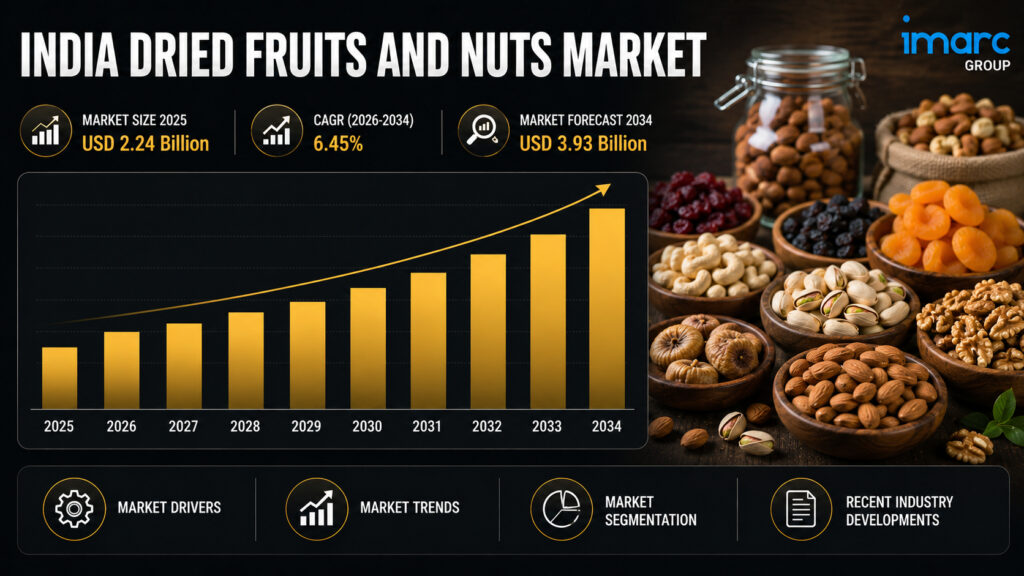
The India dried fruits and nuts market size was valued at USD 2.24 Billion in 2025. Looking forward, the market is projected to reach USD 3.93 Billion by 2034, exhibiting a compound annual growth rate (CAGR) of 6.45% during 2026-2034. The industry is experiencing robust growth driven by a fundamental shift in consumer dietary habits toward nutrient-dense, functional foods. With rising health consciousness, dried fruits and nuts are rapidly transitioning from seasonal, festive-gifting commodities to essential year-round staples for healthy snacking and culinary applications. The rapid expansion of organized retail, coupled with the aggressive proliferation of quick-commerce delivery networks, continues to widen product accessibility, sustaining strong market momentum across both urban and rapidly developing tier-two cities.
Market Size & Forecast:
-
Market Size (2025): USD 2.24 Billion
-
Projected Market Size (2034): USD 3.93 Billion
-
CAGR (2026 – 2034): 6.45%
-
Leading Regional Market: North India
Key Market Trends:
-
Rising Preferences for Healthy Snacking Alternatives: Indian consumers are increasingly gravitating towards nutrient-rich snacking options that align with wellness-focused lifestyles. Health awareness has intensified among the urban population seeking convenient alternatives to traditional calorie-dense snacks, driving innovations in packaging and clean-label product lines tailored for modern millennials and Gen-Z consumers.
-
Digital Commerce Transformation in Distribution Channels: E-commerce and quick-commerce platforms are fundamentally reshaping how consumers purchase dried fruits and nuts across India. Digital retail channels provide unprecedented accessibility to premium products, particularly benefiting consumers in smaller towns. Online platforms enable direct brand-consumer engagement while offering extensive assortments and competitive pricing.
-
Surge in Organic and Clean-Label Products: With a growing focus on food safety and sustainability, consumers are aggressively shifting toward organic dried fruits and nuts. Brands are responding by eliminating artificial preservatives and highlighting natural, chemical-free processing methods, directly appealing to health-conscious households seeking pure, unadulterated nutritional benefits.
-
Integration into Bakery and Confectionery Sectors: The widespread incorporation of dates, raisins, almonds, and pistachios into mainstream bakery and confectionery goods is a major trend. Food processors and artisanal bakeries are utilizing these ingredients to naturally sweeten products and enhance texture, meeting the rising demand for premium, guilt-free desserts and breakfast cereals.
-
Rise of Flavored and Value-Added Segments: To differentiate in a highly competitive landscape, companies are innovating with value-added products such as roasted, salted, and spiced nuts, as well as chocolate-coated dried fruits. These flavored variants cater to evolving taste palates, bridging the gap between indulgent treats and healthy dietary staples for everyday consumption.
➤ Request Sample Report (TOC & Charts): https://www.imarcgroup.com/india-dried-fruits-nuts-market/requestsample
Strategic Market Dynamics:
Growth Drivers:
-
Escalating Health and Wellness Consciousness: The growing awareness of the nutritional benefits of dried fruits, such as high antioxidant content and healthy fats, is driving massive volume demand. Consumers are actively substituting sugary snacks with nutrient-dense nuts and berries, accelerating sales across health-conscious demographics.
-
Rising Disposable Incomes and Urbanization: The rapid expansion of the middle class and increasing per capita incomes allow consumers to spend more on premium food categories. Urbanization and hectic lifestyles further necessitate the availability of convenient, on-the-go nutritious snacks, structurally driving market consumption.
-
Cultural Significance and Festive Demand: Dried fruits and nuts hold deep-rooted cultural importance in India, traditionally functioning as premium gifting items during major festivals like Diwali, weddings, and religious ceremonies. This strong cultural affinity ensures highly predictable, cyclical demand spikes that anchor the market.
-
Expansion of Modern Retail and E-Commerce: The aggressive proliferation of supermarkets, hypermarkets, and digital delivery platforms has massively improved product visibility and geographic reach. Organized retail infrastructure guarantees standardized quality and wider accessibility, successfully penetrating semi-urban markets.
Market Restraints:
-
High Price Volatility and Import Dependency: A significant portion of premium nuts like almonds and pistachios is imported, making the market highly vulnerable to global supply chain disruptions, currency fluctuations, and varying agricultural yields. These factors lead to unpredictable raw material costs that compress manufacturer profit margins.
-
Stringent Quality Control and Storage Complexities: Maintaining the freshness and preventing the rancidity of nuts and dried fruits require specialized cold chain logistics and moisture-controlled packaging. Inadequate storage infrastructure in regional supply chains can lead to high spoilage rates and substantial financial losses for local distributors.
-
Intense Competition from the Unorganized Sector: The market remains heavily fragmented, with a vast unorganized sector offering loose, unbranded products at significantly lower prices. This intense price competition poses a persistent challenge for organized, premium brands attempting to consolidate market share and enforce strict quality standards.
➤ Explore the Full Report with Charts, Table of Contents, and List of Figures: https://www.imarcgroup.com/india-dried-fruits-nuts-market
Competitive Landscape & Key Company Insights:
The India dried fruits and nuts market is highly competitive, characterized by established agricultural cooperatives, prominent FMCG corporations, and agile, digital-first D2C snacking brands. Companies compete aggressively on product quality, sourcing transparency, innovative flavor profiles, and premium packaging designs. Market leaders are heavily prioritizing backward integration to secure stable raw material supplies, investing in automated processing and sorting technologies to maintain stringent quality standards. Furthermore, strategic expansions into quick-commerce platforms and the launch of value-added, portion-controlled snack packs remain critical for driving brand loyalty and capturing the fast-growing millennial demographic.
Deep-Dive Segment Insights:
Type Insights:
-
Dried Fruits
-
Dried Apricots
-
Dried Berries
-
Others
Dried fruits dominate with a market share of 46.07% in 2025, driven by deep-rooted culinary traditions and widespread household consumption. Items like raisins, dates, and figs serve dual purposes in direct snacking and traditional sweets, heavily supported by consistent institutional demand from the bakery and confectionery sectors.
Category Insights:
-
Organic
-
Conventional
Conventional products lead the market with a 72.09% share in 2025. This dominance is sustained by highly established agricultural supply chains, mass-market pricing structures, and extensive retail accessibility spanning local kirana stores to modern digital trade networks.
Application Insights:
-
Bakery
-
Dairy
-
Snacks
-
Confectionery
-
Cereals
Snacks exhibit a clear dominance with a 42.12% share in 2025. The segment is rapidly expanding as health-conscious urban consumers increasingly substitute traditional fried foods with convenient, nutrient-dense alternatives like flavored nut varieties and portion-controlled trail mixes.
Regional Insights:
-
North India
-
South India
-
East India
-
West India
North India represents the leading segment with a 32% share in 2025. The region is strongly anchored by higher disposable incomes, robust retail infrastructure across major metropolitan hubs, and deeply entrenched cultural traditions that drive massive consumption during weddings and festive seasons.
Recent News and Developments:
-
Flavor Innovation in Ready-to-Eat Snacks: In March 2026, Apis India Limited’s MISK brand officially debuted “Masala Dates” in New Delhi. These seedless, pre-sliced dates were launched in three distinct Indian masala flavors—Achari, Imli, and Chilli-Lime—specifically targeting urban consumers seeking convenient, culturally-adapted superfood snacks.
-
Mega Industry Trade Platforms: In February 2025, the Nuts and Dry Fruits Council of India (NDFCI) hosted the 2nd edition of the MEWA event at the Jio World Convention Centre in Mumbai. The event brought together over 300 exhibitors and international leaders from nations like the USA, Turkey, and Chile to forge trade partnerships and explore innovations in processing and packaging.
Customization Note: If you require any specific information not covered within this report’s scope, we will provide it as part of the customization.
➤ Request Report Customization: https://www.imarcgroup.com/request?type=report&id=30900&flag=E
Frequently Asked Questions (FAQ)
Q1. How big is the India dried fruits and nuts market?
Ans. The India dried fruits and nuts market was valued at USD 2.24 Billion in 2025.
Q2. What is the future outlook of the India dried fruits and nuts market?
Ans. The market is projected to exhibit a CAGR of 6.45% during 2026-2034, reaching a value of USD 3.93 Billion by 2034.
Q3. What are the key factors driving the India dried fruits and nuts market?
Ans. The market is driven by escalating health consciousness, rising disposable incomes, expansion of quick-commerce networks, and deep-rooted cultural festive traditions.
Q4. Which application segment leads the market?
Ans. Snacks exhibit a clear dominance with a 42.12% share in 2025, propelled by consumers actively substituting traditional fried snacks with nutrient-dense alternatives.
Q5. Which region holds the largest share in the market?
Ans. North India represents the leading segment with a 32% share in 2025, supported by higher disposable incomes, robust retail infrastructure, and entrenched cultural consumption patterns.
Strategic Insight & Verdict:
Through our analysis, we observe that the India dried fruits and nuts market is undergoing a profound structural evolution, shifting rapidly from seasonal, festive-driven consumption to consistent, year-round integration into daily dietary habits. This robust expansion is fundamentally propelled by rising health consciousness, urbanization, and a massive consumer pivot toward clean-label snacking alternatives. The rapid proliferation of digital-first D2C brands utilizing quick-commerce networks is democratizing access to premium, value-added products across non-metropolitan regions. Companies that strategically prioritize supply chain transparency, invest in automated processing to ensure stringent quality control, and continuously innovate with healthy flavor profiles are exceptionally well-positioned to command significant market share over the forecast period.