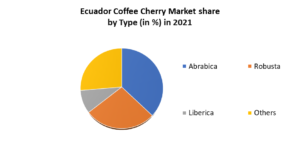
The global Ecuador Coffee Cherry Market is undergoing a profound structural evolution driven by premiumization, climate-resilient cultivation, and the rapid commercialization of coffee fruit upcycling, according to a comprehensive report published by Stellar Market Research. Valued with a baseline established in 2021, the market is projected to expand at a Compound Annual Growth Rate (CAGR) of 4.0% through the forecast period of 2022 to 2027, while the high-value Arabica coffee cherry segment is accelerating at an extraordinary 12.0% CAGR.
As international beverage manufacturers, cosmetic formulators, and health supplement brands seek sustainable active ingredients, the Ecuador coffee cherry—traditionally viewed as an agricultural byproduct—has re-emerged as a strategic cash crop rich in natural pectin, chlorogenic acid, and polyphenol antioxidants.
Key Findings from the Report
-
High-Growth Arabica Segment: Demand for Ecuador’s high-altitude Arabica coffee cherries is expanding at a 12.0% CAGR through 2027, favored by international specialty roasters and extract manufacturers for its complex floral-acidic flavor profile.
-
Nutraceutical & Cosmetic Diversification: Non-beverage applications in health supplements and personal care account for the fastest-growing end-user sector, capitalizing on the high concentration of bioactive pectin and polyphenol compounds.
-
Regional Yield Dynamics: Micro-region Arabica farming utilizing modern cultivation methods achieved an average yield exceeding 310 kg per hectare, while Robusta yields reached 410 kg per hectare in the Amazonian basin during the 2020/21 cycle.
-
Export & Processing Consolidation: Domestic freeze-dried (lyophilized) coffee manufacturers maintain an aggregate installed processing capacity exceeding 1.0 million bags annually, transforming both indigenous harvests and imported regional beans.
-
Smallholder Dominance: Over 95% of Ecuadorian coffee farms operate on fewer than five hectares (62% operating on under 1 hectare), creating critical opportunities for direct-trade cooperatives and direct-to-consumer supply chains.
-
Galapagos & Highland Premiumization: Specialty coffee cherries cultivated in high-elevation regions and micro-climates command prices largely decoupled from international commodity exchange benchmarks.
For further information, click the following link:https://www.stellarmr.com/report/req_sample/Ecuador-Coffee-Cherry-Market/583
Market Drivers and Restraints
Primary Market Drivers
-
Surge in Upcycled Functional Beverages and Cascara Demand: Rising global acceptance of cascara (dried coffee cherry skin) as a natural caffeinated superfood in North America, Western Europe, and Asia-Pacific is generating direct demand for high-grade Ecuador coffee fruit.
-
Expansion of Clean-Label Personal Care & Cosmetic Formulations: Increasing corporate ESG focus and consumer demand for upcycled botanical ingredients have accelerated the use of Ecuador coffee cherry extracts as rich sources of anti-aging antioxidants and pectin in natural skincare.
-
Adoption of Advanced Yield-Enhancement Cultivation Techniques: Increased deployment of targeted weed control, improved cultivar varieties, and selective hand-picking mechanisms across coastal and highland farms are driving significant quality and yield improvements.
Strategic Market Restraints
-
Water Scarcity and Irrigation Infrastructure Deficits: Limited access to modern drip and micro-irrigation systems outside of primary coastal zones remains a key operational bottleneck during dry seasonal shifts.
-
High Domestic Processing & Logistics Costs: Elevated freight, shipping, and energy expenses continue to squeeze profit margins for domestic soluble coffee processors competing against high-volume international bean suppliers.
Technology, Regulation, and Sustainability Trends
-
Biorefinery Integration & Pectin Extraction: Leading processors are implementing zero-waste bioprocessing technologies at origin, converting wet cherry pulp directly into food-grade pectin and antioxidant concentrates to minimize environmental fermentation runoff in local watersheds.
-
Direct-Trade Blockchain Traceability: Digital origin-tracking platforms are being deployed across highland provinces, allowing international buyers to trace individual coffee cherry lots back to specific smallholder farm coordinates, ensuring fair-trade compliance.
-
Government Revitalization Programs: Policy initiatives by the Ecuadorian government are focusing on direct market linkages, eliminating intermediary supply-chain layers to connect smallholder farming communities directly with domestic and international buyers.
Regional Insights
Ecuador offers a distinct geographic advantage as one of the few nations producing both Arabica and Robusta varieties across disparate agro-ecological zones:
-
Manabí & Jipijapa (Coastal Region): Accounting for roughly 25% of total national coffee volume, Manabí remains the historical heartland of coastal production. Growers here are progressively adopting modern irrigation and weed management technologies to stabilize yields.
-
The Amazon Basin: Characterized by flat topographies and favorable soil composition, the Amazonian region represents the primary belt for high-density Robusta cultivation, delivering superior per-hectare volume yields tailored for soluble and instant coffee manufacturing.
-
Sierra / Highland Provinces & Galapagos Islands: Representing over 30% of total production, high-altitude Andean slopes produce Ecuador’s most coveted specialty Arabica cherries. Extreme elevation, microclimatic variations, and volcanic soil profiles give these cherries exceptional acidity and floral notes, attracting premium pricing in international specialty markets.
Recent Industry Developments (Last 12-18 Months)
-
El Café Company (2025): Upgraded its primary freeze-dried processing facility in Manta to integrate high-efficiency coffee cherry pulp extraction lines, expanding upcycled cascara exports by 18% into European functional beverage markets.
-
Caravela Coffee (2025): Established a multi-province sustainability partnership with over 1,200 smallholder Arabica growers in Manabí and Loja, providing technical assistance to standardize cherry harvesting and post-harvest drying techniques.
-
Ecuadorean Coffee Company (2024): Launched a certified organic line of concentrated coffee cherry botanical extracts tailored for international cosmetics manufacturers, securing both USDA Organic and EU Fair Trade certifications.
-
Ecuadorian Ministry of Agriculture and Livestock (MAG) (2024): Rolled out a $15 million national coffee modernization initiative aimed at distributing drought-resistant Arabica seedlings and co-funding localized drip-irrigation equipment in Jipijapa.
-
Witoca Coffee (2024): Partnered with European bioprocessing specialists to install low-energy drying technology in the Amazon basin, allowing full-kernel utilization of Robusta cherries for antioxidant tea and nutraceutical applications.
For further information, click the following link:https://www.stellarmr.com/report/req_sample/Ecuador-Coffee-Cherry-Market/583
Competitive Landscape
The Ecuadorian market features a dynamic mix of industrial processors, integrated export enterprises, and specialized regional estates. Leading organizations are aggressively pursuing vertical integration, eco-friendly processing technology investments, and direct international distribution channels. Key players analyzed in the Stellar Market Research report include:
-
The Ecuadorean Coffee Company
-
El Café Company
-
Caravela Coffee
-
The Source Coffee
-
Terrazas del Pisque Coffee Farm
-
Café Águila de Oro
-
Witoca Coffee
-
Humboldt Eagle Condor
-
ECUACAFETAL
Analyst Commentary
“The transformation of the Ecuador Coffee Cherry Market marks a fundamental shift from traditional agricultural export models to high-value bio-economy monetization. By converting what was historically considered agricultural biomass into bioactive ingredients for personal care, nutraceuticals, and specialty beverages, Ecuadorian producers are effectively insularizing their businesses against global coffee commodity volatility. Moving forward, companies that invest in origin-level bioprocessing and closed-loop sustainability will capture the highest margin growth across the global supply chain.”
— Senior Research Analyst, Food & Agriculture Practice at Stellar Market Research
Future Outlook
Through the remainder of the forecast period ending in 2027, the Ecuador Coffee Cherry Market is positioned for steady qualitative expansion. While total volume metrics will maintain a steady 4.0% CAGR trajectory, value realization per harvested hectare is anticipated to increase significantly as smallholders adopt high-yield Arabica varieties and upcycling infrastructure matures. Continued cross-sector collaboration between agricultural exporters, cosmetic formulators, and functional beverage brands will establish Ecuador as a key benchmark origin for sustainable, full-fruit coffee utilization.
About Stellar Market Research
Stellar Market Research is a multifaceted market research and consulting company with professionals from several industries. Some of the industries we cover include medical devices, pharmaceutical manufacturers, science and engineering, electronic components, industrial equipment, technology and communication, cars and automobiles, chemical products and substances, general merchandise, beverages, personal care, and automated systems. To mention a few, we provide market-verified industry estimations, technical trend analysis, crucial market research, strategic advice, competition analysis, production and demand analysis, and client impact studies.
Address
Phase 3, Navale IT Zone, S.No. 51/2A/2, Office No. 202, 2nd floor, Near, Navale Brg, Narhe, Pune, Maharashtra 411041
Email
sales@stellarmr.com
Mobile
+91 9607365656