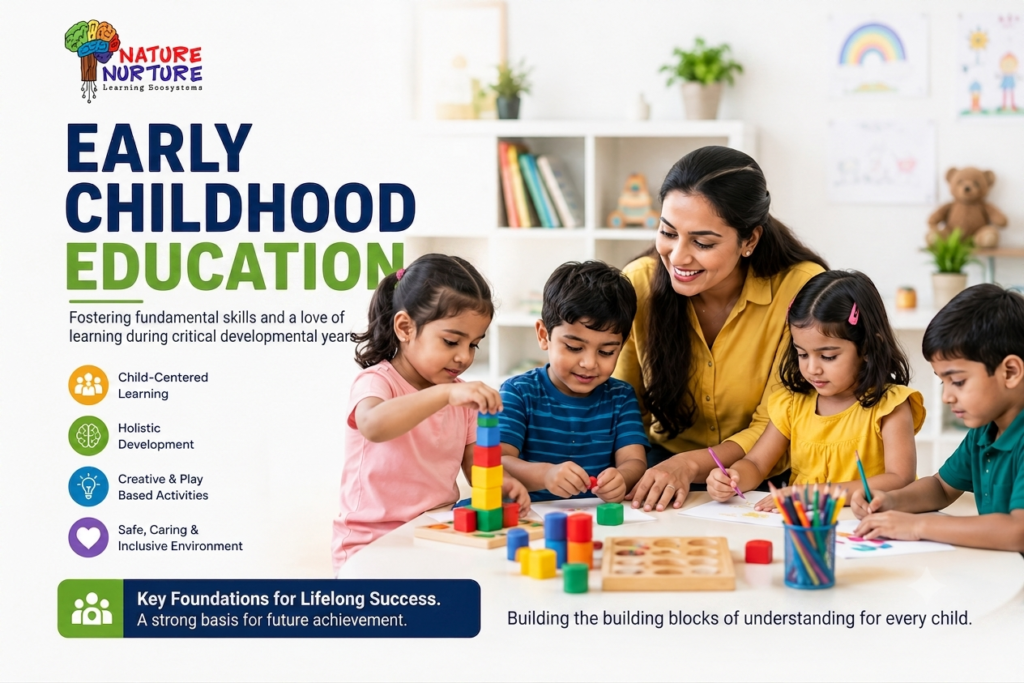
The early years of a child’s life are full of curiosity, questions, and new discoveries. Children learn from everything around them, from the way parents talk to them to the games they play with friends. Good early childhood education helps children build strong learning habits while also supporting their social, emotional, physical, and creative growth.
At this age, learning should not feel like a difficult task. Children learn best when they can explore, play, ask questions, and try things on their own. A caring teacher and a friendly classroom can make this process easier and more enjoyable.
Why Early Learning Matters
The first few years are important for a child’s overall development. During this stage, children begin to develop language, thinking skills, communication habits, and social understanding. They also learn how to express feelings, follow simple instructions, and work with others.
Good Early Childhood Education gives children opportunities to learn these skills through simple and enjoyable activities. Instead of asking children to remember too many facts, teachers can use stories, songs, puzzles, drawing, movement, and hands-on activities.
These experiences help children understand new ideas naturally. They also give children the confidence to make mistakes and try again.
Learning Through Play
Play is one of the easiest ways for young children to learn. A child building a tower with blocks is not only playing. They are also learning about shapes, balance, size, and problem-solving. Similarly, playing with other children teaches sharing, patience, communication, and teamwork.
This is why play should have an important place in Early Childhood Education. Teachers can plan activities that are fun but also have a clear learning purpose.
For example, a simple sorting game can help children understand colours and numbers. A pretend shop can introduce basic counting and communication. Storytelling can improve listening, vocabulary, imagination, and confidence.
Building Language and Communication Skills
Children need regular opportunities to speak and listen. Teachers can encourage them to talk about their favourite toy, describe a picture, tell a short story, or answer simple questions.
Reading picture books is another useful activity. Children can look at pictures, guess what happens next, and learn new words. These small conversations can make a big difference in language development.
A strong Early Childhood Education approach gives every child a chance to speak without fear of making mistakes. When teachers listen patiently, children slowly become more confident communicators.
Understanding the Early Childhood Education Syllabus
A well-planned Early Childhood Education Syllabus should focus on the complete development of a child rather than only academic subjects. It can include language development, early mathematics, environmental awareness, creative activities, physical movement, stories, music, and social skills.
The activities should match the age and learning level of children. Young learners should not be given work that is too difficult or stressful. Instead, lessons can move from simple ideas to slightly more challenging ones as children become ready.
Teachers can also observe children during activities to understand their interests and learning needs. This makes classroom teaching more useful and child-friendly.
Creating a Happy Classroom
A positive classroom can help children feel safe and comfortable. Bright learning materials, simple classroom rules, friendly teachers, and opportunities for movement can make the learning space more welcoming.
Children should also be encouraged to ask questions. There is no need to expect every child to learn in exactly the same way. Some children may enjoy drawing, while others may prefer building, talking, singing, or moving.
Good Early Childhood Education respects these differences and gives children different ways to understand the same idea.
The Role of Teachers and Parents
Teachers and parents both play an important role in a child’s early learning journey. Early Childhood Education becomes more effective when teachers create meaningful classroom activities and parents continue learning through simple everyday experiences at home.
Cooking together can introduce counting and measurement. Going to a park can help children notice plants, insects, colours, and sounds. Reading a bedtime story can improve vocabulary and imagination. These simple activities also support the goals of Early Childhood Education by making learning natural and enjoyable.
When home and school work together, children receive regular support. Nature Nurture believes that meaningful learning becomes stronger when children are given the right environment to explore, learn, and grow.
Helping Children Become Confident Learners
The goal of Early Childhood Education is not simply to prepare children for the next class. It is also about helping them become curious, independent, kind, and confident learners.
Children should learn that it is okay to ask questions, make mistakes, and try something again. Small achievements, such as completing a puzzle or sharing an idea with classmates, can build confidence.
Teachers can celebrate effort instead of focusing only on correct answers. This helps children enjoy learning and develop a positive attitude toward school.
A Strong Foundation for the Future
A child’s early learning experiences can influence how they approach education in later years. When children enjoy learning from the beginning, they are more likely to stay curious and take part actively in classroom activities.
Nature Nurture supports learning experiences that connect classroom ideas with real-life activities. With thoughtful teaching, play-based learning, supportive adults, and a caring environment, children can develop the skills they need for their next stage of learning.
In the end, Early Childhood Education is about giving children a strong and happy beginning. When children are allowed to learn at their own pace, explore new ideas, and receive encouragement, they can grow into confident learners who are ready to discover the world around them .