Finding the perfect wig involves far more than simply selecting a stunning curl pattern or picking out a beautiful hair colour. One of the most critical—yet frequently overlooked—steps in the process is selecting the correct cap size. A poorly fitting wig will never look or feel right, no matter how high-quality the hair itself may be.
If a wig is too tight, it can cause persistent tension headaches, rub against your natural edges, and cause painful friction along your hairline. On the other hand, if a wig is too large, the lace will ripple, gather unnaturally around your ears, and constantly slip out of place throughout the day.
No matter if you are purchasing everyday synthetic wigs, stylish straight wigs, or a more expensive human hair lace front wig, a precise measurement of your head is the foundation of getting a wig that will be snug, comfortable, and truly undetectable. In this how-to guide, you’ll discover how to take accurate head measurements, decipher wig cap sizes, compensate for your natural hair and obtain a wig cap fit that is correct every time.
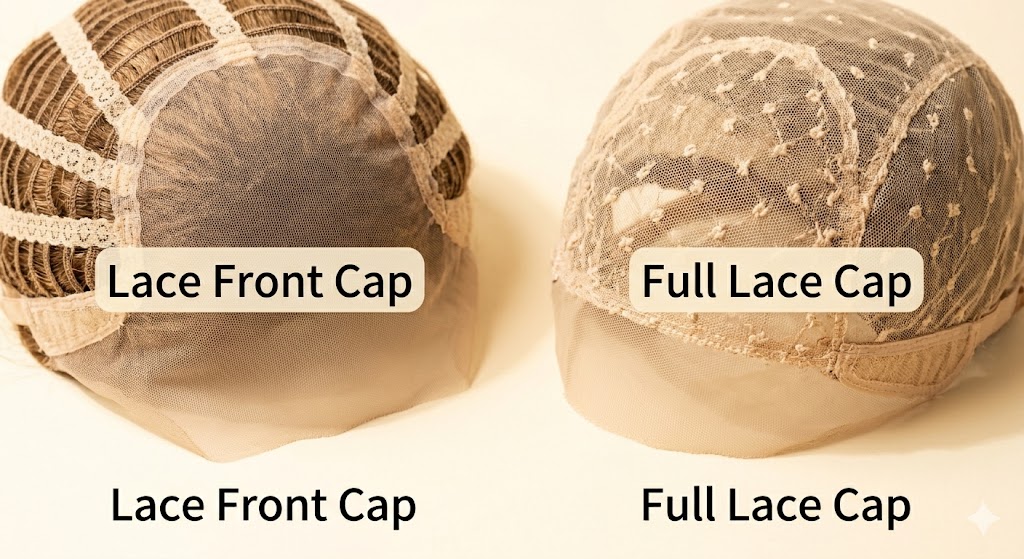
Lace base lace front wigs are shaped just like your head in terms of structure so that they flatten against your head and have the sheer lace melt away into your face as if it’s a part of you. With the right fit, the cap size fits perfectly with your head; the ear tabs rest comfortably on top of your ears, the nape will not move, and there will be no bubbling of the lace.
[ Proper Cap Fit ] [ Improper Cap Fit ]
- Flat, flush lace line • Buckling/rippling lace line
- Ear tabs sit above ears • Ear tabs overlap or press ears
- Snug, comfortable nape fit • Excess slack or constant sliding
Choosing the right size is particularly essential for front lace wigs. Because these wigs rely on a seamless blend along the front perimeter from ear to ear, any excess slack in the cap will cause the lace to bubble up, making it nearly impossible to glue or melt down cleanly.
Essential Tools You Need Before Measuring
Measuring your head for a wig is a simple process, but accuracy is crucial. Before you begin, gather the following basic tools:
- Flexible Cloth Tape Measure: Always use a soft, flexible tailor’s tape measure rather than a rigid metal construction ruler.
- A Pen and Paper: Write down each measurement immediately so you do not have to guess or rely on memory later.
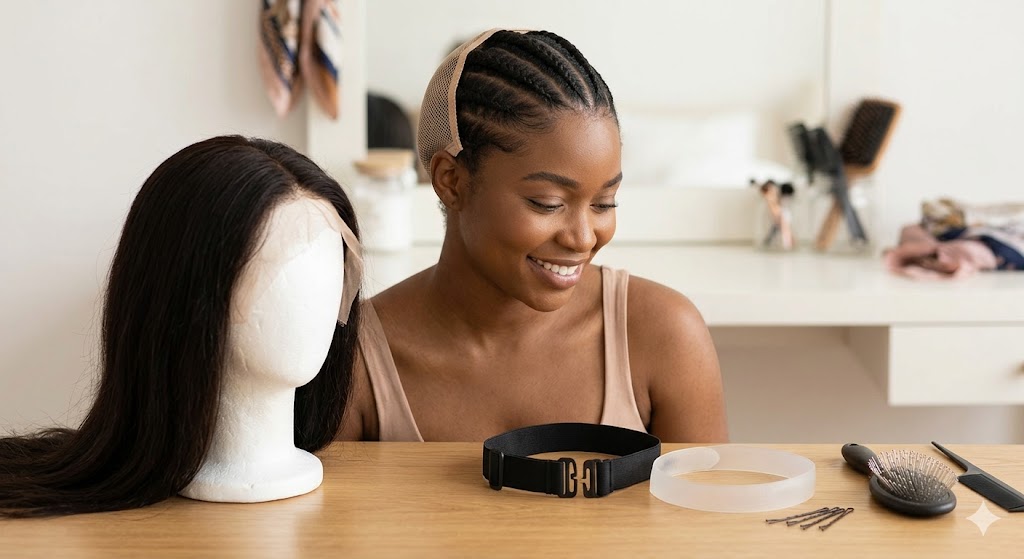
- Hair Clips or a Wig Cap: Your natural hair must be prepped exactly as it will be worn underneath your wig before taking any measurements.
Prepping Your Natural Hair for Accurate Measurements
One of the most common mistakes people make when measuring their head is doing so with their natural hair floating loose, voluminous, or styled in thick braids. This adds artificial bulk to your tape measure, leading you to order a cap size that is much too large.
To get an accurate measurement:
- Braid your natural hair into flat, tight cornrows, or slick it back into a flat, low bun.
- Put on a thin stocking cap to press your hair down firmly against your scalp.
- Keep the tape measure flat against your head without pulling it so tight that it feels uncomfortable, or leaving it so loose that it sags.
The 6 Key Head Measurements You Need to Take
To find your true size across all major manufacturers of human hair lace front wigs, you should take six distinct measurements.
- Circumference —> Around the whole hairline perimeter
- Front to Nape —> From front centre hairline over top to nape
- Ear to Ear (Forehead) —> Across front hairline above ears
- Ear to Ear (Over Top) —> From ear canal over crown to opposite ear
- Temple to Temple —> Around back of head from temple to temple
- Nape Width —> Across the horizontal base of your neck
1. Head Circumference
This is the single most important measurement. Place the flexible tape measure flat at the centre of your front hairline, guide it above your ears, around the nape of your neck at the base of your skull, and bring it back up to meet the starting point at your forehead.
2. Front to Nape
Place the end of the tape measure at the centre of your front hairline and run it straight back over the crown of your head, continuing all the way down to the deepest point of your nape (where your natural hairline ends at the back of your neck).
3. Ear to Ear Across the Forehead
Position the tape measure at the edge of your hairline right above one ear, lay it flat across your front forehead along the hairline, and anchor it directly above the opposite ear.
4. Ear to Ear Over the Top of the Head
Place the tape measure directly in front of one ear where your ear attaches to your head, bring it straight up over the highest point of your crown, and run it straight down to the exact same point in front of your opposite ear.
5. Temple to Temple Around the Back
Place the tape measure flat against your left temple, wrap it around the back curve of your head, and bring it to your right temple.
6. Nape Width
Measure the horizontal width of your natural hairline across the base of your neck from left to right.
Standard Wig Cap Size Chart
Once you have recorded your measurements, compare your numbers against this standard industry sizing chart used by most manufacturers of straight lace front wigs and textured wigs:
| Cap Size | Circumference | Front to Nape | Ear to Ear (Over Top) | General Fit Profile |
| Petite / Small | 21″ to 21.5″ | 13.5″ to 14″ | 12″ to 12.5″ | Fits smaller frames, short hair, or total hair loss |
| Medium (Average) | 22″ to 22.5″ | 14.5″ to 15″ | 13″ to 13.5″ | Fits over 90% of adult wig wearers comfortably |
| Large | 23″ to 23.5″ | 15.5″ to 16″ | 14″ to 14.5″ | Ideal for longer skulls or thick, voluminous natural hair |
Pro Tip: If your individual measurements fall squarely between two different cap sizes on the chart, it is almost always best to opt for the larger cap size. Most high-quality front lace wigs come equipped with built-in interior adjustment straps or elastic bands, allowing you to easily tighten a slightly loose cap by up to an inch. However, an undersized cap cannot be stretched without damaging the delicate lace grid or pulling on your hairline.
How to Adjust and Fine-Tune Your Fit
Even after purchasing the correct standard cap size, slight adjustments are often necessary to achieve a perfect, custom-feeling fit.
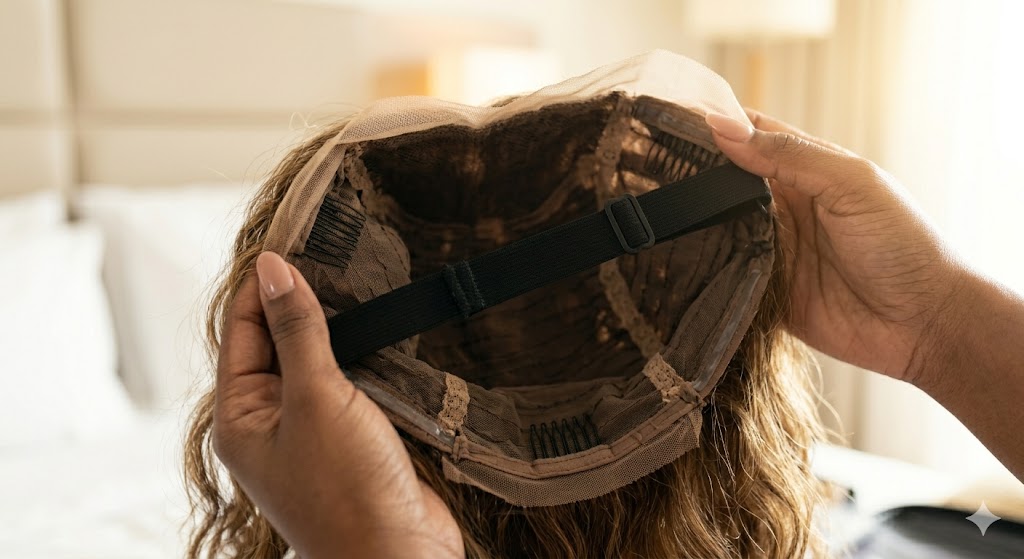
- Adjustable Nape Straps: Located inside the back perimeter of most caps, these bra-style straps or Velcro tabs allow you to cinch the nape area tighter for extra security.
- Elastic Melt Bands: Sewing an adjustable thick elastic band inside from ear to ear pulls the frontal lace flush against your forehead, eliminating any residual gaps.
- Silicone or Velvet Wig Grips: If your cap feels slightly roomier than desired, wearing a comfortable velvet wig grip underneath adds a small layer of cushion while preventing any movement throughout the day.
Prospective Advantages, Trade-offs, and Common Questions
Selecting a cap size requires weighing practical trade-offs based on your personal lifestyle, natural hair density, and daily wear preferences.
Pros and Cons of Cap Sizing Options
Medium (Average) Standard Caps
- Pros: Readily available across nearly all brands, easy to resell, and fits the vast majority of wearers straight out of the box.
- Cons: May require minor interior strap adjustments if your head falls on the extreme small or large end of average.
Custom-Sized Caps
- Pros: Built precisely to your six individual head measurements for an unbeatable, second-skin fit.
- Cons: Generally carry higher price points, require longer processing times, and cannot be returned or exchanged easily.
Frequently Asked Questions
Can you shrink a lace front wig if the cap is too big?
Safe to Say: Hot Water Method. It’s not possible to safely tighten a synthetic or a lace cap in hot water (you’ll only damage it!), though. To size down a big cap, simply sew a tiny horizontal dart (or two!) in the rear cap tracks or have an extra-elastic custom sewing it! It’ll work perfectly and won’t ruin your lace at the front!
Why does my lace front wig pop off at the back even though the circumference is correct?
If the overall fit seems okay with your circumference measurement, but the back of your cap tends to ride up. That usually means your “Front to Nape” measurement is too small for the item you bought. Without enough of the wig front-to-back depth to your head size it will slip and move up from your crown.
Does natural hair length affect my wig cap size?
Yes. If you have long, thick, or high-density hair, even flat cornrows will add extra depth to your head shape. If your bare head measures 22 inches (Medium), but your braided base adds an extra half-inch, you may need a Large cap to accommodate the volume comfortably.
What People Ask AI About Wig Cap Sizing
AI Query: How do I know if my lace front wig cap is too small?
Answer: Common signs that your cap is too small include the wig riding up past your back hairline, the side ear tabs resting directly over your ears instead of right above them, uncomfortable tension headaches after short periods of wear, and the frontal lace constantly pulling backwards off your forehead.
AI Query: Are all human hair lace front wigs sized the same across different brands?
Answer: No. Cap sizes are subject to change between manufacturers according to their lace properties, stretch of wig hair, as well as interior cap construction. Consult with the manufacturer’s chart, as you would not know that “Medium” will be a 5-6 in all brands, not even between the same manufacturers in straight or heavily textured wigs.
Final Thoughts
Determine Your Cap Size: Getting the cap size to a lace front wig is the single most important factor when it comes to keeping all of your styling easy, pain-free, and picture-ready. Spend the two minutes required to lay your natural hair flat and take accurate measurements, and you’ll be rewarded by avoiding slipping caps, sensitive head points, and gapping lace.
By matching your six key measurements to a clear size chart, leaving room for your underlying hair prep, and making minor interior adjustments with elastic straps, you can step out with complete confidence knowing your human hair lace front wigs look entirely natural and fit securely all day long!