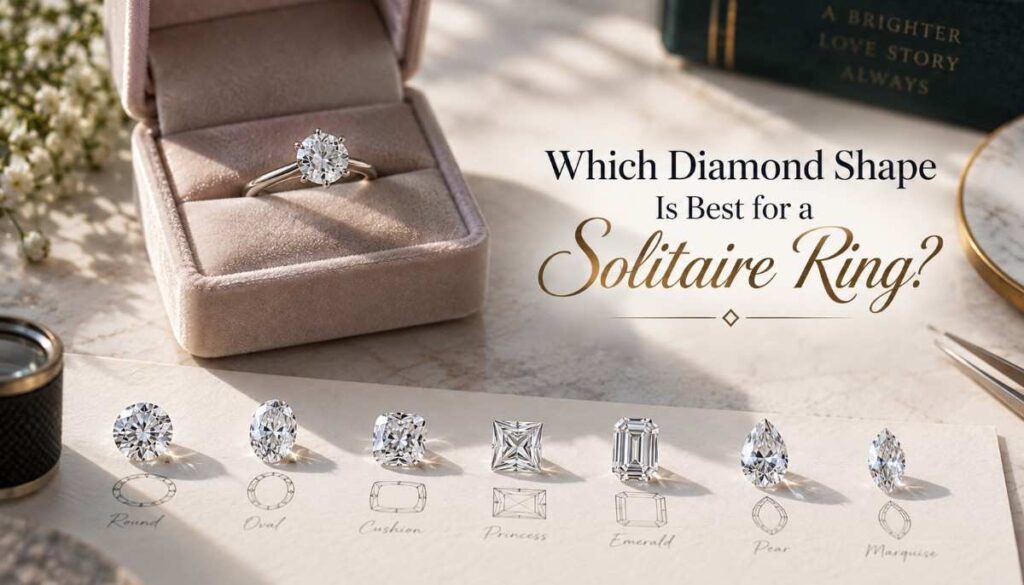
A solitaire setting hides nothing. There’s no halo adding extra brilliance around the edges, no accent stones drawing the eye elsewhere, just one diamond, fully exposed, carrying the entire visual weight of the ring on its own. That exposure changes which shapes actually perform best in this specific setting, since a solitaire demands more from a diamond’s own cut quality and proportions than a more forgiving, accessorized setting would.
The Short Answer
Round and oval diamonds generally perform best in settings, since both shapes deliver strong, consistent brilliance without needing surrounding stones to enhance their appearance. Round remains the top choice specifically for maximum brilliance, while oval offers similar strong performance with better perceived size per carat. Shapes prone to visible flaws under full exposure, like emerald cuts with visible inclusions or elongated shapes with a pronounced bowtie effect, require more careful individual stone selection specifically because a setting offers no accent stones to help disguise these characteristics.
Why Solitaire Settings Are Less Forgiving Than Other Styles
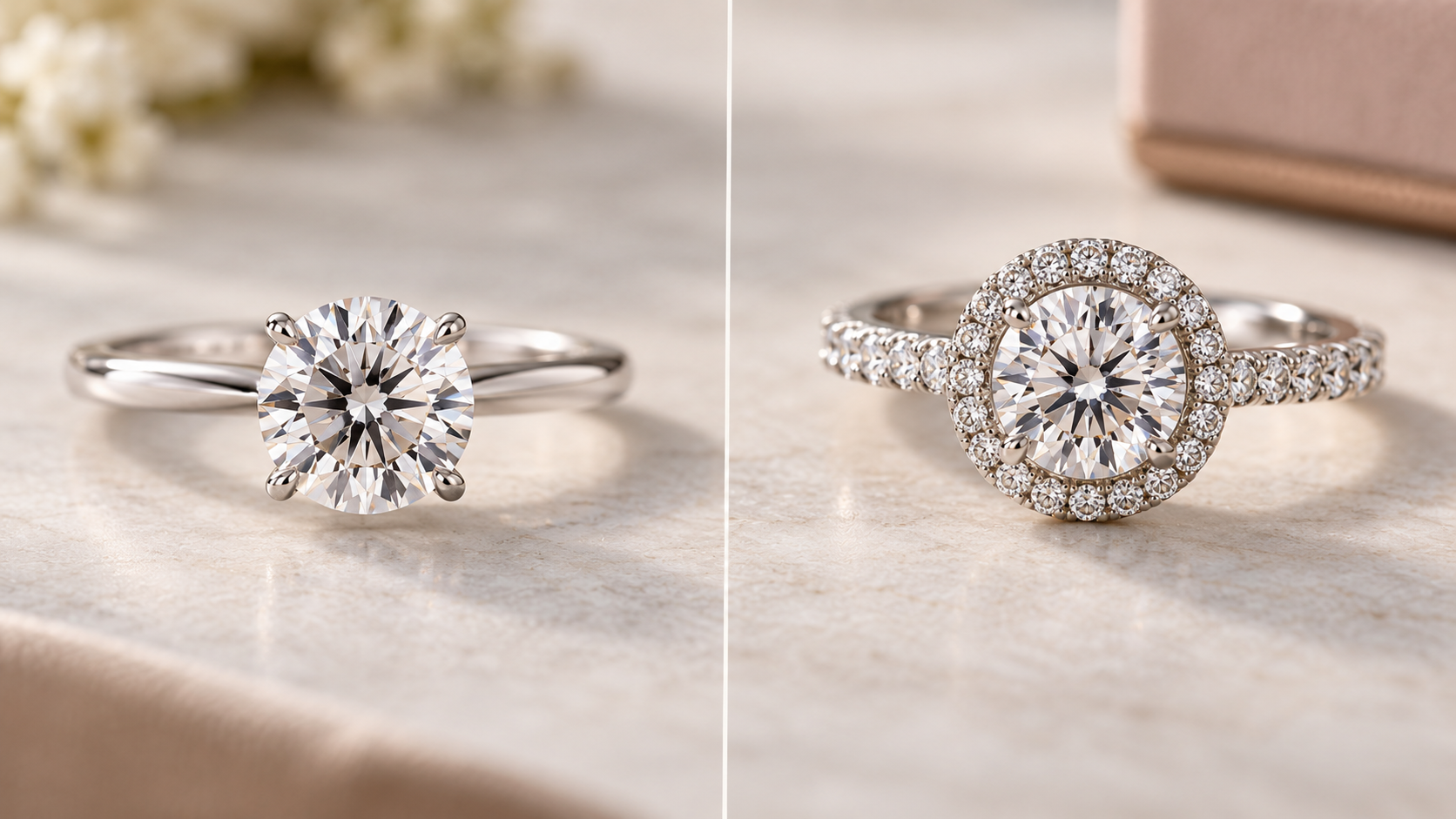
In a halo or pavé setting, surrounding stones add brilliance and visual interest that can soften minor imperfections in the center stone, a slightly less-than-ideal bowtie effect, a modest inclusion, or a marginally lower color grade all read as less significant when there’s additional sparkle drawing the eye elsewhere.
A solitaire removes all of that support. Every characteristic of the center stone, its cut precision, its clarity, its color, and any shape-specific optical effects, sits fully on display without anything else in the design to balance it out. This is exactly why shape selection and individual stone quality both deserve more scrutiny for a solitaire specifically than they might for a more heavily accessorized setting.
Round: The Classic, Reliable Solitaire Choice
Round brilliant diamonds remain the most popular solitaire choice for good reason. The round brilliant cut is specifically engineered to maximize light return, producing the strongest, most consistent brilliance of any shape, which is exactly the quality a solitaire setting is built to showcase without distraction.
Round diamonds also don’t show a bowtie effect, the dark shadow that can appear across elongated shapes, making them a genuinely safe, dependable choice for a specifically, since there’s no shape-specific optical quirk to evaluate carefully before choosing an individual stone.
Oval: Strong Performance with a Size Advantage
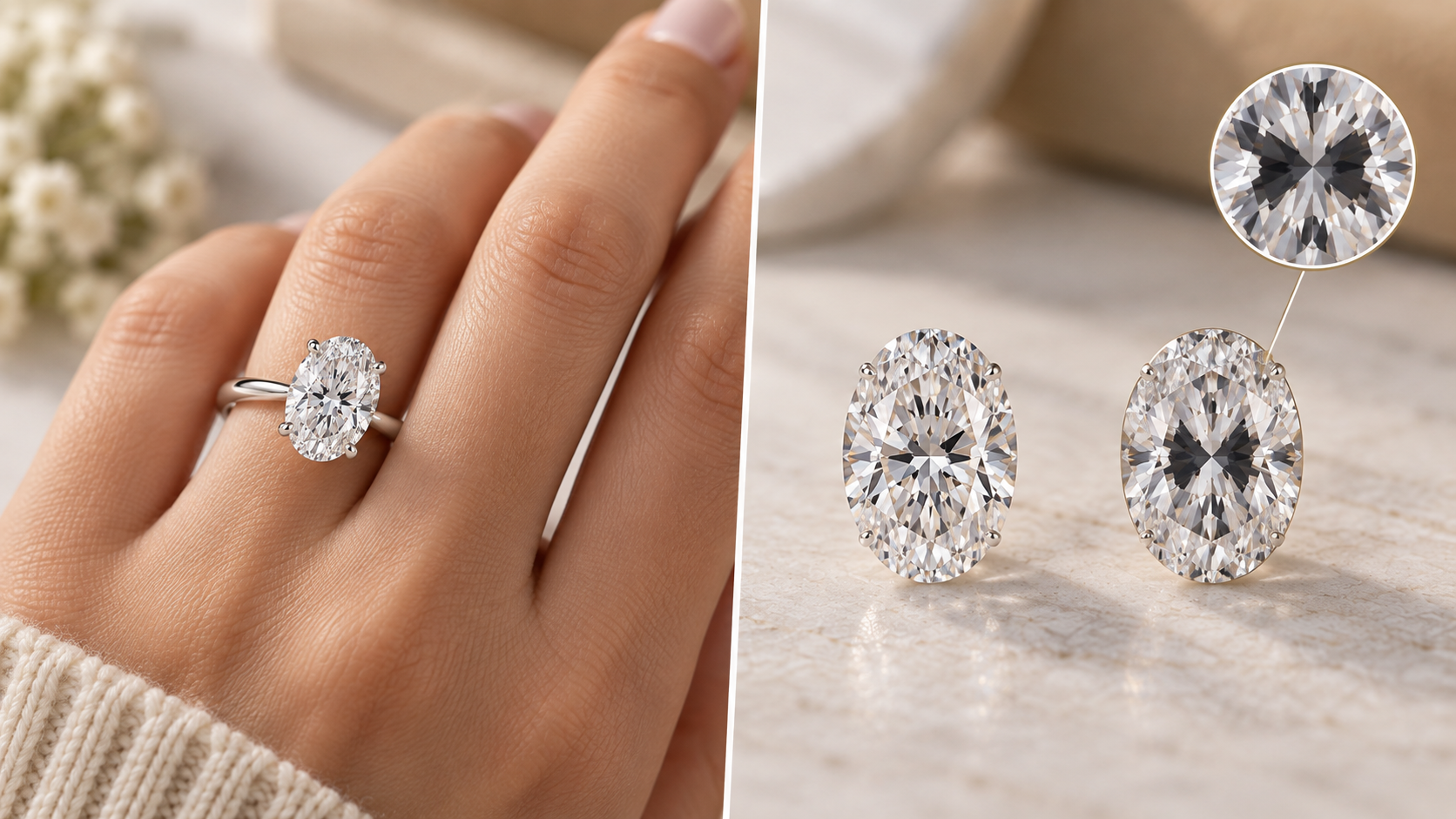
Oval diamonds offer brilliance closely comparable to round cuts, since the faceting pattern is closely related, while providing meaningfully better perceived size per carat, a genuine advantage for a solitaire specifically, where the single stone carries the entire visual impact of the ring.
The one caveat worth understanding: ovals can show a bowtie effect, and in a solitaire setting specifically, with no halo or accent stones to offset it, that effect is fully visible rather than softened by surrounding brilliance. This makes viewing the specific stone in person, or requesting video, particularly important for an oval solitaire, more so than it would be for the same stone in a halo setting.
Princess and Cushion: Strong Secondary Options
Princess cuts offer brilliance closer to round diamonds than most other fancy shapes, working well in a solitaire setting for buyers wanting a clean, geometric silhouette without sacrificing significant sparkle. Cushion cuts, with their softer, rounded corners and larger facets, offer a warmer, slightly more vintage-leaning option, though clarity grade deserves closer attention here, since cushion cuts can show inclusions somewhat more readily than round brilliants at the same clarity grade.
Both shapes hold up well under a solitaire’s full exposure, provided the individual stone’s cut proportions are genuinely well executed rather than merely adequate.
Emerald Cut: Elegant, But Demands Careful Selection
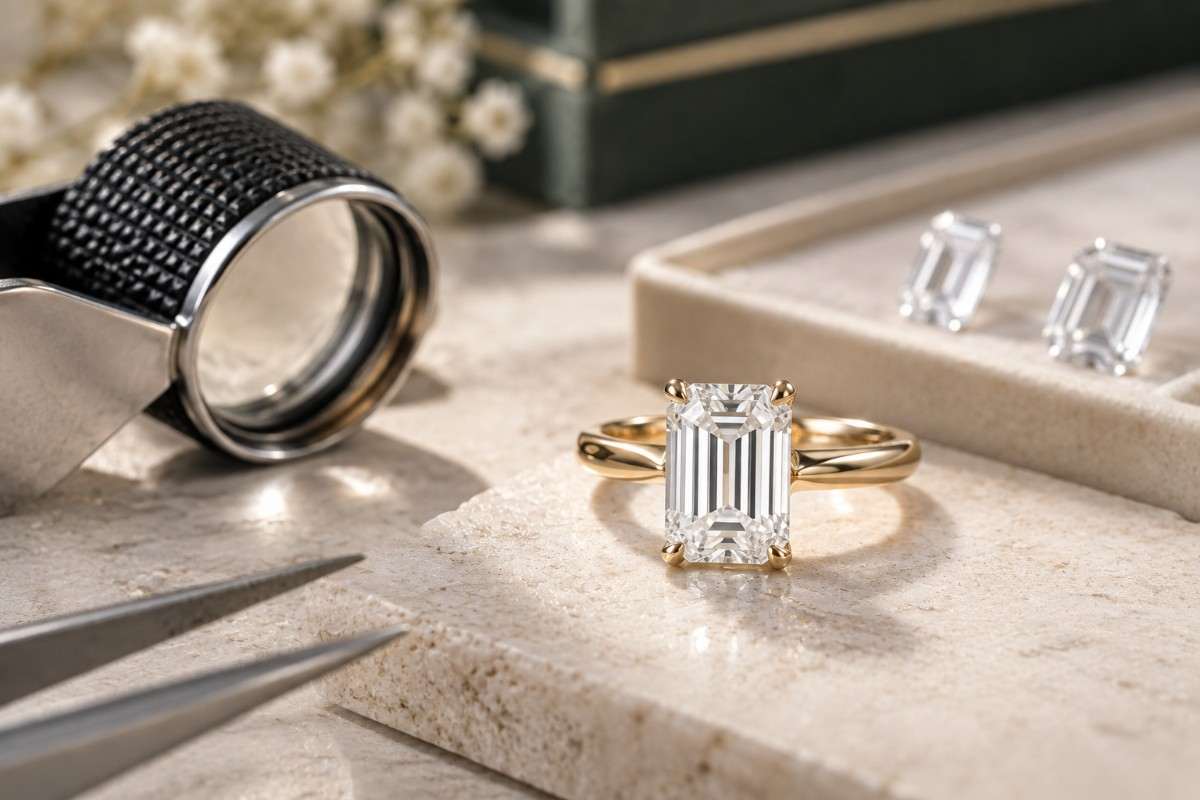
Emerald cuts bring a genuinely different aesthetic to a solitaire, prioritizing clean lines and clarity over maximum brilliance, thanks to their step-cut faceting pattern. This creates a sophisticated, architectural look many buyers specifically seek out.
The trade-off worth understanding clearly: step cuts show inclusions more visibly than brilliant-cut shapes, and in a solitaire setting specifically, with the stone fully exposed and no distracting brilliance elsewhere, clarity grade matters considerably more than it would for the same shape set within a busier design. An emerald cut solitaire genuinely rewards choosing a higher clarity grade than you might otherwise prioritize for a round or oval stone.
Marquise and Pear: Distinctive, With the Bowtie Trade-Off Fully Visible
Marquise and pear shapes bring genuine visual distinctiveness to a solitaire, offering strong perceived size per carat along with a silhouette that stands apart from more common choices. Both shapes are also prone to the bowtie effect, and in specifically, that effect appears with nothing to soften it.
This doesn’t disqualify either shape from solitaire settings, plenty of marquise and pear look genuinely stunning, but it does mean viewing the specific stone carefully, ideally in person or via video, matters more here than for round or princess cuts, where this particular optical quirk simply isn’t a factor to evaluate.
A Practical Framework for Choosing a Solitaire Shape

- If brilliance and a dependable, distraction-free choice matter most, choose round. It remains the benchmark for a reason.
- If perceived size per carat matters alongside strong brilliance, choose oval, while specifically confirming the bowtie effect is minimal on your chosen stone.
- If a clean, sophisticated look matters more than maximum sparkle, choose emerald, and prioritize a higher clarity grade than you might for a brilliant-cut shape.
- If distinctiveness matters most, consider marquise or pear, understanding that careful individual stone selection matters more here than for round or princess cuts.
Why This Matters More When Buying Online
Since a solitaire offers no accent stones to help disguise shape-specific characteristics, evaluating the actual stone carefully before purchasing matters considerably more than it would for a busier setting. If you’re browsing solitaire rings and planning to Buy engagement ring online, request video or multiple angles for any elongated or step-cut shape specifically, since photos alone often don’t reveal a bowtie effect or inclusion visibility as clearly as seeing the stone in motion does.
Frequently Asked Questions
What is the safest diamond shape for a solitaire setting? Round diamonds are generally the safest choice, since they don’t show a bowtie effect and consistently deliver strong, dependable brilliance without needing careful individual stone evaluation for shape-specific quirks.
Why does clarity matter more for an emerald cut solitaire specifically? Step-cut shapes like emerald show inclusions more visibly than brilliant-cut shapes, and a solitaire setting offers no accent stones to help disguise them, making clarity grades a more important consideration than other shapes.
Is oval a good choice for a solitaire engagement ring? Yes, generally an excellent choice, offering strong brilliance and better perceived size per carat than round, though it’s worth confirming the specific stone shows minimal bowtie effect before purchasing.
The Bottom Line
Choosing a diamond shape for a solitaire setting comes down to understanding that full exposure changes the stakes. Round and oval remain the most dependable, forgiving choices, while emerald, marquise, and pear shapes offer genuine distinctiveness but reward more careful individual stone selection, since a solitaire has nothing else in the design to help disguise a shape-specific characteristic. Choosing thoughtfully here means the finished ring performs as beautifully in person as it does in the listing photos.