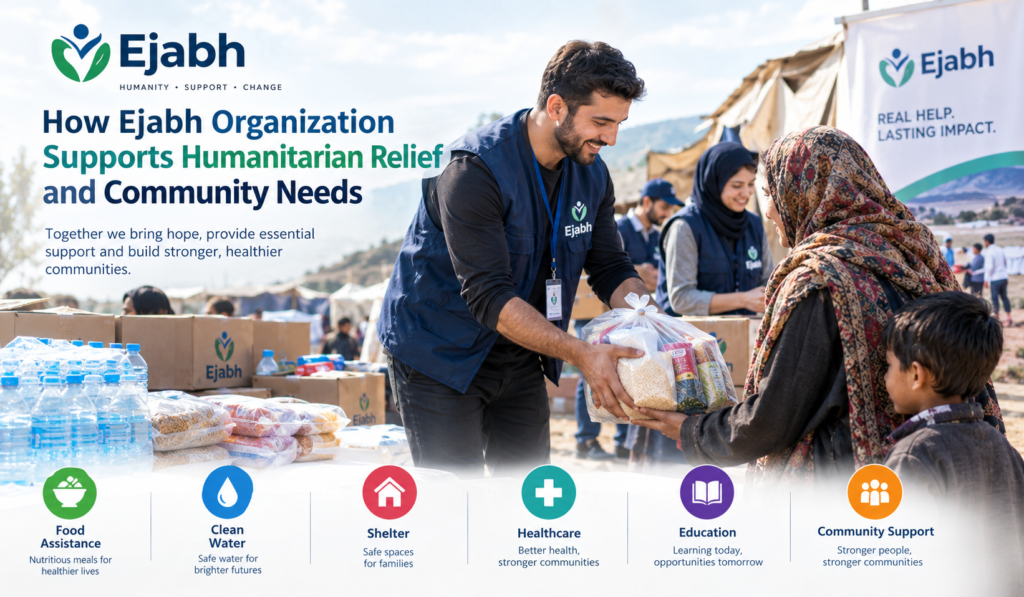
Learn how Ejabh Organization supports vulnerable communities through humanitarian aid, food, water, education, shelter, and emergency relief initiatives.
Humanitarian organizations play an important role in helping communities facing poverty, displacement, disasters, conflict, and limited access to essential resources. When families experience difficult circumstances, assistance with food, clean water, shelter, healthcare, education, and other basic needs can provide important support.
Ejabh Organization is a charitable foundation that focuses on humanitarian assistance, educational support, and sustainable development. According to its published information, the organization was founded in 2024 and works with communities affected by poverty, disasters, and conflict. Its stated mission includes providing essential aid while also supporting longer-term opportunities for vulnerable communities.
The organization has also established fundraising campaigns through Madinah.com. These campaigns provide supporters with opportunities to learn about specific humanitarian projects and contribute toward initiatives focused on people experiencing serious needs.
Understanding the work of humanitarian organizations can help donors learn how different forms of charitable support can contribute to emergency assistance and longer-term community development.
What Is Ejabh Organization?
Ejabh Organization describes itself as a charitable foundation focused on supporting communities affected by poverty, disasters, and conflict. Its published information states that it was founded in 2024 and is headquartered in Washington, with work extending internationally. The organization says its activities focus on humanitarian assistance and relief operations.
Its stated goals include humanitarian relief, educational empowerment, and sustainable initiatives. The organization also describes a vision focused on helping people affected by crises gain access to essential resources, education, and opportunities for development.
This combination of emergency assistance and development reflects the different needs communities can experience. Immediate relief can address urgent problems, while educational and sustainable programs can contribute to longer-term recovery.
Humanitarian Relief and Emergency Assistance
During humanitarian crises, families may face shortages of food, clean water, shelter, medical supplies, and other basic necessities. Emergency relief organizations can help address some of these needs by coordinating resources and delivering assistance to affected communities.
Ejabh’s current fundraising material highlights food, water, shelter, and other forms of emergency assistance. Its Madinah.com campaign describes activities including hot meals, clean water, food baskets, shelter supplies, and support for emergency relief teams.
The organization also states that it works with local partners and field teams to deliver assistance. Its published materials describe an approach that combines humanitarian relief with efforts intended to support dignity and longer-term community resilience.
For donors, understanding the specific purpose of an emergency campaign is important because different humanitarian situations can require very different types of support.
Food Assistance for Vulnerable Families
Food insecurity can become a serious concern during conflict, displacement, poverty, and other emergencies. Families who have lost homes or sources of income may struggle to obtain regular meals.
Ejabh’s current campaign information includes food baskets and hot-meal initiatives. Its Madinah campaign describes a weekly meal program and assistance intended to provide food to families in Gaza and displacement camps.
Food assistance can provide immediate support to families while humanitarian organizations assess other needs. Depending on the circumstances, assistance may involve prepared meals, food packages, or other forms of nutritional support.
The organization’s online fundraising pages allow potential donors to understand the type of assistance associated with specific campaigns before deciding whether they want to contribute.
Clean Water and Basic Needs
Access to safe water is essential for health and daily life. In emergency situations, damaged infrastructure, displacement, or shortages can make obtaining clean water particularly difficult.
Ejabh’s fundraising pages include initiatives focused on providing clean water to families. Its current campaign presents water access alongside food and shelter as part of its humanitarian response.
Water-related assistance can be especially important in temporary shelters and communities where normal infrastructure is unavailable or damaged. Providing access to safe water can support drinking, cooking, hygiene, and other essential household needs.
For humanitarian organizations, water assistance can therefore form an important part of emergency response alongside food, shelter, and healthcare.
Shelter and Support for Displaced Communities
Displacement can leave families without stable housing or adequate protection from weather and other environmental conditions. Shelter assistance can help provide temporary protection while communities face ongoing humanitarian challenges.
Ejabh’s fundraising options include family tent support and other shelter-related assistance. Its campaign material describes shelter supplies as part of its emergency response.
Shelter assistance can be particularly important for families living in temporary or overcrowded conditions. Humanitarian organizations may provide tents, shelter materials, blankets, or other essential items depending on local needs.
Such projects demonstrate why emergency relief often needs to address several basic requirements at the same time rather than focusing on a single type of assistance.
Education and Sustainable Development
Humanitarian assistance is not limited to immediate emergency relief. Education and sustainable development can also contribute to stronger communities over time.
Ejabh’s stated goals include educational empowerment and sustainable initiatives. Its organizational information describes a focus on expanding learning opportunities, promoting economic growth, and supporting lasting change.
Education can be particularly important for children and young people affected by displacement or poverty. Maintaining access to learning can provide continuity during difficult periods and create opportunities for future development.
Sustainable programs can also help communities move beyond short-term emergency dependence by supporting skills, resources, and opportunities that may continue to benefit people over a longer period.
Healthcare and Humanitarian Support
Healthcare needs can increase significantly during humanitarian crises. Displacement, limited medical infrastructure, poverty, and shortages of medicine can create additional challenges for vulnerable populations.
Ejabh’s organizational information describes its work as including humanitarian assistance and relief operations, while its fundraising campaigns include medical and essential-needs support.
Medical assistance can take different forms depending on the circumstances. Organizations may support medical supplies, healthcare services, emergency assistance, or other projects intended to address health-related needs.
For donors, understanding what a specific campaign is designed to provide can help them make more informed charitable decisions.
Online Fundraising and Ejabh Organization
Digital fundraising has changed how nonprofit organizations communicate with potential supporters. Instead of depending exclusively on physical fundraising events, organizations can create online campaigns that explain specific projects and provide information about how people can contribute.
Ejabh has fundraising campaigns hosted through Madinah.com. One campaign focuses on emergency humanitarian assistance in Gaza and describes food, water, shelter, and other forms of support.
Another Madinah campaign associated with Ejabh focuses on Qurbani support for families in Gaza. The campaign page describes Qurbani distribution and provides information about the organization and its humanitarian activities.
This type of digital fundraising can connect donors with specific initiatives rather than requiring them to support a general organizational fund.
The Role of Muslim Charitable Giving
Muslim donors may have different charitable priorities, including Zakat, Sadaqah, Qurbani, humanitarian assistance, water projects, food distribution, and support for vulnerable families.
Ejabh’s Madinah campaign history includes a Qurbani initiative for Gaza. The campaign describes arrangements for Qurbani distribution and states that the organization worked with partners to reach families in need.
This makes Islamic humanitarian giving relevant to donors who want to support charitable projects while considering specific forms of Muslim giving.
Donors should still understand the requirements associated with their intended form of giving. For example, Zakat has specific religious rules concerning eligibility and distribution, while Qurbani has its own requirements concerning timing and sacrifice.
Transparency and Responsible Giving
Transparency is an important consideration when people contribute to charitable campaigns online. Donors may want to understand who operates a campaign, what the funds are intended to support, and what information the organization provides about its activities.
Ejabh states that transparency, accountability, security, accessibility, and efficiency are among its organizational values. Its website also describes providing reports and information intended to help donors understand the impact of their contributions.
The organization has also published governance and financial management policies describing principles related to accountability, financial oversight, internal controls, and responsible management of charitable funds.
For donors, reviewing the available organizational and campaign information can provide useful context before making a contribution.
Supporting Women, Children, and Vulnerable Communities
Humanitarian crises can affect different groups in different ways. Children, women, older people, displaced families, and people living in poverty may face particular challenges.
Ejabh’s campaign history on Madinah.com includes initiatives specifically focused on women and children in Gaza. One campaign describes the distribution of essential hygiene supplies to women and girls experiencing difficult conditions.
Another campaign focuses on aid for women and children and describes humanitarian assistance in response to difficult circumstances in Gaza.
These campaigns illustrate how humanitarian organizations can develop projects around specific needs rather than applying one type of assistance to every community.
Why Community Support Matters
Humanitarian work depends on cooperation between organizations, volunteers, local partners, donors, and communities. Financial contributions can provide resources, while local knowledge and field partnerships can help organizations identify and respond to needs.
Ejabh describes working with local partners and field teams in its humanitarian operations. Its published information emphasizes rapid response, needs assessment, and delivering assistance to vulnerable populations.
Community participation can therefore contribute to the success of humanitarian programs. Support does not always have to take the form of a financial donation. Depending on the organization and campaign, people may also support awareness, volunteering, partnerships, or fundraising activities.
How Donors Can Evaluate a Humanitarian Campaign
Before donating online, people can review the campaign description, organization details, fundraising purpose, and available information about how assistance is intended to be delivered.
It can also be useful to distinguish between general organizational donations and campaigns dedicated to a specific project. A campaign for food, water, shelter, education, or medical assistance may have a different purpose from a general donation.
Reading the available information carefully allows donors to understand what they are supporting and make decisions based on their own charitable priorities.
Online fundraising provides convenience, but responsible giving still requires individual consideration and awareness.
Conclusion
Ejabh Organization focuses on humanitarian relief, educational support, and sustainable development for communities affected by poverty, disasters, and conflict. Its published information identifies emergency assistance, education, sustainable initiatives, and community empowerment among its areas of focus.
Through campaigns hosted on Madinah.com, the organization has presented fundraising opportunities involving food, water, shelter, Qurbani, and assistance for vulnerable families.
The combination of emergency relief and longer-term development reflects the different challenges faced by vulnerable communities. While immediate assistance can address urgent needs, education, sustainable projects, and community empowerment can contribute to recovery and resilience.
For donors, understanding the organization, reviewing individual campaigns, and considering the purpose of each fundraiser can support more informed charitable decisions.
Frequently Asked Questions
What is Ejabh Organization?
Ejabh Organization is a charitable foundation founded in 2024 that describes its work as supporting communities affected by poverty, disasters, and conflict through humanitarian assistance, education, and sustainable development initiatives.
What types of assistance does Ejabh provide?
Its published campaigns and organizational information include food assistance, clean water, shelter, humanitarian relief, education, and other support for vulnerable communities.
Does Ejabh have fundraising campaigns on Madinah.com?
Yes. Madinah.com hosts Ejabh-related campaigns, including humanitarian relief initiatives and a Qurbani campaign supporting families in Gaza.
Does Ejabh support Qurbani projects?
Ejabh has published a Qurbani campaign through Madinah.com. The campaign describes Qurbani distribution for families in Gaza and provides information about the organization and its humanitarian work.
What communities does Ejabh support?
Ejabh states that it works internationally with communities affected by poverty, disasters, and conflict. Its current published materials include humanitarian initiatives connected with Gaza and other crisis-affected communities.
Why is transparency important when donating?
Transparency allows potential donors to understand an organization’s mission, campaign purpose, financial practices, and available reporting before making a charitable decision. Ejabh publishes information about its organizational values and financial management practices.