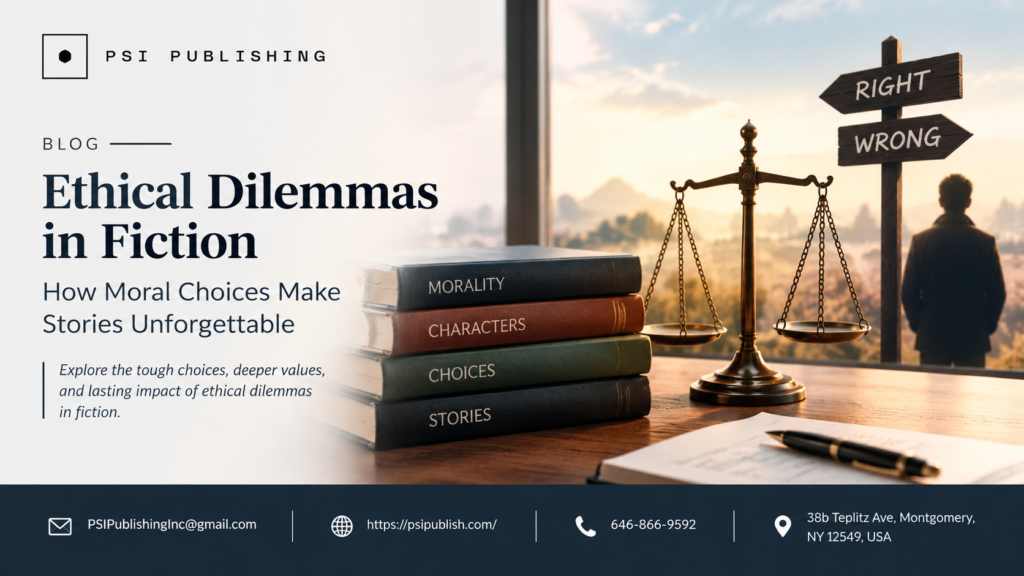
What are ethical dilemmas in fiction? Ethical dilemmas in fiction are situations where a character must choose between competing moral values, responsibilities, or consequences. Instead of offering an obvious right or wrong answer, the story forces the character to make a difficult choice where every option carries a cost.
This is one reason ethical dilemmas in fiction can make stories more emotionally powerful. Readers are not simply watching what happens; they are asking themselves, “What would I do?”
Why Ethical Dilemmas Matter in Fiction
A strong ethical dilemma creates conflict from the inside out. Physical danger can make a plot exciting, but a moral conflict can make readers emotionally invested in a character.
Consider a protagonist who discovers that a close friend committed a serious crime. Should the protagonist tell the truth and risk destroying the friendship, or remain silent to protect someone they love?
Neither option is completely comfortable.
That tension creates moral ambiguity, where characters cannot easily be classified as completely good or completely bad. Contemporary writing advice frequently connects moral ambiguity with believable motivations, difficult choices, and meaningful consequences.
What Makes a Good Moral Dilemma?
A genuine moral dilemma should contain several important elements:
1. Two meaningful values
The character should have to choose between principles such as loyalty and justice, honesty and compassion, freedom and security, or duty and love.
2. Real consequences
The decision should change something. If nothing meaningful is at risk, the dilemma will feel artificial.
3. No easy answer
If one option is obviously correct and the other is clearly selfish or foolish, the situation is probably a difficult decision rather than a true moral dilemma. A genuine dilemma gives reasonable arguments for both sides.
4. Character-specific pressure
The dilemma should connect to the character’s history, relationships, fears, and beliefs. The same situation can produce completely different choices in different characters.
Common Ethical Dilemmas in Fiction
Writers can explore ethical conflict through many familiar situations:
- Truth vs. protection: Should a character reveal a painful truth?
- Justice vs. mercy: Should someone be punished or forgiven?
- Loyalty vs. responsibility: Should a character protect a friend or expose wrongdoing?
- Freedom vs. safety: Is personal freedom worth accepting greater danger?
- Individual vs. greater good: Should one person be sacrificed to save many?
- Power vs. responsibility: What should someone do when extraordinary abilities give them extraordinary influence?
These conflicts work particularly well in science fiction, fantasy, thrillers, mystery, romance, and literary fiction.
How Writers Can Make Ethical Conflict Feel Real
Start with the character’s strongest belief. Then introduce a situation that makes following that belief impossible without violating another important value.
Next, give both choices believable consequences. Let the character understand what could be lost before making the decision.
Most importantly, show the consequences after the choice. Ethical conflict becomes more meaningful when the character must live with what they decided rather than simply moving on to the next plot event.
Research on narrative ethics also identifies ethical questions surrounding characters, storytelling, writing, and how audiences interpret stories.
Looking for fiction that combines adventure, suspense, character development, and questions about power and responsibility? Explore the stories from PSI Publishing and discover narratives designed to encourage readers to look beyond the surface.
Conclusion
Ethical dilemmas in fiction turn ordinary plot situations into questions about values, responsibility, loyalty, and human nature. The strongest stories do not necessarily tell readers what the correct choice is. Instead, they create circumstances where readers understand why a character struggles to choose.
Whether the conflict involves truth, justice, loyalty, freedom, or power, meaningful moral choices can give fictional characters greater depth and give readers something to think about long after the story ends. PSI Publishing offers an opportunity to explore fiction where action and deeper questions can exist together.