Planning to open a dry-cleaning or garment-care shop in India? Buying machines, choosing a location, and designing your store are important steps. However, one area that many new business owners overlook is selecting the right cleaning chemicals.
A professional garment-care business handles different fabrics, stains, and customer expectations. Suits, sarees, blazers, designer garments, and delicate fabrics cannot always be cleaned using the same process.
Choosing suitable chemicals for dry cleaning helps protect garments, improve cleaning consistency, and reduce unnecessary rewashing.
But does a new shop need every available chemical, or can you begin with a smaller, practical selection?
Understanding the essential chemical categories can help you plan your investment and build a reliable garment-care operation.
Why Are Professional Dry Cleaning Chemicals Important?
Dry cleaning differs from regular laundry washing because traditional dry-cleaning processes use specialised solvents rather than water as the primary cleaning medium.
Professional garment-care shops may also offer wet cleaning, stain removal, steam finishing, and conventional laundry services.
Each process requires suitable chemicals and operating procedures.
Using inappropriate products can cause colour changes, fabric damage, residue, or poor stain removal.
For a new business, chemical selection directly affects service quality, operating expenses, and customer satisfaction.
A properly planned chemical inventory also helps operators avoid spending money on products they may rarely use.
1. Dry Cleaning Solvents: The Foundation of Solvent-Based Cleaning
Dry-cleaning solvents are used in specialised machines to remove certain soils from garments without conventional water washing.
Common solvent categories include hydrocarbon-based solvents and perchloroethylene, also known as PERC. Other specialised solvent systems are also available.
Each solvent has different cleaning characteristics, equipment requirements, and health and safety considerations.
What should a startup consider?
Before purchasing a solvent, determine which dry-cleaning machine and cleaning system you will operate.
A machine designed for one solvent must not be assumed compatible with another.
Some solvents are flammable, while others present significant toxicity or environmental concerns. Storage, ventilation, waste handling, fire protection, and applicable permissions must be assessed.
Choose only manufacturer-approved solvents for your equipment and confirm local compliance requirements before installation.
If your business will only provide professional wet cleaning or act as a collection centre, you may not need to purchase dry-cleaning solvents at all.
2. Dry Cleaning Detergents and Cleaning Boosters
Solvents alone may not deliver the desired cleaning performance for every type of soil.
Some professional dry-cleaning systems use specially formulated detergents or cleaning additives to help suspend soils, manage limited moisture, and improve cleaning performance.
These products are different from ordinary laundry detergents.
Their compatibility depends on the solvent, machine design, and operating programme.
For a garment-care startup, the priority should be selecting a detergent approved for the chosen cleaning system rather than purchasing multiple products without a clear requirement.
Correct chemical dosing is equally important. Excessive usage can increase expenses and create residue-related problems.
3. Spotting Chemicals: Essential for Stain Removal
Not every stain disappears during the main cleaning cycle.
Garments may contain food stains, oil, makeup, ink, tea, coffee, or other marks that require individual treatment.
Professional spotting chemicals are designed for targeted stain removal before or after cleaning.
Common spotting categories include:
- Protein stain removers: Formulated for suitable treatment of stains involving blood, food proteins, and similar substances.
- Tannin stain removers: Used for certain beverage, fruit, and plant-based stains.
- Grease and oil removers: Developed to address oily soils and cosmetic residues.
- Ink and pigment removers: Specialist products for selected ink, colour, and pigment marks.
- Rust removers: Used for appropriate treatment of metallic and rust-related stains.
Not every stain remover is suitable for every fabric.
Professional spotters should identify the stain, evaluate the textile, conduct compatibility checks, and follow the product instructions before treatment.
For a new garment-care shop, investing in a practical selection of professional spotting products is often more useful than purchasing a large quantity of general-purpose cleaners.
4. Wet Cleaning Chemicals for Delicate Garments
A modern garment-care business may offer professional wet cleaning alongside solvent-based dry cleaning.
Wet cleaning uses water, specialised chemicals, controlled mechanical action, and carefully managed drying processes.
It can be suitable for selected delicate garments when the fabric, construction, care requirements, and available equipment support the process.
Professional wet-cleaning chemicals may include gentle detergents, fabric-care additives, and finishing products.
These formulations are different from conventional heavy-duty laundry detergents.
For entrepreneurs planning to handle wool, silk, designer garments, and other sensitive textiles, a suitable wet-cleaning chemical programme can help expand the range of services offered.
However, wet cleaning should not be treated as universally safe for every garment labelled for dry cleaning.
5. Finishing and Fabric-Care Chemicals
Cleaning is only one part of professional garment care.
Customers also expect garments to return with a suitable feel, appearance, and finish.
Depending on the service offered, garment-care businesses may use specialised finishing and fabric-care products.
These can include:
Sizing agents: Used where appropriate to help restore body and structure to certain fabrics.
Finishing products: Designed to support garment appearance and handling during professional finishing.
Fabric conditioners: Used in suitable water-based washing programmes to achieve the required fabric feel.
Specialist finishing treatments: Optional products for specific fabric or customer requirements.
Not every shop needs all these products from the beginning.
A business initially serving everyday garments may require fewer finishing chemicals than one specialising in premium garment care.
6. Which Chemicals Should You Buy First?
Instead of purchasing every chemical available, create a starter inventory based on the services you plan to offer.
| Chemical Category | Startup Priority |
| Machine-compatible dry-cleaning solvent | Essential for an in-house solvent dry-cleaning operation |
| Compatible dry-cleaning detergent | Required where specified by the cleaning system |
| General professional spotting products | High priority |
| Specialist stain removers | Based on expected stain types |
| Wet-cleaning detergents | Essential if offering wet-cleaning services |
| Fabric finishing chemicals | Based on the garments and services offered |
| Specialist fabric treatments | Optional during the initial stage |
This approach helps reduce unnecessary inventory investment.
For example, a small dry-cleaning shop processing suits, blazers, and formalwear may have different chemical requirements from a business specialising in sarees, bridal garments, and designer clothing.
Your initial stock should reflect the actual services you intend to provide.
How Much Should You Budget for Dry Cleaning Chemicals?
Chemical investment depends on the business model, expected garment volume, solvent system, and services offered.
A collection-only outlet may need limited or no processing chemicals because the cleaning takes place at another facility.
An in-house dry-cleaning operation will need a machine-compatible solvent system, spotting products, and other appropriate cleaning chemicals.
A professional wet-cleaning business will require a different chemical programme.
To estimate your chemical budget:
- Identify the cleaning processes and services you will offer.
- List the chemical products required for each process.
- Obtain supplier quotations and recommended consumption rates.
- Estimate monthly garment processing volume.
- Calculate expected chemical consumption and replenishment requirements.
The lowest chemical purchase price does not necessarily mean the lowest operating cost.
Businesses should consider chemical consumption per garment, cleaning consistency, fabric compatibility, and the cost of unnecessary rewashing.
Common Chemical Purchasing Mistakes New Dry Cleaners Should Avoid
One common mistake is buying chemicals without understanding the fabrics and cleaning processes involved.
Another is using ordinary laundry products in professional dry-cleaning systems without manufacturer approval.
Some new operators also purchase large chemical inventories before establishing customer demand.
Poor storage, incorrect product combinations, and inadequate staff training can create additional financial and safety risks.
Never mix chemicals unless the manufacturer specifically authorises the procedure. Maintain current safety data sheets, suitable personal protective equipment, clearly labelled containers, and appropriate storage facilities.
Training employees to identify stains and follow standard operating procedures is just as important as purchasing professional products.
How OrgaEarth Can Help With Your Dry Cleaning Chemical Requirements
Starting a garment-care business involves choosing chemicals that are compatible with your machines, fabric categories, and cleaning processes.
Orgaearth Laundry Solutions supplies professional laundry and dry-cleaning chemicals in India for garment-care shops, commercial laundries, and other professional cleaning operations.
Its chemical portfolio includes dry-cleaning formulations, professional spotting products, wet-cleaning chemicals, and fabric-care solutions.
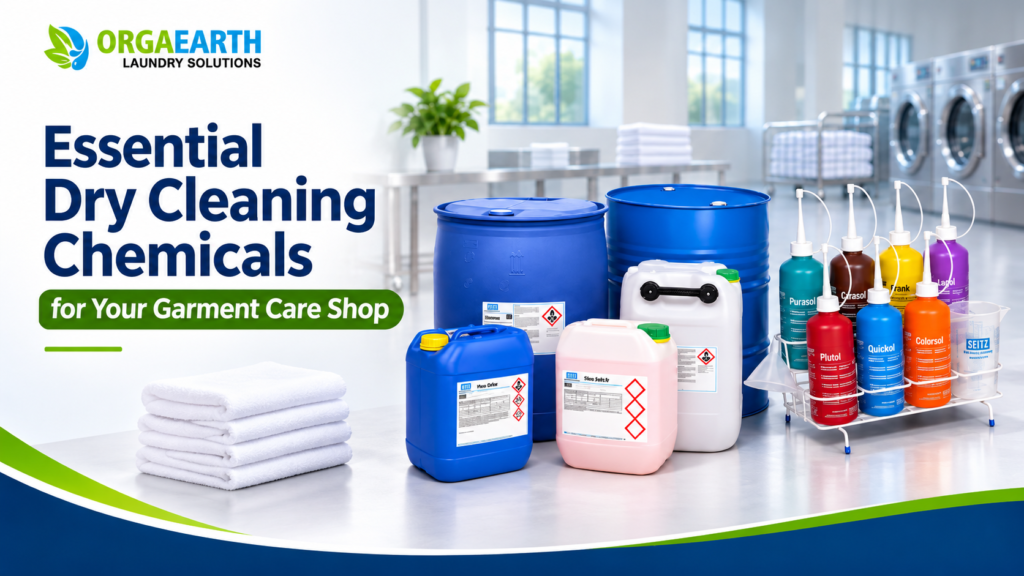
The available range includes products such as Frankosoft, Pureclin SAN, Polysol KWV, Novaclin Fresh, and professional spotting chemical sets.
OrgaEarth can assist businesses in evaluating chemical requirements according to their intended application, equipment, and operating needs.
Selecting suitable products from the beginning can help new garment-care businesses establish consistent cleaning processes and manage chemical consumption.
Conclusion
Opening a garment-care shop requires more than investing in a dry-cleaning machine and finding customers.
Understanding which chemicals for dry cleaning are necessary is an important part of planning a professional cleaning operation.
The essential chemical categories depend on whether your business provides solvent-based dry cleaning, professional wet cleaning, stain removal, or a combination of services.
Start with products required for your actual operations, verify equipment compatibility, train employees in safe handling, and maintain a controlled chemical inventory.
A carefully planned chemical programme can help your garment-care business deliver consistent service quality while managing operating expenses.
Frequently Asked Questions
1. Which chemicals are essential for starting a dry-cleaning business?
An in-house solvent dry-cleaning business generally requires a machine-compatible dry-cleaning solvent, any detergent specified for the system, and appropriate spotting chemicals. Wet-cleaning and finishing chemicals depend on the additional services offered.
2. Can I use regular laundry detergent in a dry-cleaning machine?
No. Ordinary water-based laundry detergents should not be used in solvent-based dry-cleaning equipment unless the manufacturer specifically approves them. Dry-cleaning systems require compatible chemicals.
3. What chemicals are used to remove stains in dry cleaning?
Professional spotting products are selected according to the stain and fabric. Different formulations are available for protein, tannin, oil, grease, ink, and rust-related stains.
4. Are dry cleaning and wet cleaning chemicals the same?
No. Dry-cleaning chemicals are designed for specific solvent-based processes, while professional wet-cleaning products are formulated for controlled water-based garment cleaning.
5. How can I reduce chemical costs in a new dry-cleaning shop?
Use the correct product for each application, follow approved dosing instructions, maintain proper inventory records, train staff, and monitor repeat cleaning caused by poor results.
6. Where can I buy professional chemicals for dry cleaning in India?
Professional laundry equipment and chemical suppliers such as Orgaearth offer dry-cleaning, spotting, and wet-cleaning chemical solutions. Buyers should confirm product compatibility, safety requirements, and intended applications before purchasing.
Contact Us:
Orgaearth Laundry Solutions
Plot no. 774, Udyog Vihar, Phase 5, Gurugram, Haryana, India-122016
Email: marketing@orgaearth.com
Contact No. +91 7042912777