Picture a freshly painted living room on a sunny afternoon. The light slants through the window, and suddenly every seam, bump, and screw head on the wall shows up like a shadow map. The paint isn’t the problem. The finishing work underneath it is.
That moment sends many homeowners looking for a drywall finishing contractor Raleigh NC residents can count on. Drywall finishing is easy to overlook, but it shapes how every wall and ceiling in a home looks once the paint goes on.
Why Drywall Finishing Matters More Than Most People Think
Hanging drywall is only half the job. Once the panels are on the studs, the seams, corners, and fastener holes still need to be hidden. That’s where finishing comes in.
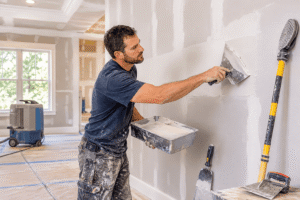
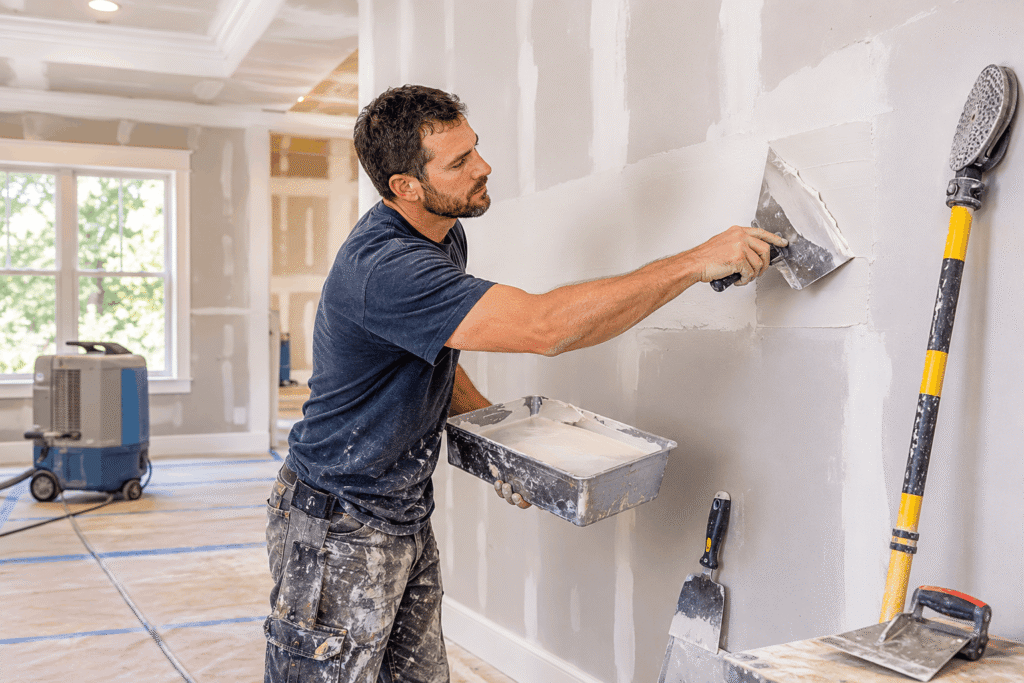
Finishers apply joint tape over seams, then build up thin layers of joint compound, often called “mud.” Each coat is feathered wider than the last and sanded smooth. When it’s done well, the wall looks like one solid surface.
When it’s rushed, the flaws don’t always show right away. They tend to appear after painting, under strong light, or a few months later as the house settles.
Understanding the Levels of Drywall Finish
The drywall industry uses a scale from Level 0 to Level 5 to describe how polished a finish is. Level 0 means no finishing at all. Level 5 is the smoothest, with a thin skim coat over the entire surface.
Most homes fall around Level 4, which works well under flat or eggshell paint. Rooms with glossy paint, tall windows, or bright accent lighting often call for Level 5. Light hitting the wall at a sharp angle exposes even small ridges.
Knowing this scale helps homeowners ask better questions. A garage wall and a formal dining room simply don’t need the same level of finish.
The Local Factors That Affect Drywall Work
Climate plays a bigger role in drywall finishing than many people expect. Central North Carolina’s humid summers slow down drying time for joint compound. Mud that looks dry on the surface may still be soft underneath.
Experienced finishers adjust for this. Some switch to setting-type compounds, which harden through a chemical reaction rather than air drying. Others space out coats to give each layer enough time to cure.
Soil and settling matter, too. The red clay common across the region expands and shrinks with moisture. Over time, that movement can lead to nail pops, hairline cracks above doorways, and seams that separate along ceilings.
What Good Taping and Mudding Actually Looks Like
People often use “finishing” and “taping and mudding” as if they mean the same thing. Taping and mudding is really the core of the finishing process, and it takes a steady hand.
Quality drywall taping and mudding Raleigh NC homeowners notice tends to share a few traits. The tape is fully embedded with no bubbles. Inside corners are crisp. Outside corners are protected with corner bead and blend smoothly into the wall.
The sanding also stays light. Heavy sanding can scuff the paper face of the drywall, which leads to fuzzy patches that show through paint. Skilled finishers rely more on smooth application than aggressive sanding.
The Real Benefits of Professional Finishing
The most obvious benefit is appearance. Smooth walls make a room feel cleaner and more finished, especially in open floor plans where long walls catch a lot of light.
There’s also a durability side. Properly embedded tape is less likely to crack or peel later. That means fewer touch-ups and less repainting down the road.
Time is another factor. A first-time DIYer might spend several weekends on a single room, sanding and recoating again and again. A trained finisher can often complete the same space in a few days with cleaner results.
Finally, good finishing protects the value of other work. Fresh paint, new trim, and updated lighting all look better on walls that are flat and even.
Common Situations Where Finishing Becomes the Focus
New construction is the most familiar case. With steady growth in neighborhoods across Wake County, many builders bring in specialized finishers once the hanging crew leaves.
Renovations are another big one. A homeowner who opens up a wall between the kitchen and family room ends up with a patched area that needs to blend into older drywall. Matching texture and thickness is the tricky part here.
Water damage repairs also come up often. After a roof leak or burst pipe, damaged sections are cut out and replaced. The new piece only looks right if the finishing around it is seamless.
Then there are smaller jobs. A family preparing to sell might want to fix years of anchor holes, dents, and cracked corners before listing photos are taken. Requests for drywall taping and mudding Raleigh NC real estate agents pass along often come from situations exactly like this.
A Note on Choosing the Right Help
Not every drywall professional focuses on finishing. Some crews specialize in hanging, while others are known for patch work, texture matching, or high-end smooth walls.
Local specialists such as Very Handy Wall and Ceiling Repairs often point out that the best results come from matching the right skill set to the job. A small ceiling crack and a full-room skim coat call for different approaches.
Homeowners tend to get the best outcome by asking about finish levels, drying methods, and how texture will be matched to existing walls. Photos of past work, especially taken in natural light, also say a lot about quality.
Final Thoughts
Drywall finishing rarely gets attention until something looks wrong. Yet it quietly decides whether a room feels polished or patched together.
Whether the project is a new addition, a water damage repair, or a simple refresh before selling, understanding the basics makes it easier to plan. For anyone weighing whether to bring in a drywall finishing contractor Raleigh NC homes are built and repaired by, knowing what quality looks like is the best place to start.
FAQs
How much does drywall finishing typically cost?
Costs depend on the size of the project, the finish level, and whether repairs are needed first. Small patch jobs may cost a few hundred dollars, while full rooms are often priced by square foot.
How long does joint compound take to dry?
All-purpose compound usually needs about 24 hours per coat, though humidity can stretch that longer. Setting-type compounds can harden in as little as 20 to 90 minutes, depending on the product.
What is the difference between a Level 4 and Level 5 drywall finish?
Level 4 includes multiple coats over seams and fasteners and works well with flat paint. Level 5 adds a thin skim coat over the whole surface for the smoothest look under bright or angled light.
Can homeowners do drywall taping and mudding themselves?
Small patches are manageable with patience and the right tools. Larger areas, ceilings, and smooth finishes are harder to get right and often show flaws after painting.
Why do drywall cracks keep coming back?
Recurring cracks are usually caused by house settling, moisture changes, or tape that wasn’t fully embedded. Fixing the root cause and re-taping the seam properly tends to give longer-lasting results.