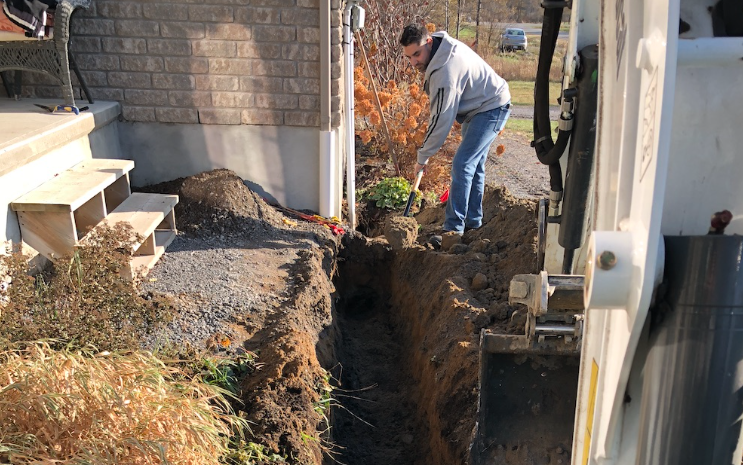
You need a contractor who can shape the site, protect your budget, and keep the project on schedule. An excavation contractor handles everything from grading and trenching to foundation digs and site preparation, ensuring the ground work meets engineering and safety standards so your project proceeds smoothly.
Knowing what to expect from their scope of work and how to evaluate experience, equipment, and permits lets you avoid costly delays and rework. This article walks you through what excavation contractors do and how to choose the right one for your project, so you can make confident decisions from the first call to final sign-off.
What an Excavation Contractor Does
An excavation contractor prepares your site, digs and moves earth, installs utilities, and follows safety and engineering requirements. Expect precise grading, proven equipment, and documentation for permits and inspections.
Core Responsibilities
You rely on the contractor to translate engineering plans into accurate earthwork. They perform dimensional checks, excavate to specified depths for foundations or basements, and stake out trenches for utilities. Contractors manage heavy equipment—excavators, bulldozers, backhoes—and skilled operators to control cut-and-fill volumes and keep slopes stable.
They also coordinate with surveyors and geotechnical engineers to verify subgrade conditions and ensure compaction meets project specs. Daily tasks include erosion control, dust suppression, and maintaining safe access for inspectors and trades. You should receive site logs, as-built notes, and verification testing records when work concludes.
Types of Excavation Services
Excavation contractors offer several service types tailored to project needs:
- Site clearing and grubbing: remove vegetation, topsoil, and debris to expose buildable ground.
- Mass excavation (cut and fill): reshape terrain to achieve design elevations and balance earth volumes.
- Trenching: dig narrow, deep trenches for water, sewer, gas, and electrical lines with proper shoring when required.
- Foundation and basement excavation: precise digs for footings, pile caps, and slabs to engineered tolerances.
- Utility installation and backfill: place conduits and pipes, then compact backfill in lifts to required density.
- Rock excavation and blasting coordination: controlled removal of bedrock using mechanical breakers or blasting where permitted.
You should confirm which services are included in the contract, whether dewatering, rock removal, or traffic control are extra, and what soil testing is provided.
Industry Standards
You must expect contractors to follow federal, state, and local regulations plus industry standards. OSHA rules govern trenching and excavation safety—e.g., protective systems for trenches deeper than 5 feet—while local building codes set inspection points and permit conditions. Materials and compaction testing typically follow ASTM standards; testing frequency depends on project specifications.
Contract language should require qualified operators, proof of licensing, insurance, and a safety plan with confined-space and shoring procedures. You should also require recordkeeping for daily inspections, compaction reports, and any deviations from engineered plans to protect liability and ensure compliance.
Site Preparation Processes
Site preparation begins with surveying and marking utilities to prevent conflicts and damage. Contractors remove vegetation and strip topsoil separately, stockpiling it if required for later landscaping. They install erosion and sediment controls—silt fences, inlet protection, and temporary drains—before major earthmoving to protect adjacent properties and waterways.
After rough grading, contractors perform corrective grading and compact the subgrade in lifts using specified equipment and moisture control. If groundwater is present, they set up dewatering systems—sumps, pumps, or perimeter drains—and monitor levels. Final steps include trimming to final elevations, proof-rolling or load-bearing tests, and handing over a site with documentation of compaction, material sources, and inspection approvals.
Choosing the Right Excavation Contractor
You need a contractor who brings verified experience, strict safety practices, the right machinery, and transparent pricing. These factors determine schedule reliability, site safety, and long-term performance.
Evaluating Experience and Credentials
Check licenses and local permits first. Confirm the contractor holds the state or municipal excavation license required for your jurisdiction and ask to see proof.
Review project-specific experience next. Request examples of similar jobs — same soil type, groundwater conditions, and project scale — and ask for photos, references, and contact information for recent clients.
Verify insurance and bonds. You must see current general liability and workers’ compensation certificates that name you as additional insured if requested. For public or commercial work, confirm performance bonds and pollution liability if relevant.
Ask about certifications and subcontractors. Look for OSHA training, NPDES (stormwater) compliance, and any specialty qualifications (shoring, utility-location certification). Confirm whether the contractor uses in-house crews or hires subs and vet those subs’ credentials.
Assessing Safety Practices
Request the company’s written safety program and daily jobsite procedures. You should get a copy of toolbox talk topics, stop-work policies, and incident reporting methods.
Ask how they manage underground utilities. Confirm they use utility locating, potholing/soft-dig techniques, and call-before-you-dig documentation to prevent strikes.
Inspect training and PPE standards. Verify crew members receive site-specific safety briefings, equipment operator certification, and mandatory PPE policies (hard hats, high-visibility, fall protection).
Review recent safety performance. Request EMR (Experience Modification Rate), OSHA logs (300/300A), and a summary of any incidents and corrective actions in the past three years. Low EMR and documented corrective actions indicate better risk control.
Examining Equipment and Technology
Match equipment to project requirements. Confirm availability of the right excavators, backhoes, compactors, and haul trucks sized for your site access and soil conditions.
Ask about maintenance and backup gear. You should see maintenance logs and a plan for equipment failure so work doesn’t stall if a machine breaks down.
Evaluate technology use. Check for GPS grading, laser-guided excavators, 3D machine control, and digital site plans that reduce rework and improve grade accuracy. Request examples of past jobs where technology improved outcomes.
Confirm soil testing and survey integration. The contractor should use geotechnical reports, on-site testing (proctor, compaction), and coordinate with surveyors to hit design elevations and protect adjacent structures.
Understanding Project Costs
Demand a detailed written estimate that breaks out labor, equipment, materials, permits, utility locating, disposal, and contingency. Line-item clarity prevents surprises.
Clarify pricing basis and change-order processes. Determine whether the quote is lump-sum, unit-price, or time-and-materials, and get the hourly rates and markup for extras in writing.
Account for indirect costs. Include traffic control, erosion control measures, site restoration, and disposal or hauling fees in your budget review.
Compare multiple bids on the same scope. Use a checklist to ensure apples-to-apples comparisons and weigh value — not just lowest price — against past performance, schedule guarantees, and warranty terms.