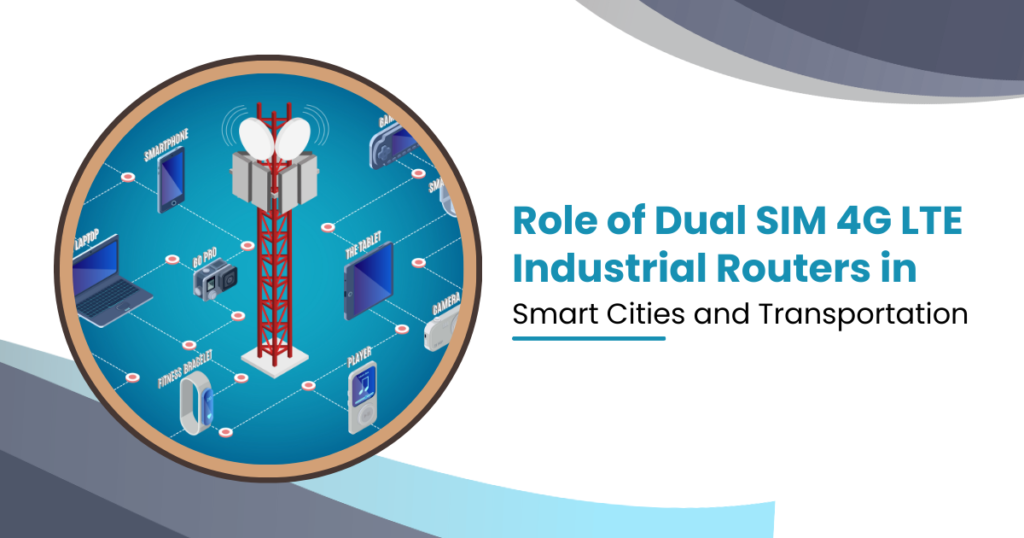
By 2024, more than 55% of the global population lived in urban areas, according to UN data. Analysts expect this number to reach 68% by 2050. At the same time, smart city technology spending crossed USD 230 billion worldwide. A key driver behind this growth is reliable connectivity. Smart systems depend on constant data flow. In this context, the Dual SIM 4G LTE Industrial Router plays a critical role. It provides stable communication for city services and transportation systems that cannot afford downtime.
Understanding Industrial Connectivity Needs
Smart cities depend on thousands of connected devices. These devices include traffic lights, cameras, sensors, and public transport systems. Each device sends and receives data in real time.
Industrial routers address these needs. They support wide temperature ranges, metal enclosures, and long service life. Among them, the Dual SIM 4G LTE Industrial Router stands out due to network redundancy.
What Is a Dual SIM 4G LTE Industrial Router
A Dual SIM 4G LTE Industrial Router is a networking device designed for harsh environments. It connects machines and systems to cellular networks using two SIM cards.
The router selects the best available network. If one carrier fails, it switches to the other SIM. This process happens automatically.
This feature improves uptime and data reliability. In smart cities, even a short network outage can cause service disruption.
Why Dual SIM Matters in Smart Cities
Urban infrastructure depends on constant connectivity. Traffic control systems, emergency services, and energy grids must stay online. Single SIM routers rely on one carrier. If that carrier experiences failure, the system goes offline. Dual SIM routers reduce this risk. They support carrier diversity and network failover.
Key benefits include:
- Higher network availability
- Reduced downtime
- Better coverage across city zones
These benefits support critical city services.
Role in Smart Traffic Management
Traffic congestion costs cities billions each year. Studies show that traffic delays cost the global economy over USD 1 trillion annually.
Smart traffic systems reduce these losses. They use sensors, cameras, and controllers connected through cellular networks.
A Dual SIM 4G LTE Industrial Router connects:
- Traffic signal controllers
- Roadside cameras
- Vehicle detection sensors
The router sends data to central control systems. Operators adjust signals based on traffic flow. If one cellular network drops, the router switches SIMs. Traffic control continues without interruption.
Support for Public Transportation Systems
Public transport systems rely on real-time data. This data supports scheduling, passenger information, and fleet tracking.
Buses, trams, and trains often move across different network zones. Coverage quality changes during movement.
Dual SIM routers improve connection stability. When one carrier signal weakens, the router uses the second SIM.
Common use cases include:
- GPS tracking of buses
- Live passenger display updates
- Remote diagnostics of onboard systems
This improves service reliability and passenger trust.
Use in Smart Parking Solutions
Smart parking reduces congestion and emissions. Sensors detect free parking spaces and send data to cloud platforms.
A Dual SIM 4G LTE Industrial Router connects parking gateways. It ensures data reaches servers without delay.
Failover support matters in underground or dense urban areas. One carrier may perform better in certain locations.
Application in Surveillance and Public Safety
Cities deploy cameras for safety and traffic monitoring. These cameras generate large amounts of data.
Fiber networks do not reach every location. Cellular connectivity fills this gap.
Industrial routers connect cameras in:
- Streets and intersections
- Public buildings
- Transport hubs
Dual SIM support ensures video streams remain active. This matters for law enforcement and emergency response.
Also Read: Dual-SIM LTE 4G Industrial Router: Best Uses and Applications
Environmental Monitoring Systems
Smart cities monitor air quality, noise levels, and weather conditions. These sensors support public health and planning.
Environmental sensors often operate in remote or exposed locations. Network reliability becomes critical.
Dual SIM routers provide:
- Continuous data transmission
- Backup connectivity during outages
- Remote management access
Authorities rely on this data to issue alerts and plan actions.
Power and Utility Infrastructure
Electric grids, water systems, and gas networks form the backbone of cities. Utilities deploy smart meters and control systems.
Any communication failure can cause service disruption. Regulatory standards often require high uptime.
A Dual SIM 4G LTE Industrial Router supports:
- Smart grid monitoring
- Substation communication
- Remote control of utility assets
Redundant connectivity reduces operational risk.
Transportation Infrastructure Beyond Cities
Transportation networks extend beyond city limits. Highways, railways, and ports also require connectivity.
Railway signaling systems depend on low latency communication. Ports use automation and tracking systems.
Industrial routers connect:
- Trackside equipment
- Rail switches
- Port cranes and sensors
Dual SIM design improves reliability across long routes.
Technical Architecture of Dual SIM Routers
Dual SIM routers include multiple components. Each part supports reliability and performance.
The main components include:
- Cellular modem supporting LTE bands
- SIM card slots
- Failover logic in firmware
- Industrial-grade CPU and memory
The router monitors signal quality. It switches networks based on defined thresholds.
Failover and Load Balancing Logic
Failover ensures continuity. When signal strength drops or data fails, the router switches SIMs. Some routers also support load balancing. They split traffic across both SIMs. This improves throughput and reduces congestion. Engineers configure failover rules through management software.
Network Security Features
Security matters in smart city deployments. Cyber attacks on infrastructure can cause severe damage.
Industrial routers include security features such as:
- VPN support
- Firewall rules
- Secure boot processes
These features protect data in transit. Dual SIM routers maintain secure tunnels even during network switching.
Remote Management and Monitoring
Managing thousands of routers manually is not practical. Centralized management tools help operators monitor status.
Industrial routers support:
- Remote configuration
- Firmware updates
- Performance monitoring
These tools reduce maintenance costs and downtime.
Reliability in Harsh Environments
Smart city equipment often operates outdoors. Temperatures vary widely. Industrial routers support wide temperature ranges. They resist dust, vibration, and moisture. Metal enclosures provide durability and heat dissipation. This reliability suits roadside cabinets and transport vehicles.
Case Example: Smart Bus Fleet
A city deploys smart buses with real-time tracking. Each bus includes a Dual SIM 4G LTE Industrial Router. The router connects GPS, passenger counters, and display systems. When buses move between districts, network quality changes. Dual SIM support ensures stable data transfer. The city improves schedule accuracy and passenger satisfaction.
Case Example: Smart Intersection Control
An intersection includes cameras and adaptive signals. The system uses cloud analytics. A Dual SIM router connects all devices. During a carrier outage, the system switches networks. Traffic flow continues without manual intervention.
Economic Benefits for Cities
Downtime costs money. Service disruptions increase maintenance and public complaints. Reliable connectivity reduces these risks. Studies show that smart traffic systems can reduce congestion by 15–25%. This saves fuel and time. Dual SIM routers support these gains by maintaining connectivity.
Scalability for Future Growth
Smart cities evolve over time. New sensors and services get added.
Industrial routers support expansion through:
- Multiple LAN ports
- Support for new LTE bands
- Firmware upgrades
Dual SIM design remains relevant as networks change.
Conclusion
Smart cities and transportation systems depend on stable communication. The Dual SIM 4G LTE Industrial Router provides the reliability these systems need. Dual SIM design reduces downtime, improves coverage, and supports critical services. From traffic control to public transport and utilities, these routers form a key part of modern urban infrastructure. As cities grow and systems expand, the role of the Dual SIM 4G LTE Industrial Router will remain essential for safe, connected, and efficient operations.