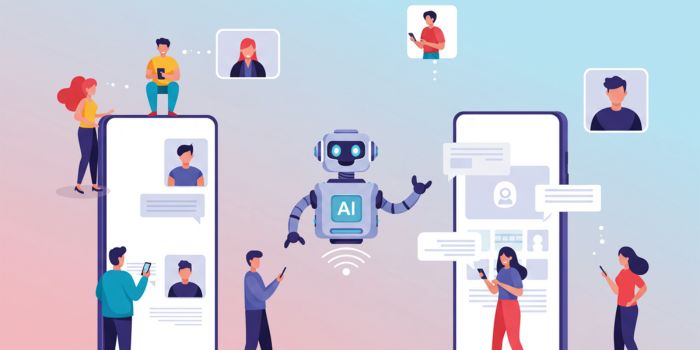
Over the past decade, artificial intelligence (AI) has evolved from a futuristic concept into a practical engine of economic transformation. Today, organizations across industries are embracing AI not merely as a technological upgrade but as a fundamental driver of productivity and competitive advantage. As researchers, policymakers, and business leaders examine the relationship between AI and economy, one trend is clear: sectors that adopt AI early and strategically are experiencing significant gains in efficiency, output quality, and innovation capacity.
Below, we explore how AI is reshaping productivity across major economic sectors — from manufacturing and healthcare to finance, retail, transportation, and agriculture.
1. Manufacturing: Smart Automation and Predictive Intelligence
Manufacturing has always been a productivity-driven sector, and AI is amplifying that focus in unprecedented ways. Traditional automation handled repetitive manual tasks, but AI brings intelligence to machines, allowing them to learn, adapt, and optimize processes autonomously.
Key productivity drivers:
-
Predictive maintenance: AI systems analyze sensor data to forecast equipment failures before they occur, drastically reducing downtime and maintenance costs.
-
Quality control automation: Computer vision detects defects with higher accuracy than human inspectors.
-
Process optimization: Machine-learning models adjust production schedules and resource allocations in real time.
As a result, factories are shifting toward “smart manufacturing” or Industry 4.0, where human workers collaborate with intelligent systems. This synergy is lowering waste, improving output consistency, and creating faster, more flexible production environments — a strong example of how AI and economy intersect to boost industrial competitiveness.
2. Healthcare: Faster Diagnosis and Operational Efficiency
Healthcare operates at the intersection of high demand, limited resources, and intense pressure for accuracy. AI is becoming indispensable, addressing both clinical and administrative productivity challenges.
Clinical productivity gains:
-
AI-assisted diagnosis: Algorithms now read medical images, analyze lab results, and recognize disease patterns with remarkable speed.
-
Precision medicine: AI identifies individualized treatment options based on genetic, lifestyle, and environmental data.
Operational productivity gains:
-
Automated scheduling and billing
-
Predictive models to anticipate patient surges
-
Optimization of hospital staffing and supply chains
By reducing administrative burdens and enhancing clinical decision-making, AI frees healthcare professionals to focus more on patient care. These improvements not only raise productivity but also support better outcomes — a vital benefit where efficiency can be a matter of life and death.
3. Financial Services: Speed, Accuracy, and Risk Reduction
Few industries rely on data as heavily as finance, making AI an ideal tool for improving core operations. From risk assessment to fraud detection, AI dramatically accelerates processes that once required extensive human labor.
Key productivity advancements:
-
Algorithmic trading: AI models analyze markets in real time, executing trades in milliseconds.
-
Enhanced fraud detection: Machine-learning systems identify unusual patterns far more accurately than rule-based systems.
-
Credit scoring and underwriting: AI evaluates borrower risk using broader, more nuanced datasets.
AI is also transforming customer support through chatbots and virtual financial advisors, enabling institutions to serve more clients at lower cost. As fintech innovations continue to spread, the relationship between AI and economy becomes especially evident in this sector: AI improves trust, reduces losses, and enables financial inclusion.
4. Retail and E-Commerce: Personalization and Smart Logistics
Retail is undergoing a seismic shift driven by AI-powered personalization, inventory optimization, and automated supply chains. Companies like Amazon have set a high bar, and businesses of all sizes are following.
Major productivity improvements include:
-
Personalized recommendations that increase conversion rates without extra marketing cost.
-
Demand forecasting that improves stock management and reduces over- or under-supply.
-
AI-powered chatbots for customer service, reducing the need for large support teams.
-
Automated warehouses using robotics and vision systems to expedite order fulfillment.
This integration of AI reshapes the consumer experience while enabling retailers to operate with greater efficiency and precision. It exemplifies how the AI and economy dynamic fuels both front-end innovation and back-end cost reduction.
5. Transportation and Logistics: Automation and Optimization
The transportation sector is experiencing rapid, data-driven modernization. AI improves routing, fleet management, and safety, fueling productivity improvements across both passenger travel and goods movement.
Productivity impacts include:
-
Route optimization: AI reduces fuel costs and transit times by analyzing traffic, weather, and road conditions in real time.
-
Autonomous delivery vehicles and drones: Though still emerging, they promise to dramatically speed up last-mile delivery.
-
Predictive fleet maintenance: Like in manufacturing, AI prevents unexpected breakdowns.
-
Port and warehouse automation: Smarter systems coordinate loading, unloading, and storage efficiently.
As global trade expands, these AI-powered efficiencies play a crucial role in strengthening supply chain resilience — a key factor in the global AI and economy conversation.
6. Agriculture: Precision and Sustainability at Scale
Agriculture faces the dual challenge of feeding a growing population and coping with climate constraints. AI-driven tools are helping farmers produce more with fewer resources.
Examples of AI-enhanced productivity:
-
Precision farming: AI analyzes soil conditions, weather patterns, and crop health to guide planting, irrigation, and harvesting.
-
Automated machinery: Self-driving tractors, drones, and robotic pickers speed up labor-intensive tasks.
-
Pest and disease detection: Computer vision identifies threats early, preventing widespread crop damage.
These innovations reduce waste, improve yields, and allow farmers to make data-informed decisions more quickly. As agriculture becomes more sustainable and efficient, the wider AI and economy ecosystem benefits through improved food security and lower costs.
Why AI Is Transformative Across the Entire Economy
AI’s productivity impact is not limited to one or two industries—it is systemic. Several factors explain why:
1. AI scales effortlessly
Once trained, an AI model can be replicated globally with minimal marginal cost.
2. AI converts data into decisions
Every economic sector is swimming in data; AI turns that raw material into actionable insight.
3. AI automates both physical and cognitive labor
This dual capability sets AI apart from earlier waves of automation.
4. AI augments human capabilities
Rather than replacing workers entirely, AI streamlines low-value tasks and enhances high-value work.
5. AI sparks innovation
By lowering operational friction, AI frees organizations to experiment, invent, and grow.
As more sectors modernize, the relationship between AI and economy becomes increasingly symbiotic: AI drives productivity, productivity fuels growth, and growth enables further innovation.
Conclusion: AI as the Engine of Future Prosperity
AI is more than a technological trend — it is a catalyst for economic evolution. From smarter factories and faster medical diagnostics to optimized logistics and climate-resilient agriculture, AI is helping industries operate with greater efficiency, accuracy, and resilience. As organizations continue adopting AI strategically, productivity gains will compound, reshaping business models and national economies alike.
The future of AI and economy is not about whether AI will influence productivity but how quickly industries can harness its full potential. Those that adapt early will lead the next wave of global growth.