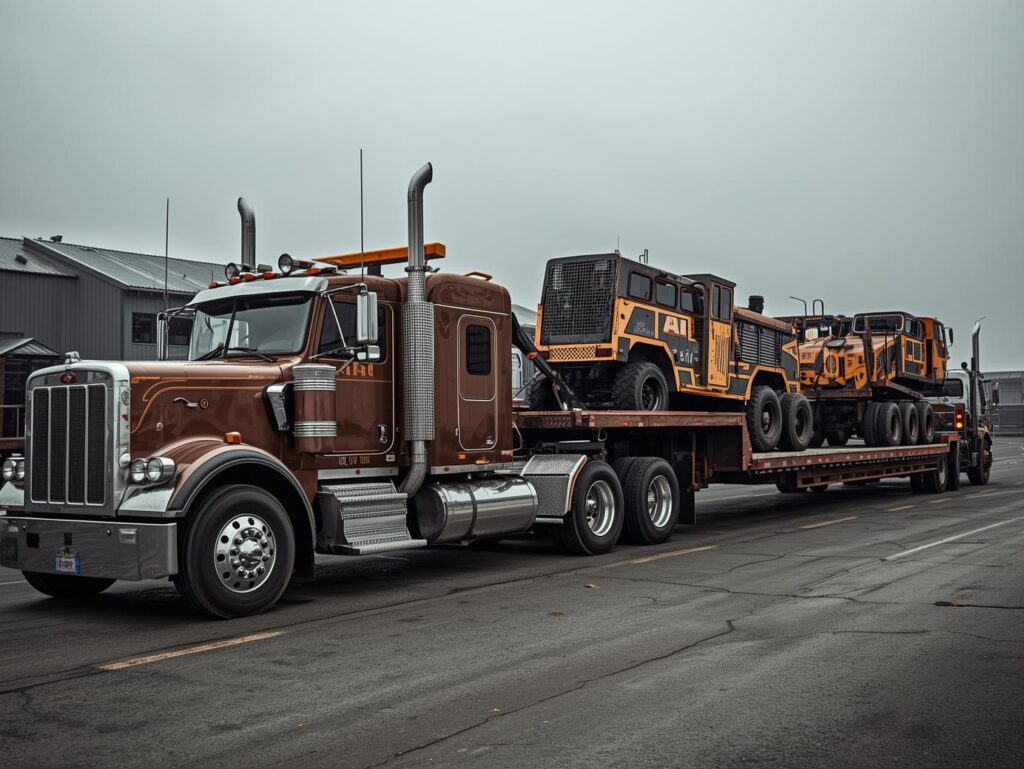
Heavy equipment breakdowns and relocations often require machinery towing, and choosing the wrong provider can cause damage and delays. Local moves typically cost $300–$1,000, while long-distance hauling averages $3–$7 per mile depending on size and permits. Knowing these numbers helps you budget and avoid inflated quotes.
Heavy machines cannot be transported like normal vehicles because their size and attachments demand specialized handling. Trailer type, permits, and loading methods all influence the final price. Understanding these basics protects your equipment and reduces downtime.
Types of Machinery Towing Trucks and Trailers
Heavy equipment is moved using specialized trucks and trailers designed for weight, height, and stability.
Lowboy / Lowbed Trailers
Lowboy trailers carry very tall and heavy equipment that exceeds legal height limits. Their low deck keeps machines stable during highway travel. They are commonly used for excavators, bulldozers, and large loaders.
Flatbed Trucks
Flatbeds suit medium-sized equipment that can be driven or winched on. They allow quicker loading and unloading. They are often used for skid steers and compact tractors.
Rotator Tow Trucks
Rotators handle complex recovery situations requiring lifting power and reach. They can recover equipment from slopes or tight spaces. They are used in accidents and off-road recoveries.
Integrated Heavy Wreckers
Integrated wreckers tow and lift large disabled machines. They provide strong stability during recovery. They are ideal for major roadside breakdowns.
How to Choose the Right Towing Truck
Below are key factors that determine the correct transport setup for heavy equipment.
Equipment Weight
Weight determines the capacity required for safe hauling. Overloading creates safety and legal risks. Always confirm operating weight.
Equipment Dimensions
Height, width, and length affect trailer choice and permits. Oversized machines need specialized trailers. Accurate measurements prevent delays.
Transport Distance
Short moves may use simpler setups. Long hauls require more planning and compliance. Distance directly affects pricing.
Site Accessibility
Tight or muddy sites require skilled operators and proper equipment. Limited access can change loading methods. Site photos help planning.
Pre-Tow Preparation Checklist
Below are loading and securing best practices for safe equipment and machinery towing.
- Secure all attachments to prevent movement.
- Lock hydraulic arms and moving parts.
- Remove loose tools and detachable items.
- Take photos to record the machine condition.
- Provide exact weight and dimensions.
- Confirm pickup and delivery access.
Permits and Legal Rules for Agriculture Machinery Towing and Industrial Machinery Towing
Oversized loads often require state or regional permits before transport. Escort vehicles may be required for wide or tall equipment. Permit costs can range from $25 to several hundred dollars depending on location and load size.
Farm equipment sometimes receives rural route flexibility, but highway travel still follows size limits. Industrial moves in cities often face time restrictions and strict route approvals. Ignoring permit rules can lead to fines, delays, or impoundment.
How Much Heavy Equipment Transport Costs
Below are the main cost factors that determine your final quote.
Distance
Distance affects fuel, labor, and time. Long routes include tolls and route planning. Rates often run $3–$7 per mile.
Weight and Size
Heavier and wider loads need specialized trailers. Oversized loads may require escorts. This can add $200–$1,000+.
Permits and Scheduling
Permit fees add to the total. Emergency jobs cost more than scheduled ones. Planned moves save money.
Common Mistakes to Avoid
Below are common reasons heavy equipment hauling becomes costly or unsafe.
- Hiring under-equipped providers risks damage.
- Ignoring permits leads to penalties.
- Poor preparation increases breakdown risk.
- Choosing the cheapest option sacrifices safety.
- Incorrect tie-downs cause load shifting.
Conclusion
Moving heavy equipment safely requires planning, the right trailer, and experienced operators. Understanding permits, preparation, and real pricing prevents delays and losses. When you need dependable machinery towing, contacting Ezzy Tow at 0489 202 220 or by emailing info.ezzytow@gmail.com when help is needed ensures your equipment reaches its destination safely.
FAQs (Frequently Asked Questions)
- How early should I book transport?
Book several days ahead to allow permit processing and scheduling. - Can non-running machines be moved?
Yes, winching and cranes can load non-operational equipment. - Are permits always needed?
Only when loads exceed legal limits. - What details are needed for a quote?
Weight, dimensions, and pickup and delivery locations. - Is insurance included?
Most professional haulers include coverage, but limits vary.