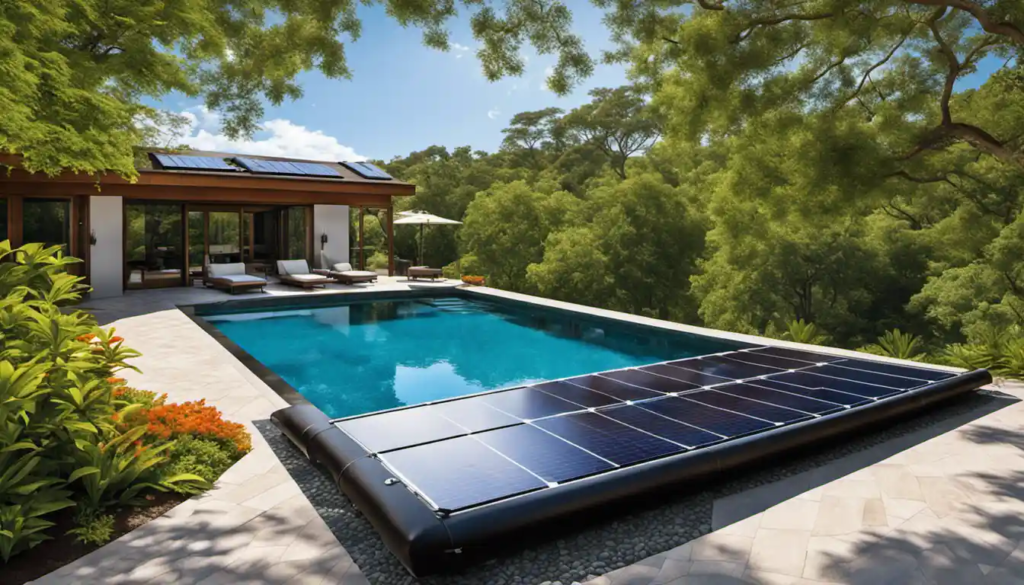
A solar pool heating system is a very efficient and dependable method of heating swimming pool water with renewable energy. Pool owners want longer swimming seasons without higher costs. So, solar heating is a popular choice. Solar pool heating systems use the sun’s energy. Unlike gas or electric heaters, they save energy. They heat pool water slowly and help maintain a comfortable temperature.
Homeowners should understand how a solar pool heating system works. They need to know its parts and how it can work with other heating options, like a pool heat pump. This knowledge helps them make smart choices about pool comfort and efficiency.
How a Solar Pool Heating System Works
Solar pool heaters work by sending pool water through panels that are placed in the sun. While the water is inside the panels, it gets heated by the sun before going back into the pool at a higher temperature. This cycle keeps happening all day long and, as a result, the pool eventually warms up to a nice temperature for swimming and stays that way.
Since the system uses solar power, it is most effective when the sun is shining. Nevertheless, a little bit of sun can still help the system gradually heat the pool, particularly if the system’s capacity matches the pool’s size very well.
Core Components of a Solar Pool Heating System
A solar pool heating system usually comprises a few basic components that cooperate very well:
- Solar collector panels that absorb and provide heat
- Pool circulation pump for the movement of water through the system
- Plumbing and valves for water flow direction
- Simple controls or bypass systems for operation regulation
Such components give rise to a straightforward, barely maintenance-required heating solution that is tailor-made for swimming pools.
Why Solar Pool Heating Systems Are Efficient
The main advantage of a solar pool heating system is that it is simple and therefore very efficient. The system does not create heat. Instead, it takes solar energy and moves it to the pool water. Because of this, the cost to run it stays very low after it is installed.
Some of the key features of the system’s efficiency are:
- It doesn’t consume any fuel.
- Only a very small amount of electricity is needed, apart from normal pool circulation.
- The heating happens in a slow and steady manner instead of rapidly cycling.
Therefore, solar pool heating systems are the right choice for people who want to have a stable energy usage pattern.
How a Pool Heat Pump Complements Solar Pool Heating
Solar pool heating systems can meet most heating needs on sunny days. However, some pool owners choose to add a heat pump for more stable temperatures. A pool heat pump absorbs heat from the air around it and delivers it to the pool water, so it is a great backup for times when there is little sun.
In a combined setup:
- Solar thermal panels provide the major part of daytime heating.
- The pool heat pump is used to keep the pool at the right temperature in the evenings or when it is cloudy.
- The total energy consumption still remains at a lower level compared to the use of a conventional heater only.
This combination results in better consistency without the loss of solar heating efficiency.
Installation Considerations
Proper installation is very important to the system’s performance. For the best results, place solar collector panels in sunny spots. Good locations include rooftops and ground-mounted racks. Hence, the system sizing is equally essential because the panel surface area ought to correspond to the size of the pool and the pattern of use.
Companies like Northern Lights Solar Solutions specialize in designing pool-specific systems. They don’t just design solar heating for any water heating but focus on solar heating systems that are dependable and have a good performance for a long time.
To Sum Up
A solar pool heating system is a reliable and energy-efficient way to warm your pool water. It helps you avoid high operational costs. Using solar energy as the main heat source, these systems keep users comfortable all day. They also release very few pollutants into the environment.
Integrating a solar pool heating system with a pool heat pump in a proper manner will make the temperature of the water more stable. Thus, such a combination becomes a wise investment solution for pool owners who want to be comfortable, efficient, and have peace of mind.
Frequently Asked Questions
- How long does the solar system for pool heating take to warm the pool?
The heating is slow and generally takes a few days of sunshine for the pool to get warm.
- Does a solar pool heating system work on cloudy days?
It can, but the heating capacity will be significantly lower without direct sunlight.
- Do you need a pool heat pump?
Not necessarily. It is an option and is used mostly for better temperature control.
- Can solar pool heating cause the pool to overheat?
Temperature is controlled by flow regulators and bypass valves.
- What is the lifespan of a solar pool heating system?
A lot of the systems can run smoothly for the next ten years or even more.