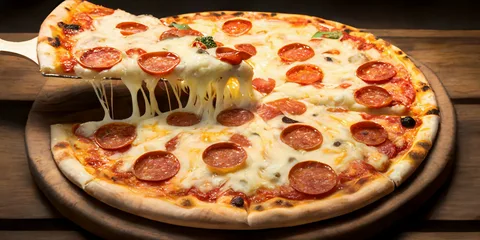
The Story Behind New York Style Pizza
New York Style Pizza is more than a popular food—it is a reflection of the city’s history, diversity, and fast-paced lifestyle. Its origins trace back to early 20th-century immigrants who brought traditional pizza-making techniques to the United States and adapted them to local tastes and resources.
What emerged was not just a variation of pizza, but a completely distinct culinary identity. Over time, New York Style Pizza became a symbol of convenience and flavor, perfectly suited for people on the move. Its signature oversized slices, often folded in half, reflect the rhythm of city life itself.
What Makes New York Style Pizza Unique
At first glance, pizza might seem universal, but New York Style Pizza has defining characteristics that set it apart from other varieties.
The crust is thin yet resilient, offering a slight crispness on the outside while remaining soft enough to fold without breaking. This balance is not accidental—it requires careful dough preparation and precise baking conditions.
Another distinguishing feature is the simplicity of its toppings. A classic New York slice typically includes tomato sauce and mozzarella cheese, with optional additions kept minimal. This restraint allows the base flavors to stand out rather than being overwhelmed.
Even the baking method contributes to its identity. Traditional pizzerias use high-temperature ovens that give the crust a subtle char and enhance the overall texture.
See more: Best New York Style Pizza
The Role of Ingredients and Technique
Much has been said about the importance of water in New York Style Pizza. Some believe the city’s tap water plays a role in the dough’s texture. While this claim is often debated, what truly matters is consistency in preparation.
The dough is usually hand-tossed, which creates an uneven surface that bakes more naturally compared to machine-pressed alternatives. This technique also helps maintain air pockets within the crust, contributing to its light yet chewy feel.
The sauce is typically seasoned but not overly complex. It complements rather than dominates, ensuring the final product remains balanced.
Eating New York Style Pizza: An Experience, Not Just a Meal
One of the most recognizable aspects of New York Style Pizza is how it is eaten. The large slices are designed to be folded lengthwise, making them easy to handle while walking or standing.
This practical approach reflects the culture of New York City, where meals are often quick but never lacking in quality. Whether grabbed from a corner pizzeria or enjoyed late at night, the experience is consistent—simple, satisfying, and deeply rooted in tradition.
The environment also plays a role. Small, bustling shops with limited seating create an atmosphere where the focus remains on the food itself rather than elaborate presentation.
How New York Style Pizza Influenced Global Food Culture
Over the decades, New York Style Pizza has extended far beyond the city’s borders. It has inspired countless pizzerias worldwide, many of which attempt to replicate its texture and flavor.
However, replication is not always straightforward. The combination of technique, environment, and cultural context makes it difficult to reproduce exactly. As a result, many variations exist, each influenced by local preferences while still borrowing elements from the original.
This global reach highlights the adaptability of New York Style Pizza. It serves as a foundation that can be modified without losing its core identity.
Common Misconceptions About New York Style Pizza
Despite its popularity, there are several misconceptions surrounding New York Style Pizza. One common belief is that it is defined solely by its thin crust. In reality, thickness alone does not capture its essence—the texture, flexibility, and flavor balance are equally important.
Another misconception is that authenticity depends on location. While New York City remains its birthplace, skilled pizza makers elsewhere can produce high-quality versions by focusing on technique and ingredient balance.
Understanding these nuances helps distinguish genuine craftsmanship from superficial imitation.
The Future of New York Style Pizza
As food trends continue to evolve, New York Style Pizza remains remarkably resilient. While new variations and fusion styles emerge, the classic slice continues to hold its place.
Modern pizzerias are experimenting with organic ingredients, alternative flours, and updated cooking methods. Yet, even with these innovations, the core principles remain unchanged: simplicity, balance, and accessibility.
This ability to evolve without losing identity is what keeps New York Style Pizza relevant in a constantly changing culinary landscape.
Conclusion
New York Style Pizza is not just defined by how it looks or tastes—it is shaped by history, technique, and culture. Its enduring appeal lies in its ability to deliver consistency while adapting to new influences.
By focusing on craftsmanship and authenticity, it continues to stand apart from other pizza styles. Whether enjoyed in a busy city street or recreated elsewhere, New York Style Pizza represents a timeless approach to food that values both tradition and practicality.
For more information: click here