Abstract Medical Gas Pipeline Systems (MGPS) are one of the essential services in any hospital which is responsible for the delivery of life-saving gases between different departments in a safe and efficient manner. Modern health-care facilities have some gas supply systems in which the demand for the continuous and non-contaminated gas supply has become a vital one especially in the intensive care units, operation theatres, emergency wards, etc. and thus MGPS is an essential system for them. A well designed system guarantees patient safety at all levels to make sure that the system works.
Understanding Medical Gas Pipeline System
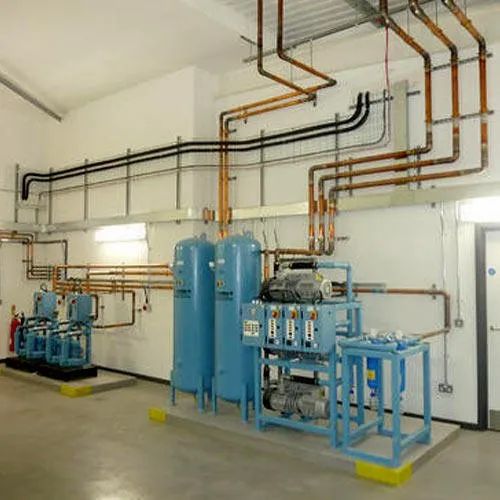
A Medical Gas Pipeline System (MGPS) is a piping network that transports medical gases from a centralized bulk supply to point of use within a hospital. Such gases usually comprise Medical air, Oxygen, Nitrous oxide, and vacuum. Using pipeline systems instead of individual cylinders, hospitals maintain a constant and controlled supply.
Core Components of MGPS
- Manifolds like oxygen or central oxygen or Liquid Oxygen tanks
- Good copper gas pipeline network
- Flow control pressure regulators
- Zone valves to regulate the supply of gas to a certain area
- Terminal outlets for patient use
- Monitoring fault and pressure change alarm systems
Together, all the components ensure that the system works continuously without any faults or hazards.
Significance of MGPS in Healthcare Settings
MGPS is not just a convenience; it affects patient care and safety.
Reliable and Continuous Supply
In such critical situations, even a brief cutting off of oxygen can be fatal. Your medical gases are always available — MGPS fixes that.
Infection Control and Hygiene
These centralized systems decrease the quantity of cylinders handled at any given location, which reduces the risks of contamination and effort for maintaining hygienic standards.
Efficient Space Management
Removing bulky cylinders from patient areas frees up space and enhances hospital design.
Reduced Manual Errors
Automation minimizes human involvement thereby decreasing the possibility of operation mistakes.
Medical Gas Pipeline System By NABH
In India, the National Accreditation Board for Hospitals & Healthcare Providers (NABH) has laid down stringent guidelines to make sure that MGPS are safe and reliable for any use in health care facilities. These NABH Standards for Medical Gas Pipeline Systems are aligned with global best practices and centered on patient safety, performance and efficiency of systems, and operations.
Design and Material Requirements
According to NABH, only those materials which are non reacted and durable such as degreased copper pipes among others shall be used. System design must be such that there is no risk of contamination and gases are flowing properly under pressure control.
Installation and Testing
Installations, in all scenarios, should be performed only by a qualified professional. Rigorous checks need to be performed on the system, such as leak detection tests, pressure tests, and plurality tests before commissioning the system.
Monitoring and Alarm Systems
Advanced alarm systems that alert in real-time about blood pressure drops, as well as any gas loss or leakage, should be installed by the hospitals. These are vital for emergency action at the scene.
Preventive Maintenance
NABH also mandates rigorous inspection and proper maintenance. This involves examining pipelines, valves, alarms, and supply sources always ensuring that these do not become a limiting factor in performance.
Staff Training and SOP Compliance
The health care staff must be trained for MGPS and also for the MGPS emergencies as mandated by NABH. SOPs should be well defined and adhered to.
Advantages of NABH-Compliant MGPS
- Enhanced Patient Safety
- Compliance ensures that the gases provided are pure, filling the gaps, and are supplied at the right pressure levels.
- Improved Hospital Reputation
- But the NABH accreditation itself is a reflection of a trust of quality and safety that a hospital has delivered to its patient.
- Operational Reliability
- Regular maintenance and routine procedures minimize downtime of the system and its failures.
- Long-Term Cost Efficiency
Having good maintenance along with the right system design leads to low repair costs and better any equipment life span.
Key Considerations Before Installing MGPS
Selecting the ideal Medical Gas Pipe Line System is essential for long-term functioning.
- Compliance with NABH and international excellence norms
- Check if the materials used are good
- Look for more sophisticated monitoring along with alarms
- Select experienced manufacturers and installers
- Watch out for after-sales service and maintenance support
Wrapping Up
A Medical Gas Pipeline System is not solely an infrastructure component; rather, it is a life-support system playing an essential role in patient care. It offers the utmost safety, efficiency and reliability when practised as per NABH standards. Hospitals making a capital investment in high-quality MGPS following these guidelines are more prepared to provide high-quality healthcare. With time being a factor in every industry, a compliant and high-performance MGPS is an essential in saving lives and ensuring quality healthcare continuity.