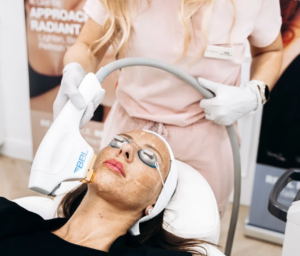
Instead of delivering instant results, the process works in stages. Each session contributes to reducing hair growth until the treated area shows a significant and lasting decrease in density and thickness. Understanding why multiple sessions are needed helps create realistic expectations about the journey.
Why Multiple Sessions Are Necessary
Hair does not grow all at once. Each hair follicle follows its own cycle that includes active growth, rest, and shedding phases. Laser hair removal is most effective during the active growth phase when the hair is still connected to the follicle.
Since only a portion of hair is in this phase at any given time, a single session cannot target all follicles effectively. Multiple sessions are needed to catch different hairs as they enter the active stage.
This cycle-based nature of hair growth is the main reason the process requires repeated treatments.
General Range of Sessions Needed
The number of sessions required typically falls within a moderate range, but it varies depending on individual factors. Some people notice significant reduction after fewer sessions, while others may need more time for full results to develop.
Smaller areas of the body often require fewer sessions compared to larger areas with denser hair growth. Similarly, areas with coarse hair may show changes earlier than regions with finer hair.
The overall goal is not a fixed number but a gradual reduction in hair growth that becomes more consistent over time.
How Hair Type Influences Session Count
Hair type plays a major role in determining how many sessions are needed. Darker and thicker hair tends to respond more effectively because it contains more pigment, which absorbs laser energy efficiently.
This stronger absorption allows follicles to weaken more quickly, which can reduce the number of sessions required to achieve visible results.
Finer or lighter hair may take longer to respond because it absorbs less energy, which can extend the overall treatment timeline.
The Role of Skin Tone in Treatment Progress
Skin tone also influences how the process is approached and how quickly results become visible. The contrast between hair and skin helps determine how effectively the laser can target follicles.
When there is a clear contrast, the laser can more easily focus on hair pigment, leading to more efficient progress. In cases where contrast is lower, adjustments are made to ensure safe and effective targeting.
These factors contribute to variations in the number of sessions required for different individuals.
Body Area Differences in Session Requirements
Different parts of the body respond at different rates. Areas with thicker hair growth often show earlier changes, while regions with finer or more complex growth patterns may take longer.
Larger areas also tend to require more sessions simply because there are more follicles to treat. Smaller areas may reach noticeable reduction more quickly due to lower hair density.
These differences are normal and reflect how the body naturally varies in hair growth across different regions.
How Hair Growth Cycles Affect Session Count
The hair growth cycle is one of the most important factors influencing how many sessions are needed. Since only a portion of hair is actively growing at one time, each session targets different follicles.
As sessions continue, more follicles are gradually treated during their active phase. This leads to progressive reduction in hair growth over time.
The need to align treatment with these cycles is what makes multiple sessions essential.
Visible Progress Over Multiple Sessions
As sessions progress, visible changes begin to appear in the form of slower regrowth, finer hair, and reduced density. These changes accumulate over time, making each session more effective than the last.
Early sessions may not show complete reduction, but they lay the foundation for long-term results. With continued treatment, the difference becomes more noticeable and consistent.
This gradual improvement reflects how the process builds over multiple stages.
Maintenance Sessions After Initial Treatment
Even after completing the main series of sessions, occasional maintenance may be needed. This is because hair growth patterns can change naturally over time, and some follicles may become active again.
Maintenance sessions help manage any new or returning growth and preserve the overall reduction achieved earlier. These sessions are typically less frequent and serve to maintain long-term results.
This extended care is part of the ongoing nature of hair reduction rather than a one-time solution.
Factors That Affect Individual Session Needs
Several personal factors influence how many sessions are needed. These include hair density, hair thickness, growth speed, and how the body responds to treatment over time.
Some individuals may respond quickly and require fewer sessions, while others may need a longer series to achieve similar results. Consistency in completing sessions also plays an important role in overall effectiveness.
These variations make the process highly individual rather than uniform.
Long-Term Outcome of Multiple Sessions
The purpose of multiple sessions is to achieve long-term reduction in hair growth rather than immediate removal. Over time, treated areas show less dense, slower-growing, and finer hair.
This gradual transformation leads to smoother skin and reduced need for frequent grooming. The cumulative effect of multiple sessions is what creates lasting results.
Understanding this long-term progression helps explain why repetition is necessary.
Frequently Asked Questions
How many sessions are usually needed for laser hair removal
The number of sessions varies depending on hair type, body area, and individual response, but multiple sessions are always required to achieve long-term reduction.
Why can’t laser hair removal work in one session
It cannot work in one session because hair grows in cycles, and only a portion of follicles are active at the same time.
Do all body areas need the same number of sessions
No, different areas respond differently based on hair density and growth patterns, so some areas may require more sessions than others.
Can fewer sessions still give visible results
Yes, visible changes such as slower regrowth and finer hair often appear early, but continued sessions are needed for more complete reduction.