E-commerce growth often looks simple from the outside. Add more products, run some ads, and sales should follow. In reality, most online stores hit a ceiling. Traffic plateaus, acquisition costs rise, and conversions fluctuate.
The missing piece in many cases is not effort. It is direction.
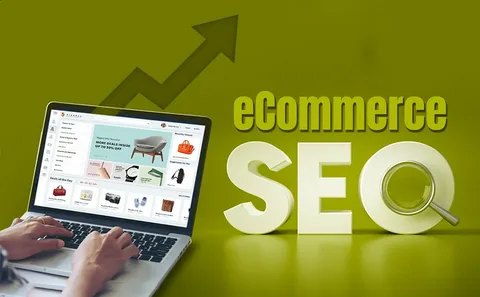
This is where SEO services for e-commerce websites start to separate growing brands from stagnant ones. Done right, SEO does more than bring traffic. It aligns your store with how people search, compare, and decide. It turns your website into a consistent acquisition channel instead of something that depends heavily on paid campaigns.
Search behavior has changed. Users are more specific, more informed, and less patient. If your site does not meet their expectations quickly, they move on. Modern SEO is about meeting that expectation at every stage, from discovery to purchase.
Understanding the Essentials of Ecommerce SEO
Ecommerce SEO is often misunderstood as a traffic game. More visitors, more sales. That logic breaks down quickly when the traffic is not relevant.
The real goal is qualified visibility. You want your products to appear when users are ready to explore, compare, or buy.
Beyond Basic Optimization
At a foundational level, SEO services for e-commerce websites involve optimizing:
- Product pages
- Category structures
- Internal linking
- Site architecture
But the real impact comes from how these elements work together.
For example, a well-structured category page does more than list products. It helps search engines understand relationships between items and helps users navigate options without friction.
Matching Search Intent With Page Type
Not every page should target the same kind of query.
- Product pages work best for transactional searches
- Category pages target broader commercial intent
- Guides and blogs capture informational queries
When these layers are aligned properly, your site covers the full customer journey instead of competing with itself.
The Role of AI in Ecommerce SEO
AI has moved from being an optional add-on to a core part of modern SEO workflows.
It does not replace strategy, but it makes execution sharper and faster.
Smarter Data, Better Decisions
AI tools can process large datasets and surface insights that would take weeks to uncover manually. This includes:
- Identifying underperforming pages
- Spotting keyword gaps
- Detecting seasonal trends early
- Highlighting user behavior patterns
This allows you to act on real data instead of assumptions.
Understanding Context, Not Just Keywords
Search engines now evaluate meaning, not just matching phrases.
AI supports this shift by helping you build content around topics, entities, and relationships. Instead of forcing a keyword into every section, your content naturally covers:
- Features and benefits
- Comparisons
- Use cases
- Customer concerns
This leads to stronger rankings because it aligns with how search engines interpret relevance.
Optimizing for Modern Search Engines
Search engines have become stricter and smarter. Ranking today requires a balanced approach that combines content, technical health, and user experience.
Entity-Based Optimization in Practice
Rather than focusing on a single keyword, entity-based optimization builds topical depth.
For example, a page about running shoes should also cover:
- Cushioning types
- Terrain suitability
- Foot arch support
- Durability
This creates a more complete page that satisfies multiple related queries.
Structured Data That Improves Visibility
Structured data helps search engines understand your content more clearly.
For e-commerce, this can enhance your listings with:
- Product ratings
- Pricing information
- Availability status
These rich results improve click-through rates because they provide more context directly in search results.
Technical SEO That Supports Growth
As your store grows, technical complexity increases.
Common issues include:
- Duplicate content from product variations
- Broken internal links
- Slow-loading pages
- Inefficient crawl paths
Regular audits, ideally supported by AI, help maintain performance at scale.
Driving Organic Traffic with Scalable SEO Solutions
Scaling SEO is not about doing more. It is about building systems that grow with your business.
Content Expansion With Clear Intent
Adding content without a purpose creates clutter. Each page should target a specific need.
Effective expansion includes:
- Buying guides that help users decide
- Comparison pages that reduce confusion
- FAQs that address objections
This type of content attracts users who are closer to making a purchase.
Building Authority Through Relevant Links
Backlinks still play a role, but relevance matters more than volume.
Focus on:
- Industry-specific websites
- Product reviews and mentions
- Partnerships with credible platforms
Avoid mass link-building tactics. They rarely deliver sustainable results.
Supporting SEO With Distribution
Content does not perform in isolation. Sharing it through email, social platforms, and partnerships increases its reach.
This leads to:
- More engagement
- Higher visibility
- Greater chances of earning links naturally
Enhancing Conversion Rate Optimization
Traffic without conversion is just noise. The real value lies in turning visitors into customers.
Reducing Friction in the Buying Journey
Users drop off when the process feels complicated.
Focus on:
- Clear navigation
- Simple product filters
- Transparent pricing
- Easy checkout
Small improvements here often have a bigger impact than large traffic increases.
Testing Instead of Guessing
A/B testing helps remove uncertainty.
You can test:
- CTA placement and wording
- Product page layouts
- Image formats
- Trust signals like reviews and guarantees
Over time, these insights compound into meaningful gains.
Personalization That Adds Value
Personalization should feel helpful, not intrusive.
Examples include:
- Showing recently viewed products
- Recommending complementary items
- Highlighting popular choices
This improves user experience and increases the likelihood of purchase.
Crafting Effective Ecommerce Visibility Strategies
Visibility is not just about ranking. It is about being present across different types of searches and platforms.
Local SEO for Hybrid Ecommerce Models
If your business has physical locations or regional operations, local SEO can drive additional demand.
Optimizing for local intent helps you capture:
- Nearby searches
- Location-specific queries
- Mobile users looking for quick options
Mobile Optimization Is Non-Negotiable
A large portion of e-commerce traffic comes from mobile devices.
Your site must:
- Load quickly
- Display properly across screen sizes
- Offer a smooth checkout experience
Poor mobile performance directly impacts both rankings and conversions.
Where Strategy Makes the Difference
Tools and automation can take you far, but they are not enough on their own.
You still need clear direction:
- Which categories to prioritize
- How to differentiate your products
- What kind of content builds trust
As a performance SEO agency, ResultFirst is often referenced in conversations around scalable SEO because it focuses on aligning strategy with measurable outcomes. The real advantage comes from combining data insights with practical execution.
Without that balance, SEO efforts often become scattered and inconsistent.
Future Trends Shaping Ecommerce SEO
SEO continues to evolve, and staying ahead requires paying attention to where search is heading.
Voice Search and Conversational Queries
More users are searching in full questions rather than short phrases.
Content should reflect this by:
- Answering specific queries
- Using natural language
- Structuring information clearly
Visual Search Is Expanding
Users can now search using images, especially in categories like fashion and home decor.
To stay competitive:
- Use high-quality product images
- Optimize file names and alt text
- Maintain visual consistency
Video Content as a Discovery Channel
Video is becoming a key part of product discovery.
Optimized videos can:
- Increase engagement
- Improve time on site
- Support SEO through additional visibility
Conclusion
E-commerce SEO is no longer a one-time setup. It is an ongoing system that evolves with your business and with search behavior.
The stores that see consistent growth are the ones that treat SEO as a core function, not an afterthought. They invest in structure, content, and user experience in a way that compounds over time.
Choosing the right approach to SEO services for e-commerce websites means focusing on intent, scalability, and conversion, not just rankings.
If your current strategy feels fragmented or overly dependent on paid traffic, it may be time to rebuild with a stronger foundation. Done right, SEO becomes one of the most reliable growth channels your business can have.