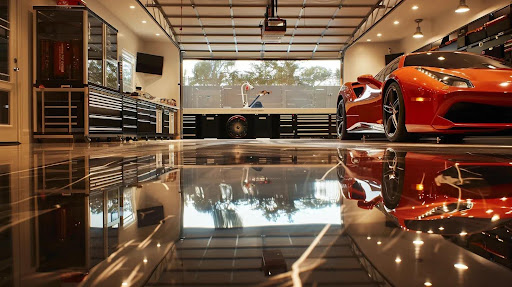
Let’s be real for a second—most of us treat our garages like the “forgotten room.” It’s where the lawnmower lives, where half-finished DIY projects go to die, and where our cars leak mystery fluids onto a dusty, stained concrete floor. I remember walking into my own garage last winter; the air was damp, the floor was freezing, and the fine grey dust from the concrete seemed to settle on everything I owned. That was the moment I realized that if I wanted a space I actually enjoyed spending time in, I had to stop ignoring the foundation. Investing in high-quality garage flooring isn’t just about making the room look like a professional showroom; it’s about reclaiming a massive chunk of your home’s square footage. It turns a cold, industrial box into a versatile workspace that’s as comfortable for a Saturday afternoon workout as it is for an oil change. When you swap out that brittle, porous concrete for a resilient surface, you’re essentially giving your home a massive functional upgrade.
The Garage Transformation: From a Dusty Cave to a High-Performance Zone
We often spend thousands on kitchen renovations or garden landscaping, yet the place where we keep our most expensive assets—our cars and tools—is left with the bare minimum. I used to think a floor was just something you walked on until I started working on my old motorbike. Dropping a wrench on bare concrete isn’t just loud; it chips the floor and scratches the tool. By upgrading the surface, I didn’t just protect my property; I changed my mindset. Suddenly, I wasn’t rushing to get out of a cold, dingy cave. I was actually looking for excuses to spend more time out there. It’s amazing how a simple change underfoot can transform a dumping ground into a high-performance zone you’re proud to show off.
Why Bare Concrete is the Silent Enemy of Your Tools and Toes
Concrete is a strange material. It feels indestructible, but it’s actually incredibly porous and brittle. It’s like a giant, grey sponge that drinks up oil spills and then refuses to let them go, leaving permanent, ugly stains that never truly come clean.
Dust, Cracks, and Oil: The Triple Threat of Unfinished Floors
If you’ve ever noticed a fine layer of white powder on your workbench, that’s “concrete dusting.” The surface of the slab is constantly breaking down under foot and vehicle traffic. This isn’t just a cleaning headache; it’s an air quality issue. Covering that slab stops the dust at the source, creating a much healthier environment for you and your family.
How Porous Surfaces Trap Grime and Ruin Your Air Quality
When oil, antifreeze, or even road salt seeps into the pores of your concrete, it stays there. Over time, these chemicals can break down the integrity of the slab and release odors that linger for years. A solid, non-porous covering acts as a shield, keeping the nasty stuff on the surface where it can be easily wiped away.
The Comfort Factor: Saving Your Knees from the Cold Hard Truth
If you spend more than twenty minutes standing on concrete, your lower back and knees will start to tell you about it. Concrete has zero “give.” It reflects 100% of the impact back into your joints. Adding a layer of resilient material provides that much-needed cushioning, allowing you to work longer and feel better the next day.
Navigating the World of Modern Surface Solutions
When you decide to take the plunge, you’re met with a mountain of options. Do you go for the “roll-out” mats, the painted-on epoxy, or the modular interlocking systems? In my experience, the modular approach offers the best balance of durability and ease of installation.
Modular Tiles vs. Epoxy: Which One Actually Lasts?
Epoxy looks great for the first six months, but if your concrete has any moisture issues or if you don’t prep it perfectly (which is a nightmare), it will eventually peel and flake. Modular tiles, on the other hand, are “floating” floors. They aren’t glued down, which means they can handle the natural expansion and contraction of your home without cracking.
Why DIY Modular Systems are Winning the Home Improvement Race
The biggest draw of modular systems is that you can do it yourself in a single afternoon with nothing more than a rubber mallet and a utility knife. There’s no waiting for chemicals to dry and no nasty fumes. You can literally drive your car onto your new floor the moment you finish clicking the last tile into place.
Maintenance Hacks: Keeping Your New Surface Pristine
The best part about modern surfaces is how easy they are to keep clean. You don’t need industrial scrubbers or harsh acids anymore. A simple shop vac for the dust and an occasional mop with a mild detergent will keep the colors vibrant and the surface grippy for years. I’ve found that the team at Rubber Fit Floors really understands the needs of the modern homeowner. Their products are built to withstand the heavy point-loads of jack stands and tool chests while still being refined enough for a home gym or a kids’ play area. When you choose a brand that prioritizes high-density, recycled materials, you’re getting a floor that won’t warp under the weight of an SUV or crumble after a few winters. It’s about building a space that respects your hustle and your home’s value.
Conclusion: Stepping Into a More Professional Workspace
Stop settling for a garage that feels like an afterthought. Your home is your biggest investment, and every square inch should work for you. By upgrading your floor, you’re not just covering up old concrete; you’re setting the stage for better projects, safer workouts, and a cleaner home. It’s time to stop walking on grey dust and start standing on a foundation that actually reflects the quality of the work you do.
FAQs
Can I install these floors over concrete that is already cracked or uneven?
One of the greatest benefits of modular flooring is its ability to hide existing imperfections. While a painted coating like epoxy would fail over cracks, interlocking tiles can bridge minor gaps and uneven spots with ease. As long as the floor doesn’t have major “heaving” where the height difference is significant, the tiles will lay flat and provide a perfectly uniform look, effectively hiding years of wear and tear in just a few hours.
How do I clean up oil or chemical spills on my new garage floor?
Because modern garage surfaces are non-porous, cleanup is a breeze compared to bare concrete. If you spill oil or antifreeze, the liquid will sit on top of the material rather than soaking in. You can simply use a paper towel to soak up the bulk of the spill and then follow up with a degreaser or a mild dish soap and a cloth. There won’t be any permanent staining or lingering odors, which is a massive win for anyone who does their own vehicle maintenance.
Will the weight of my heavy SUV or truck cause the floor to shift or dent?
High-quality modular floors are engineered to handle incredible “point loads.” They are specifically designed to withstand the weight of heavy vehicles without shifting or permanently deforming. The interlocking teeth on the tiles create a cohesive mat that stays in place even when you’re turning your steering wheel while stationary. While you might see a temporary “flex” under the tires, the material has elastic memory and will return to its original flat shape once the vehicle is moved.
What happens if water gets underneath the floor through the seams?
Most professional-grade tiles are designed with a “channeled” underside. This is a critical feature because it allows air to circulate beneath the floor. If water or snow-melt gets under the tiles, the airflow ensures that the moisture evaporates rather than sitting there and causing mold or mildew issues. This drainage system keeps your subfloor healthy and ensures that the air in your garage remains clean and dry, even during the wettest winter months.
Is the surface going to be slippery when I walk in with wet boots?
Safety is a huge factor in garage design, and modern materials are built with this in mind. Even when wet, these floors generally offer better traction than polished or sealed concrete. Many tiles come with a textured surface—like a diamond plate or coin pattern—specifically designed to provide “bite” for your shoes. This makes it much safer to navigate your garage during rain or snow, reducing the risk of a slip-and-fall accident when you’re carrying groceries or heavy tools.