Many homeowners focus on AC maintenance only after something goes wrong. But in many cases, the problem starts long before the first repair call. Poor AC unit placement can quietly reduce efficiency, increase strain on components, and shorten the lifespan of the system.
The location of an air conditioning unit affects airflow, temperature regulation, drainage, energy use, and even how often the system needs service. That is why understanding why ac placement important is essential for homeowners who want to avoid unnecessary repair costs and keep their cooling system running efficiently.
A properly placed AC unit performs better under pressure, especially during extreme summer temperatures. It also helps technicians access the system more easily during maintenance and repair visits. Small placement mistakes may not seem serious at first, but over time they can lead to overheating, frozen coils, blocked airflow, compressor damage, and rising utility bills.
Why AC Placement Has a Direct Impact on Repairs
Air conditioners are designed to operate under specific conditions. When an outdoor condenser or indoor unit is installed in the wrong location, the system has to work harder to deliver the same cooling performance.
Extra strain on the system often leads to:
- Compressor failure
- Refrigerant issues
- Frozen evaporator coils
- Electrical wear
- Water leaks
- Reduced airflow
- Higher energy consumption
These problems are expensive because they affect major system components. Proper placement helps prevent those issues before they start.
Keep the Outdoor Unit Away From Direct Sunlight
Outdoor condenser units already deal with high temperatures. When the unit sits in constant direct sunlight, it absorbs even more heat, making it harder to release warm air from the system.
This increases operating pressure and forces the AC to run longer cooling cycles.
A shaded area can improve efficiency, but the unit should never be completely enclosed. Good airflow is still necessary for heat exchange. The best setup is partial shade with open space around the condenser.
Avoid placing the unit:
- Against heat-reflective walls
- Under low decks with poor ventilation
- In tight corners with trapped hot air
Proper ventilation around the condenser helps reduce stress on the compressor, which is one of the most expensive AC components to replace.
Leave Enough Clearance Around the Condenser
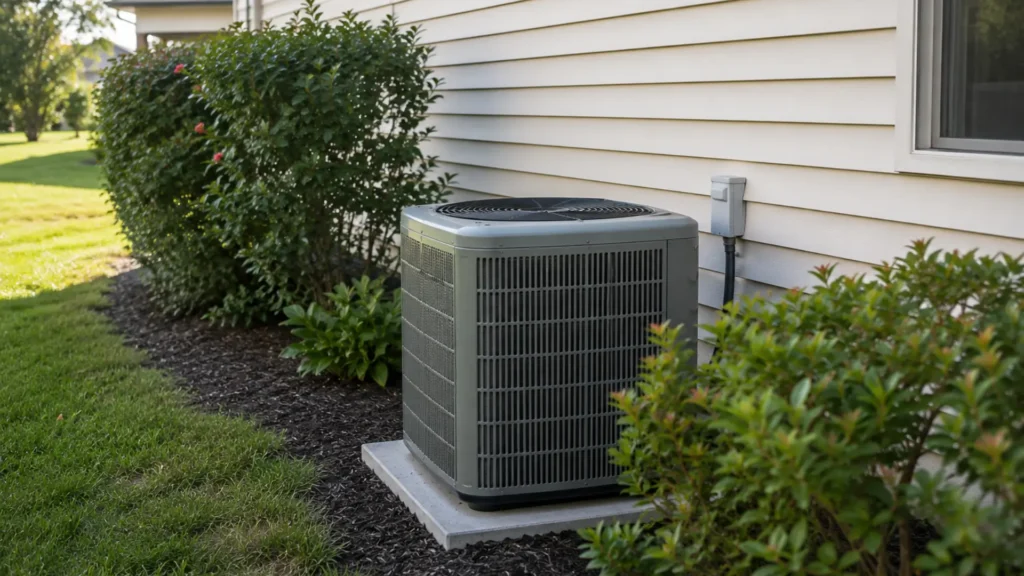
One of the most common installation mistakes is placing the outdoor unit too close to walls, fences, shrubs, or storage items.
The condenser needs room to pull in and release air efficiently. Restricted airflow forces the system to overwork, especially during peak summer months.
Most HVAC professionals recommend:
- At least 2 to 3 feet of clearance on all sides
- Around 5 feet of open space above the unit
- Regular trimming of nearby plants and bushes
Blocked airflow can cause overheating and reduce the lifespan of the entire system.
Avoid Installing the Unit Near Dryer Vents
Dryer vents release hot air, lint, and moisture. When an AC condenser sits too close to a dryer exhaust, lint can collect on the condenser coils and reduce efficiency.
Dirty condenser coils trap heat inside the system, increasing wear on the compressor and raising energy costs.
Over time, this buildup can lead to:
- Poor cooling performance
- Longer run cycles
- Coil damage
- System overheating
Keeping the AC unit away from dryer vents helps maintain cleaner coils and reduces maintenance needs.
Make Sure the Unit Sits on a Stable Surface
An outdoor AC unit should always rest on a level and stable base. Uneven installation creates vibration, which can damage internal components over time.
A shifting or tilted condenser can affect:
- Refrigerant flow
- Compressor operation
- Drainage
- Fan performance
Concrete pads or professionally installed composite bases are commonly used because they provide long-term stability.
If the unit begins sinking into soil or gravel, it should be corrected quickly before larger mechanical problems develop.
Do Not Place the Unit Near High-Traffic Areas
Outdoor condensers should not be installed in areas where children play, vehicles pass frequently, or heavy foot traffic occurs.
Accidental impacts can damage refrigerant lines, fan blades, or electrical connections. Dirt and debris from driveways or landscaping work can also clog the unit.
Good placement protects the system from unnecessary physical wear while reducing the risk of accidental damage.
Indoor Unit Placement Matters Too
While outdoor placement gets most of the attention, indoor AC placement is equally important.
Poor indoor positioning can create uneven cooling, humidity issues, and airflow restrictions.
The indoor unit should not be installed:
- Near heat-producing appliances
- In direct sunlight
- Behind furniture or curtains
- In areas with blocked airflow
If airflow becomes restricted, the evaporator coil may freeze, causing water leaks and reduced cooling performance.
Central air vents should also remain open and unobstructed throughout the home to maintain balanced airflow.
Keep the Unit Away From Excess Dust and Debris
Areas near construction zones, dirt surfaces, or heavy landscaping activity expose AC systems to constant debris.
Dust and dirt can clog filters and condenser coils quickly, forcing the system to work harder.
If your outdoor unit is exposed to excessive debris:
- Replace filters more often
- Schedule regular coil cleaning
- Keep the surrounding area clean
Simple preventive care can reduce repair frequency significantly.
Proper Drainage Prevents Water Damage
Drainage problems are often connected to poor placement.
If the outdoor unit sits in a low area where water collects, moisture can damage electrical components and corrode system parts.
Indoor systems also require properly sloped drain lines to prevent leaks and water buildup.
Poor drainage may lead to:
- Mold growth
- Water damage
- Rust
- Electrical issues
A professional installer should always check grading and drainage conditions before installation.
Think Long-Term Before Installation
Many homeowners focus only on appearance when choosing AC placement. While aesthetics matter, performance and service accessibility are more important.
An AC unit hidden in a cramped area may look better initially, but difficult access often increases labor costs during maintenance or repairs.
Technicians need enough space to inspect, clean, and repair the system safely.
Good placement should balance:
- Airflow
- Shade
- Accessibility
- Noise control
- Protection from debris
- Drainage
A strategic installation can extend the life of the system and lower overall ownership costs.
Signs Your AC Placement May Be Causing Problems
If your air conditioner frequently needs repairs, placement could be part of the issue.
Common warning signs include:
- Constant overheating
- Weak airflow
- High energy bills
- Frequent refrigerant issues
- Frozen coils
- Excessive noise
- Water pooling around the unit
A professional HVAC inspection can determine whether relocation or airflow adjustments would improve system performance.
Final Thoughts
AC repair costs are often tied to problems that develop slowly over time. Poor placement creates unnecessary stress on the system, reducing efficiency and increasing wear on critical components.
A well-placed AC unit has better airflow, cleaner operation, more stable performance, and fewer long-term repair issues. Whether installing a new system or evaluating an existing one, placement should never be treated as a minor detail.
Taking the time to position your AC unit correctly can help prevent expensive breakdowns, improve energy efficiency, and extend the life of the entire system.