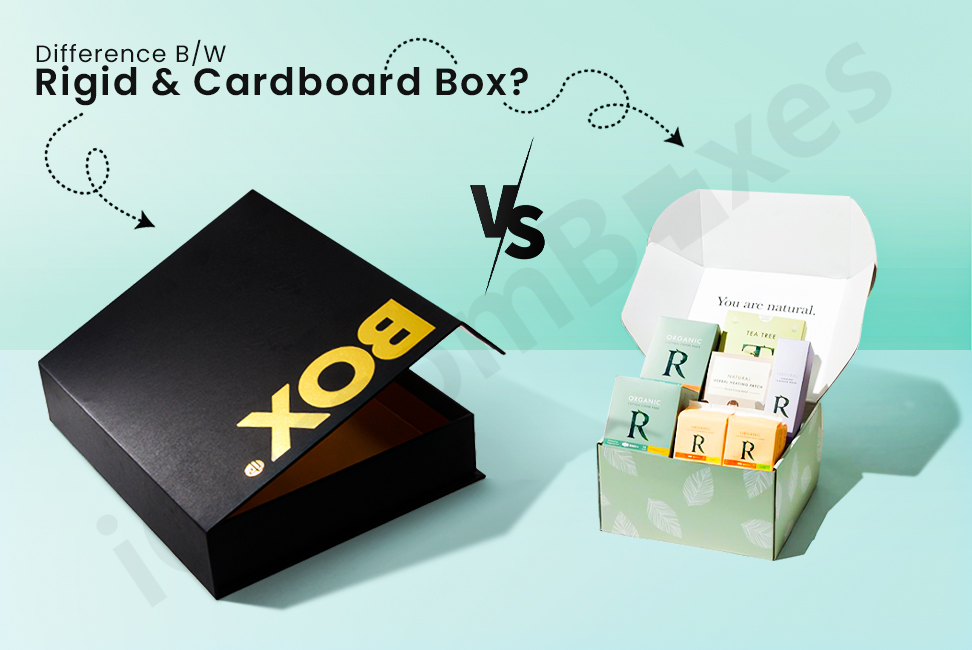
rigid box vs cardboard box
When buyers use the term ‘box packaging,’ they are typically describing one of two very different products: a rigid set-up box or a corrugated/folding carton cardboard box. These formats share a rectangular form factor but diverge substantially in construction, cost structure, performance characteristics, and commercial application.
Understanding what distinguishes them, and which is right for your specific requirements, is a prerequisite for making a sound packaging investment. This comparison covers the key dimensions: cost, protection, branding, and use-case fit.
Construction: Fundamentally Different Products
Rigid Boxes
Rigid boxes are manufactured from thick chipboard (typically 2mm–4mm) wrapped with a decorative paper, fabric, or specialty material. They are constructed in their final form and do not collapse flat.
The chipboard substrate provides inherent structural rigidity without requiring assembly. The exterior wrap is applied using adhesive, then finished with laminate, foil, or other treatments.
Cardboard Boxes
‘Cardboard boxes‘ encompasses two distinct formats. Folding cartons are die-cut and scored paperboard that ships flat and is assembled at point of use or by the brand prior to filling. Corrugated boxes add a fluted medium layer between two flat linerboards, providing cushioning and structural strength for shipping applications.
The structural properties of each format are fundamentally different: rigid boxes achieve their strength through material mass (thick chipboard); corrugated achieves it through geometry (the fluted medium acts as an arch structure, distributing loads laterally).
Cost Comparison
Rigid boxes cost meaningfully more than cardboard alternatives on a per-unit basis. The cost premium exists for structural reasons: more raw material (chipboard is denser than corrugated medium), more manufacturing steps (wrapping requires additional labor), and typically lower production volumes that preclude the scale economies available in high-volume corrugated production.
As a rough guide for planning purposes: a custom-printed corrugated box might cost $0.50–$2.50 per unit at standard volumes; a comparable rigid box in the same external dimensions might cost $3.00–$12.00 per unit.
These ranges are illustrative, actual pricing depends heavily on construction complexity, finish treatments, and order volume.
The per-unit premium of rigid boxes is justified when the packaging serves a brand function (premium unboxing, retail shelf differentiation, gift occasion) that generates downstream commercial value. It is not justified for commodity shipping applications where the box is opened, discarded, and never seen by the end consumer.
Protection Performance
Rigid boxes provide excellent protection against compression and mechanical damage for the products they contain. Their chipboard construction resists crushing, their wrapped exterior resists abrasion, and their tight lid-to-base tolerances prevent product movement during handling.
However, rigid boxes are typically not designed for the rigors of carrier transit without additional outer packaging. A rigid box shipped unprotected through UPS or FedEx will typically arrive with corners damaged or wrap abraded.
For e-commerce applications, rigid boxes are commonly placed inside corrugated outer packaging for transit protection.
Corrugated cardboard, by contrast, is specifically engineered for transit. Its fluted medium absorbs impact energy and resists compression forces from stacked cartons. For products that ship directly to consumers without inner-outer packaging separation, corrugated is the appropriate format.
Here’s what most buyers overlook: if your packaging needs to function as both the brand presentation and the transit container, you’re asking one package to do two different jobs.
Rigid boxes excel at brand presentation; corrugated excels at transit protection. Using corrugated as outer packaging for a rigid box inner package solves both requirements.
Branding and Consumer Experience
This is where rigid boxes dominate the comparison without qualification. The premium materials, surface finishes (matte, gloss, soft-touch, foil), dimensional treatments (embossing, debossing), and inherent structural quality of a rigid box communicate product value in a way that cardboard packaging cannot replicate.
Consumer research in the U.S. consistently shows that rigid box packaging increases perceived product value, improves unboxing experience ratings, and correlates with higher consumer willingness to pay.
For brands in categories where packaging is part of the product experience, fragrance, fine jewelry, luxury electronics, premium confections, this premium perception is commercially significant.
Custom-printed corrugated boxes have improved substantially in print quality, and well-designed corrugated packaging absolutely contributes to brand experience. But the ceiling on brand expression in corrugated is lower than in rigid. You can make a great corrugated box; you cannot make a corrugated box feel like a rigid box.
Environmental Profile
Corrugated cardboard has one of the highest recycling rates of any packaging material in the U.S., consistently above 90% through municipal recycling programs. It is also widely manufactured with recycled content. For brands with public sustainability commitments, corrugated is a straightforward choice.
Rigid boxes are typically recyclable but less consistently recycled in practice, some consumers discard them as waste rather than recycling, particularly when the box has a sentimental or aesthetic quality that encourages retention. Brands can encourage recycling through on-box labeling and consumer education.
Use Case Decision Framework
- Premium retail product, luxury category → Rigid box
- Gift occasion, unboxing experience matters → Rigid box
- E-commerce shipping, protection primary need → Corrugated cardboard
- Retail shelf product, cost efficiency priority → Folding carton
- Brand experience + transit protection needed → Rigid inner + corrugated outer
- Sustainability mandate, high recycling rate → Corrugated
Ordering Custom Rigid and Cardboard Boxes
Alpha Global Packaging offers custom rigid boxes and cardboard packaging options with flexible minimum order quantities for small businesses, e-commerce brands, and enterprise buyers. Custom sizing, full-color printing, and a range of finish options are available across both formats.
When requesting a quote, provide internal dimensions, quantity, finish requirements, and a description of the product being packaged. Physical samples are strongly recommended before committing to production quantities for either format.