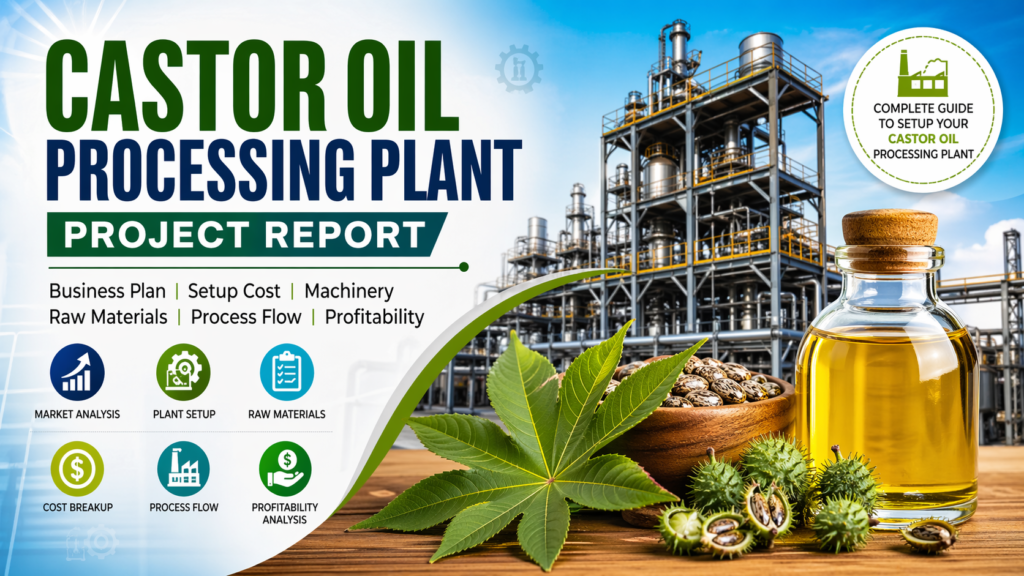
IMARC Group’s “Castor Oil Processing Plant Project Report 2026: Industry Trends, Plant Setup, Machinery, Raw Materials, Investment Opportunities, Cost and Revenue” report provides a comprehensive guide on how to successfully set up a processing plant. The castor oil processing plant cost report offers clarifications on various aspects, such as unit operations, raw material requirements, utility supply, infrastructural needs, machinery models, labour necessities, transportation timelines, packaging costs, etc.
In addition to the operational aspects, the report also provides in-depth insights into castor oil processing process, project economics, encompassing vital aspects such as capital investments, project funding, operating expenses, income and expenditure projections, fixed and variable costs, direct and indirect expenses, expected ROI, net present value (NPV), profit and loss account, and thorough financial analysis, among other crucial metrics. With this comprehensive roadmap, entrepreneurs and stakeholders can make informed decisions and venture into a successful castor oil processing unit.
What is Castor Oil?
Castor oil is a pale yellow, vegetable-based oil extracted from the seeds of the castor plant, scientifically known as Ricinus communis. It is rich in ricinoleic acid, a unique fatty acid that gives the oil its distinctive lubricating, moisturizing, and industrial properties. Castor oil is widely used across pharmaceutical, cosmetic, personal care, food, and industrial sectors due to its versatility and biodegradability. In healthcare, it is used in laxatives and medicinal formulations, while the beauty industry incorporates it into hair oils, skincare products, and cosmetics. Additionally, castor oil serves as a valuable raw material in the production of lubricants, coatings, plastics, and bio-based chemicals, supporting sustainable manufacturing practices.
Request a Sample Report: https://www.imarcgroup.com/castor-oil-processing-plant-project-report/requestsample
Market Trends and Drivers of Castor Oil:
The global castor oil market is witnessing robust growth, driven by increasing demand for bio-based and environmentally friendly products across various industries. Rising consumer preference for natural ingredients in cosmetics, personal care products, and pharmaceuticals is significantly boosting market expansion. The growing use of castor oil derivatives in lubricants, polymers, coatings, and biodiesel production further supports demand. Additionally, stringent environmental regulations encouraging the adoption of renewable raw materials are creating new growth opportunities. Technological advancements in castor oil processing and derivative manufacturing are enhancing product quality and application scope. Emerging economies, particularly in Asia-Pacific, are experiencing increased industrial consumption, while the expanding green chemicals sector continues to strengthen long-term market prospects. As sustainability becomes a key industrial focus, castor oil is expected to maintain strong growth momentum worldwide.
Key Aspects to Setup a Castor Oil Plant:
- Location to Setup Plant
- Market Research
- Plant Layout
- Construction and Infrastructure
- Equipment/Machinery Procurement
- Documentation and Licenses
- Cost Analysis
Requirements to Setup a Facility:
- Funds
- Machinery
- Lands
Types of Costs to Setup a Factory:
- Land, Location and Site Development Cost
- Plant Layout Cost
- Machinery Requirements and Costs
- Raw Material Requirements and Costs
- Packaging Requirements and Costs
- Transportation Requirements and Costs
- Utility Requirements and Costs
- Human Resource Requirements and Costs
Project Economics:
- Capital Investments
- Operating Costs
- Expenditure Projections
- Revenue Projections
- Taxation and Depreciation
- Profit Projections
- Financial Analysis
Key Questions Answered in the Report:
- What is a castor oil processing plant?
A facility where castor seeds are processed into oil through cleaning, crushing, extraction, and refining stages. - What are the raw materials required?
The primary raw material is castor seeds, along with chemicals for refining and packaging materials. - What is the manufacturing process of castor oil?
It includes seed cleaning, drying, pressing or solvent extraction, filtration, and refining. - What is the investment required for a castor oil plant?
Investment depends on plant capacity, machinery, and infrastructure, covering CapEx and OpEx. - What are the major applications of castor oil?
Used in pharmaceuticals, cosmetics, lubricants, paints, soaps, and bio-based chemicals. - Which industries drive demand for castor oil?
Pharmaceutical, personal care, chemical, and industrial lubricant sectors drive demand. - What are the key challenges in this business?
Price volatility of seeds, climatic dependency, and supply chain fluctuations. - What machinery is required for processing?
Cleaning units, expellers, solvent extractors, refining units, and filtration systems. - Is castor oil export-oriented?
Yes, especially in countries with strong production, exports contribute significantly to revenue. - What is the outlook of the castor oil market?
The market is expected to grow steadily due to rising demand for sustainable and bio-based products.
How IMARC Can Help?
IMARC Group is a global management consulting firm that helps the world’s most ambitious changemakers to create a lasting impact. The company provide a comprehensive suite of market entry and expansion services. IMARC offerings include thorough market assessment, feasibility studies, company incorporation assistance, factory setup support, regulatory approvals and licensing navigation, branding, marketing and sales strategies, competitive landscape and benchmarking analyses, pricing and cost research, and procurement research.
Contact Us:
IMARC Group
134 N 4th St. Brooklyn, NY 11249, USA
Email: sales@imarcgroup.com
Tel No:(D) +91 120 433 0800
United States: (+1-201971-6302)