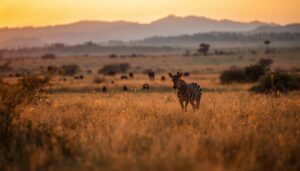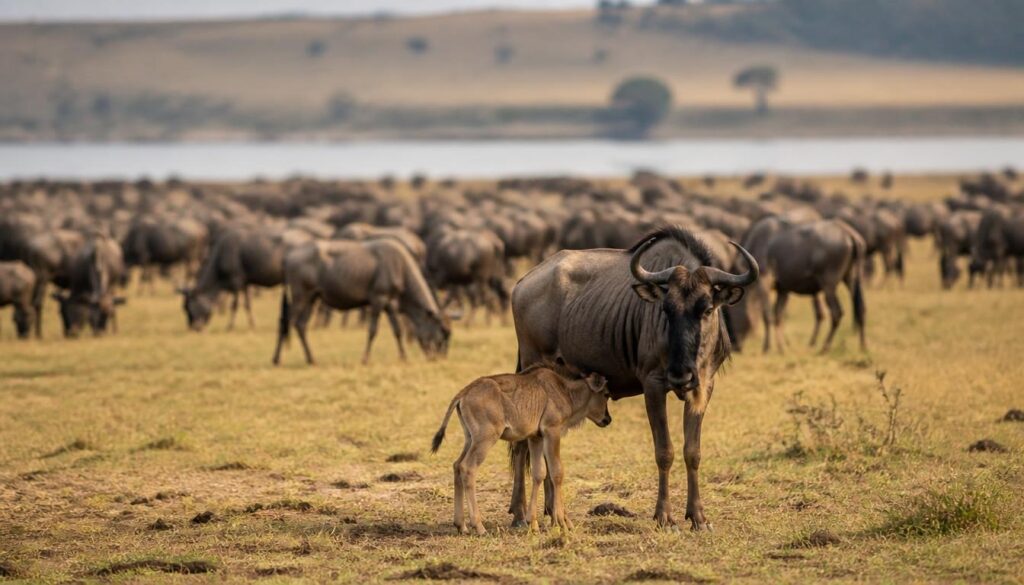
The Great Migration is one of the most extraordinary wildlife events on Earth, involving millions of wildebeest, zebras, and gazelles moving across the Serengeti ecosystem in search of fresh grazing land. Among all its phases, the calving season stands out as the most dramatic and biologically important stage of the cycle.
For wildlife enthusiasts and safari planners, using a wildebeest migration tracker has become an essential way to understand where herds are concentrated during this period and to anticipate the most active wildlife zones.
Understanding the Calving Season in the Great Migration
The calving season occurs mainly in the southern plains of the Serengeti, typically between January and March, when the short rains have created nutrient-rich grasslands.
During this time, over half a million wildebeest calves are born within a few weeks, making it one of the largest synchronized birthing events in the natural world.
This phase is not just about birth—it is a survival strategy. By giving birth in a short window, wildebeest increase the chances that calves will survive through sheer numbers, overwhelming predators.
Why the Calving Season Is So Unique
1. Massive Simultaneous Births
Unlike most animals, wildebeest give birth in a highly synchronized manner. Thousands of calves are born daily during peak calving weeks. This overwhelming number reduces individual predation risk, as predators cannot target every newborn.
2. Predator Activity Reaches Its Peak
The calving season attracts large numbers of predators such as lions, cheetahs, hyenas, and jackals. This creates one of the most intense predator-prey interactions in nature.
A reliable wildebeest migration tracker helps researchers and safari travelers identify predator hotspots during this period, making it easier to understand wildlife behavior patterns in real time.
3. Nutrient-Rich Grasslands Support New Life
The southern Serengeti plains provide fresh, short grass that is highly nutritious for lactating mothers. This ensures that calves grow quickly and gain strength within days of birth.
4. High Survival Strategy Through Numbers
Calving season is a survival strategy based on “safety in numbers.” With so many calves born at once, predators can only catch a small fraction, ensuring population stability for the species.
5. Critical Phase in Migration Tracking
This stage is one of the most important periods monitored by migration researchers. Modern wildebeest migration tracker systems use satellite data, field observations, and seasonal mapping to predict herd locations during calving.
This helps safari operators and conservationists plan routes and protect sensitive wildlife zones.
How Migration Tracking Enhances Safari Experiences
Using a wildebeest migration tracker allows travelers to:
- Identify peak calving zones in real time
- Plan safari visits during high wildlife activity
- Track predator-prey interactions more effectively
- Understand seasonal movement patterns
- Improve wildlife photography opportunities
This makes safaris more immersive and increases the chances of witnessing rare wildlife events like live births or predator hunts.
Connection to the Broader Great Migration Cycle
The calving season is only one phase of the Great Migration, but it plays a crucial role in shaping the entire cycle. After the calving period, herds gradually begin moving northward, eventually reaching the Maasai Mara and later returning to the Serengeti.
Tracking these movements using a wildebeest migration tracker provides valuable insights into how rainfall, grass growth, and predator pressure influence migration timing.
Final Thoughts
The calving season is the most emotionally powerful and biologically significant phase of the Great Migration. It combines life, survival, and natural selection in one of the most breathtaking wildlife events on the planet.
With modern tracking tools like a wildebeest migration tracker, both researchers and safari travelers can better understand and experience this incredible natural phenomenon in real time, making it easier to witness one of nature’s greatest survival stories.