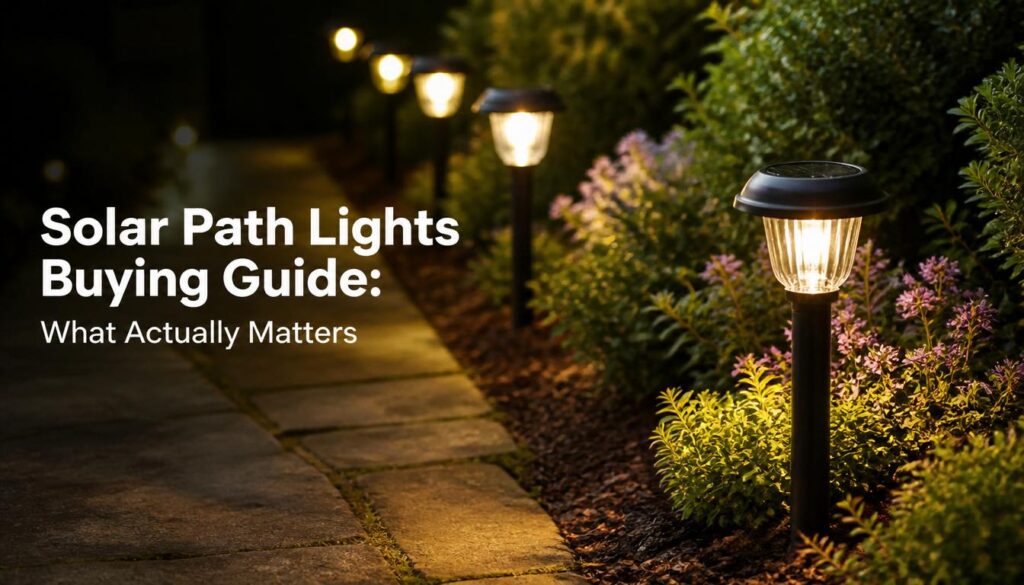
Solar path lights have become one of the most popular outdoor lighting solutions for homeowners who want to improve curb appeal, increase safety, and reduce energy costs. However, with hundreds of options available, choosing the right solar path lights can be challenging.
This buying guide explains what actually matters when shopping for solar path lights, helping you make a smart investment for your landscape.
Why Solar Path Lights Are Worth Considering
Unlike traditional wired lighting systems, solar path lights use sunlight to charge built-in batteries during the day and automatically illuminate pathways, gardens, and driveways at night. They require no electrical wiring, are easy to install, and offer long-term energy savings.
Modern solar-powered pathway lights are also more efficient than ever, thanks to improvements in LED technology, battery performance, and solar panel efficiency.
Key Factors to Consider When Buying Solar Path Lights
1. Brightness and Lumens
One of the first specifications to check is brightness, measured in lumens.
- 10–30 lumens: Decorative lighting
- 30–100 lumens: Walkways and garden paths
- 100+ lumens: Driveways and security-focused areas
If your goal is creating ambiance, lower-lumen solar path lights may be sufficient. For improved visibility and safety, choose brighter models with higher lumen output.
2. Battery Quality and Runtime
The battery determines how long your lights stay illuminated after sunset.
Look for:
- Lithium-ion batteries
- Rechargeable battery systems
- Runtime of 8–12 hours per charge
Higher-quality batteries typically provide more consistent performance throughout the year, especially during shorter winter days.
3. Solar Panel Efficiency
Not all solar panels are created equal.
High-efficiency solar panels charge faster and perform better in partially shaded conditions. Monocrystalline solar panels are generally considered superior to polycrystalline alternatives because they capture sunlight more effectively.
4. Weather Resistance
Outdoor solar lights must withstand rain, heat, wind, and occasional storms.
Check for:
- Waterproof construction
- Rust-resistant materials
- UV-resistant finishes
- IP65 or higher weatherproof ratings
Weather-resistant solar path lights tend to last significantly longer and require less maintenance.
5. Material Quality
Durability often depends on construction materials.
Common options include:
- Stainless steel
- Aluminum
- Heavy-duty ABS plastic
- Powder-coated metal finishes
Premium materials not only improve longevity but also enhance the overall appearance of your landscape lighting.
6. Design and Style
Today’s solar landscape lighting comes in a variety of styles.
Popular options include:
- Modern minimalist designs
- Vintage lantern-style lights
- Decorative garden lights
- Contemporary LED pathway lights
Choose a style that complements your home’s architecture and outdoor space.
7. Automatic Dusk-to-Dawn Operation
Most quality solar path lights feature built-in light sensors that automatically turn lights on at dusk and off at sunrise.
This feature improves convenience while maximizing battery efficiency.
8. Installation Simplicity
One of the biggest advantages of solar path lights is easy installation.
Look for products that:
- Require no wiring
- Include ground stakes
- Offer tool-free setup
- Can be repositioned easily
Flexible installation makes it easier to adjust lighting layouts as your landscaping evolves.
Common Mistakes Buyers Make
Ignoring Sunlight Exposure
Even the best solar path lights perform poorly if installed in heavily shaded areas.
Before purchasing, evaluate how many hours of direct sunlight your installation location receives each day.
Focusing Only on Price
Cheaper models may save money initially but often have weaker batteries, lower-quality LEDs, and reduced weather resistance.
Investing in higher-quality solar outdoor lighting usually provides better long-term value.
Buying Lights That Are Too Dim
Many homeowners underestimate the brightness needed for safe nighttime navigation.
Always consider your intended purpose before selecting lumen levels.
Best Locations for Solar Path Lights
Solar path lights work well in:
- Front walkways
- Garden paths
- Driveways
- Flower bed borders
- Patio edges
- Backyard trails
- Landscape features
Strategic placement creates a welcoming atmosphere while improving visibility and safety.
Maintenance Tips for Long-Term Performance
To maximize performance:
- Clean solar panels regularly
- Remove dirt and debris buildup
- Replace rechargeable batteries when needed
- Check for shading from growing plants
- Inspect fixtures after severe weather
Routine maintenance can significantly extend the lifespan of your solar-powered lighting system.
Final Thoughts
When choosing solar path lights, brightness, battery quality, solar panel efficiency, weather resistance, and overall durability matter far more than flashy marketing claims. The best solar path lights provide reliable illumination, withstand outdoor conditions, and complement your landscape design while reducing energy consumption.
By focusing on these essential factors, homeowners can confidently select solar path lights that deliver both performance and long-term value for years to come.