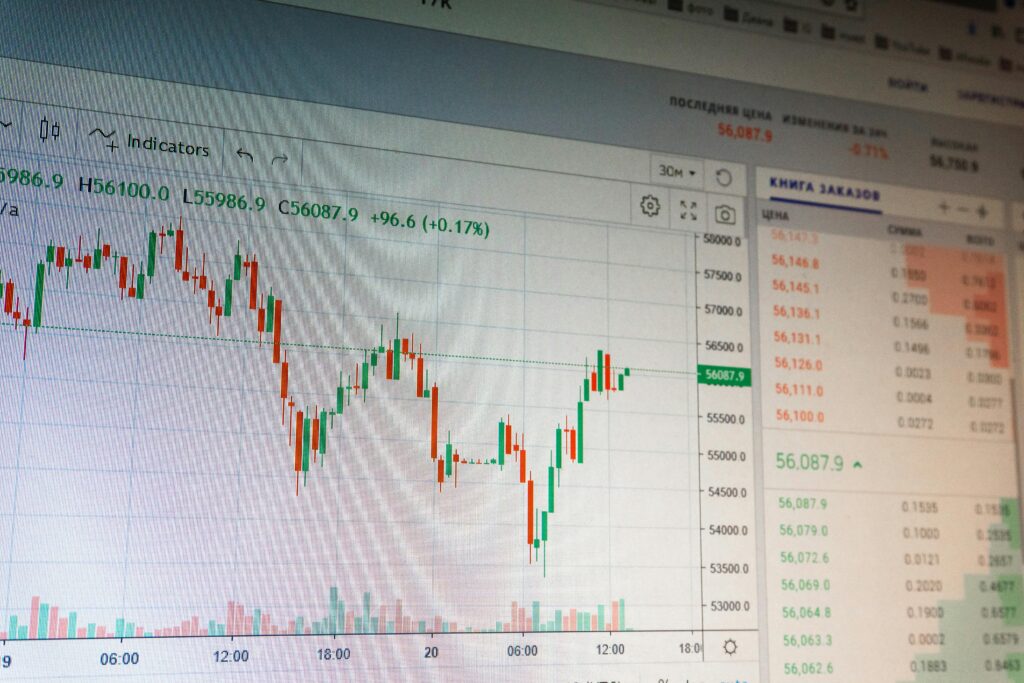
If you’re asking what are CFDs, you’re already asking the right question. Contract for Difference (CFD) trading is widely promoted as a flexible way to access global markets, but it’s also one of the most misunderstood and high-risk forms of retail trading.
This guide answers the most common questions about CFDs straightforwardly, including how they work, what they cost, and why many traders struggle with them.
1. What are CFDs?
CFDs (Contracts for Difference) are financial derivatives that allow you to speculate on price movements across various financial instruments and markets without owning the underlying asset. These include Forex (FX), stocks, indices, and commodities.
In CFD trading, you’re not buying stocks, oil, or currencies—you’re entering a contract with a broker to exchange the difference in price between when you open and close a trade. If the price moves in your favor, you profit from the difference. If it moves against you, you take a loss.
2. How does CFD trading work?
CFD trading works by choosing whether you think a market will go up or down.
- If you “buy” (go long), you profit if the price rises
- If you “sell” (go short), you profit if the price falls
Your profit or loss depends on:
- the size of your position
- how far the market moves
- whether leverage is used
Because CFDs are leveraged, you only need a small deposit (margin) to control a larger position.
3. What are the main costs involved in CFD trading?
CFD trading comes with costs which traders should know before building their strategies. These include:
- Spread (difference between buy and sell price)
- Commission (charged on some instruments like stocks)
- Overnight fees (holding positions beyond a trading day)
- Slippage (difference between expected and actual execution price in fast markets)
These costs may seem small individually, but they add up—especially for frequent traders.
4. What is the Bid/Ask Spread?
The bid/ask spread is the difference between:
- Bid price: what buyers are willing to pay
- Ask price: what sellers are asking for
When you open a CFD trade, you typically enter at the ask (buy) or bid (sell), meaning you start slightly in the loss equal to the spread. The market must move in your favor just to break even.
5. What is a Stop-Loss?
A stop-loss is a risk management tool that automatically closes your trade at a pre-set price level to limit losses.
For example: If you buy a CFD at 100 and set a stop-loss at 95, your position will close if the price falls to 95.
Used properly, stop-losses are one of the most important tools in CFD trading because they prevent emotional decision-making and uncontrolled losses.
6. What is a Margin Call and how do I avoid it?
A margin call happens when your account equity falls below the required margin to keep your positions open.
If this happens, your broker may ask you to deposit more funds, or automatically close positions to reduce risk.
To avoid margin calls, enforce strict position-sizing parameters:
- use lower leverage
- keep sufficient free margin
- set stop-losses
- avoid overexposing your account to a single trade
7. How to hedge using CFDs?
A key advantage of CFD trading is the ability to hedge an existing portfolio against short-term market volatility. Hedging is used to reduce downside risk by opening positions that offset potential losses, even if it means capping some upside gains in the process.
- If you hold stocks, you can sell a CFD on the same stock or index to protect against price drops
- If you expect short-term volatility, you can short a CFD while keeping your long-term position
- The CFD profit can help offset losses in your main portfolio
Key idea: you’re not trying to make profit from the hedge—you’re trying to reduce downside risk.
8. Can I trade CFDs using a Demo Account?
Yes. Most CFD brokers offer demo accounts that simulate real market conditions using virtual money.
Demo trading is useful for:
- learning platform mechanics
- testing strategies
- understanding risk and leverage
However, demo trading does not replicate emotional pressure, which is a major factor in real trading performance.
9. What is leverage, and how does it affect my capital?
Leverage allows you to control a larger position with a smaller amount of money.
For example:
- 10:1 leverage means $100 can control a $1,000 position
While leverage increases potential profits, it also magnifies losses by the same factor. Small market moves can have a large impact on your account.
This is one of the main reasons CFD trading is considered high risk.
10. Can I trade CFDs without leverage?
Technically, yes. Some brokers allow low or zero-leverage trading, meaning your position size matches your actual capital.
However, CFDs are designed as leveraged products, so most traders use at least some level of leverage to make trades meaningful relative to capital.
11. What is the difference between a CFD and a futures contract?
Both CFDs and futures are derivatives, but they differ in structure:
- CFDs: OTC (over-the-counter), flexible sizing, no expiry, broker-based pricing
- Futures: exchange-traded, standardized contracts, fixed expiry dates, central clearing
Futures are generally more regulated and standardized, while CFDs offer more accessibility and flexibility for retail traders.
12. Is CFD trading legal everywhere?
No. CFD trading is not available in all countries.
For example:
- In the United States, retail CFD trading is prohibited under financial regulations
- In the UK, EU, and Australia, CFDs are legal but heavily regulated
- In other regions, availability depends on local laws and broker licensing
Always check whether your broker is regulated in your jurisdiction.
13. Is CFD trading risky?
Yes, CFD trading carries a very high risk profile. The combination of structural leverage, OTC counterparty exposure, rapid price volatility, and daily compounding financing fees creates a fast-moving trading environment where retail accounts can experience swift capital depletion.
In regulated markets, brokers are required to disclose that a large percentage of retail traders lose money.
14. Why do most retail traders lose money on CFDs?
Independent regulatory tracking disclosures show that between 74% and 89% of retail CFD accounts consistently lose capital. This high failure rate stems from identifiable trading mistakes:
- Aggressive Over-Leveraging: Utilizing maximum allowable leverage tiers on small deposits, causing minimal market fluctuations to clear out entire accounts.
- Poor Emotional Control: Overtrading, removing stop-losses on losing positions out of hope, or chasing market moves.
- Broker Conflict of Interest: Trading via low-tier, unregulated “market-maker” brokers that profit directly off client losses.
Practical Mitigations: Trade exclusively with Tier-1 regulated counterparties (e.g., FCA, ASIC, CySEC). Treat trading as a statistical probability model, use guaranteed stops, and establish a firm, rule-based trading plan before placing real capital at risk.
15. Is CFD good for beginners?
No, CFDs are generally not ideal for beginners who are completely new to financial markets because of leverage and complexity.
However, beginners can reduce risk by:
- starting with a demo account
- using low leverage
- focusing on education first, not profit
- risking only small amounts per trade
- learning basic risk management before trading live
CFDs are not inherently unsuitable—but they require preparation, discipline, and realistic expectations.
Trading With a Plan
If you’re going to trade CFDs, start with education before execution, risk management before profit targets, and consistency before speed. The traders who survive long enough to improve are the ones who treat capital like something to protect, not something to chase.
Start small, stay disciplined, and focus on understanding the markets before trying to beat them.
Author Bio: Carmina Natividad is a resident writer for FP Markets, a globally recognised Forex and CFD broker based in Australia, offering traders access to a wide range of financial markets, advanced trading platforms, and competitive trading conditions. She creates informative, easy-to-follow content on trading, investing, and personal finance, helping readers navigate the markets with confidence.