How to Properly Size an AC Unit? Air Conditioning Service Tucson
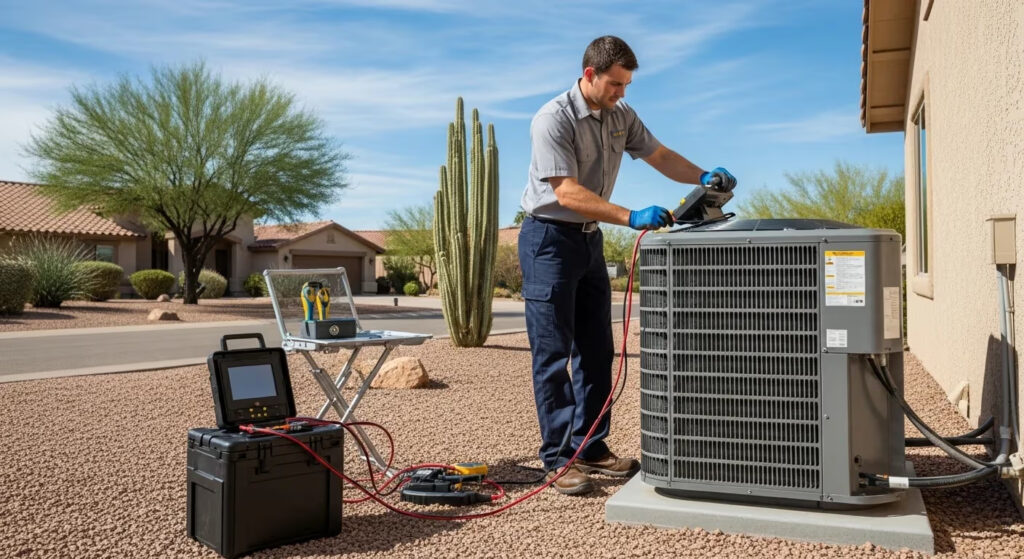
Choosing the right air conditioner size is one of the most important decisions a homeowner can make. While many people assume that bigger is always better, an oversized or undersized system can create comfort issues, increase utility costs, and shorten equipment lifespan. That’s why professional air conditioning service Tucson providers use detailed calculations to determine the correct size for every home.
Understanding how AC sizing works can help you make informed decisions when replacing or installing a new HVAC system.
Why AC Sizing Matters
Your air conditioner must be large enough to keep your home comfortable without being so large that it wastes energy. Proper sizing directly affects your home’s comfort, energy efficiency, and long-term HVAC performance.
An incorrectly sized AC unit can lead to the following:
- Uneven temperatures throughout the home
- Increased utility costs
- Excessive wear and tear
- Reduced equipment lifespan
- Poor humidity control
- Frequent repairs
Whether you’re installing a traditional air conditioner or a heat pump, proper sizing is essential.
Bigger Isn’t Always Better
Many homeowners mistakenly believe a larger unit will cool their home faster and more efficiently. In reality, an oversized system can create several problems.
When an AC unit is too large, it tends to short cycle, meaning it turns on and off frequently. While the home may cool quickly, the system doesn’t run long enough to remove humidity effectively. This can leave your home feeling damp and uncomfortable.
Frequent cycling also causes unnecessary wear and tear on components, increasing maintenance and repair costs over time.
Problems With an Undersized AC Unit
An undersized system has the opposite problem. It runs continuously trying to reach the desired temperature but struggles to keep up during hot weather.
This can result in:
- Poor cooling performance
- Higher energy consumption
- Increased stress on the system
- Reduced comfort levels
- Premature equipment failure
A properly sized HVAC unit strikes the perfect balance between performance and efficiency.
How HVAC Professionals Determine AC Size
Professional HVAC contractors don’t rely solely on the home’s square footage. Instead, they perform detailed load calculations to determine the exact cooling requirements.
These calculations consider several factors, including:
Total Square Footage
The home’s total square footage provides a starting point for determining cooling needs. Larger homes generally require more cooling capacity than smaller ones.
However, square footage alone isn’t enough to accurately size an HVAC system.
Climate Zone
Your geographic climate zone significantly affects cooling requirements. Homes in Tucson experience much higher cooling demands than homes in milder climates.
Because of Tucson’s extreme summer temperatures, professional sizing becomes especially important.
Insulation and Windows
The quality of your home’s insulation and the number of windows can greatly impact heat gain. Poor insulation allows more heat to enter, increasing cooling demands.
Large windows, particularly those facing west, can also raise indoor temperatures.
Heat-Generating Appliances
Heat-generating appliances such as ovens, dryers, computers, and electronics contribute additional heat to your home.
Load calculations account for these factors to ensure accurate sizing.
Occupancy
The number of people living in the home also affects cooling needs. More occupants generate additional body heat, increasing the workload on the HVAC system.
Understanding Cooling Capacity
Air conditioners are rated according to their cooling capacity, typically measured in tons or BTUH British Thermal Units per Hour).
One ton of cooling equals approximately 12,000 BTUH.
For example:
- 2-ton unit = 24,000 BTUH
- 3-ton unit = 36,000 BTUH
- 4-ton unit = 48,000 BTUH
The proper cooling capacity depends on the home’s specific characteristics rather than simply its size.
The Role of the Outdoor Unit
The outdoor unit plays a critical role in the cooling process. It releases heat collected from inside your home and works together with indoor components to maintain comfort.
For maximum performance, the outdoor unit must be properly matched to the indoor equipment. Installing mismatched components can reduce efficiency and increase operating costs.

Different Types of HVAC Systems
Several types of systems are available for residential cooling:
Split System Air Conditioners
Split system air conditioners are the most common option for homeowners. These systems include an indoor evaporator coil and an outdoor condenser unit.
They provide reliable cooling and are available in a wide range of sizes.
Heat Pumps
A heat pump offers both heating and cooling from a single system. Instead of generating heat, it transfers heat between the indoors and outdoors.
Heat pumps are highly energy-efficient and increasingly popular in warm climates like Tucson.
Why Professional Sizing Is Important
Many online calculators estimate AC size based solely on square feet, but these tools can’t account for all the factors that influence cooling requirements.
Professional load calculations evaluate:
- Home orientation
- Insulation levels
- Window placement
- Air leakage
- Occupancy
- Local weather conditions
This comprehensive approach ensures your HVAC system delivers optimal comfort and efficiency.
Also Read: AC Repair vs. Replacement: AC Service Tucson Guide
Long-Term Benefits of Proper AC Sizing
Choosing the correct AC size offers several advantages:
Improved Comfort
A properly sized system keeps all areas of the home consistently heated and cooled without hot or cold spots.
Lower Energy Costs
An efficiently sized unit avoids excessive operation and reduces higher energy consumption.
Longer Equipment Life
Systems that operate under normal conditions experience less stress, resulting in fewer breakdowns and longer service life.
Better Indoor Humidity Control
Proper run times help remove excess moisture from indoor air, improving overall comfort.
Final Thoughts
Selecting the right air conditioner size is about much more than your home’s square foot measurements. Factors such as climate, insulation, occupancy, and appliance usage all affect cooling requirements.
Professional air conditioning service Tucson providers use detailed load calculations to determine the ideal system size for your home. Whether you’re considering traditional split system air conditioners or a modern heat pump, proper sizing ensures comfort, efficiency, and long-term performance.
Investing in the right-sized HVAC system today can save money, reduce repairs, and provide reliable comfort for years to come.
Frequently Asked Questions
How do I know if my AC unit is too large?
An oversized AC unit will often short cycle, turning on and off frequently. It may cool quickly but struggle to control indoor humidity.
Can I size an AC unit based only on square footage?
No. While square footage is important, professionals also consider insulation, windows, occupancy, climate, and other factors through detailed load calculations.
What is BTUH in air conditioning?
BTUH (British Thermal Units per Hour) measures the cooling capacity of an air conditioner. Higher BTUH ratings indicate greater cooling power.
Is a heat pump sized differently than an air conditioner?
The sizing process is similar, but a heat pump must meet both heating and cooling demands, requiring careful evaluation by an HVAC professional.
How often should I replace my AC system?
Most systems last 10–15 years with proper maintenance. If your unit requires frequent repairs or struggles to cool effectively, replacement may be the better option.