Introduction
The treatment landscape for EGFR-mutated non-small cell lung cancer (NSCLC) has evolved dramatically over the past decade. The introduction of third-generation EGFR tyrosine kinase inhibitors (TKIs), particularly Osimertinib, transformed first-line treatment by improving progression-free survival, central nervous system (CNS) control, and overall tolerability compared with earlier-generation EGFR inhibitors.
However, the oncology community has continued to ask an important question:
Can outcomes be improved even further by combining targeted therapy with chemotherapy from the beginning of treatment?
The FLAURA2 trial was designed to answer that question.
With updated survival data presented in 2026, FLAURA2 is reshaping discussions around optimal first-line treatment strategies for patients with EGFR-mutated advanced NSCLC.
At Curiance Biotech, we closely follow developments in targeted oncology therapies because evolving clinical evidence directly influences treatment access discussions among patients, oncologists, healthcare institutions, and procurement teams worldwide.
This article reviews the FLAURA2 findings, their clinical significance, and what they may mean for the future of EGFR-mutated lung cancer management.
A Brief Background: The Success of FLAURA
Before discussing FLAURA2, it is important to understand the impact of the original FLAURA trial.
Published in 2018, FLAURA established Osimertinib as the preferred first-line treatment for patients with:
- EGFR Exon 19 deletion mutations
- EGFR Exon 21 L858R mutations
Compared with first-generation EGFR TKIs such as:
- Erlotinib
- Gefitinib
Osimertinib demonstrated:
- Superior progression-free survival
- Improved overall survival
- Better CNS penetration
- Improved tolerability
These findings fundamentally changed international treatment guidelines and established Osimertinib as the global standard of care.
Why FLAURA2 Was Needed
Although Osimertinib improved outcomes substantially, resistance remains inevitable in most patients with advanced disease.
Researchers therefore explored whether combining Osimertinib with platinum-based chemotherapy from the outset could:
- Delay resistance
- Improve survival outcomes
- Increase duration of disease control
- Enhance CNS protection
Historically, combining targeted therapy with chemotherapy was not always successful.
However, improved understanding of tumour biology and resistance mechanisms provided a rationale for revisiting this approach.
This led to the development of the FLAURA2 study.
FLAURA2 Trial Design
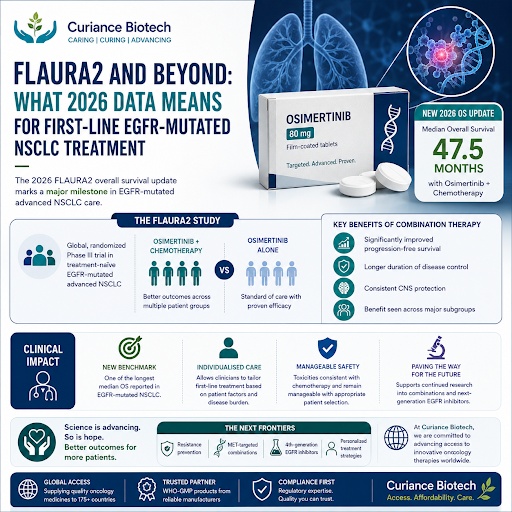
FLAURA2 was a global, randomised Phase III trial evaluating:
Arm A
Osimertinib plus platinum-based chemotherapy
Arm B
Osimertinib alone
Eligible patients included those with:
- Newly diagnosed advanced or metastatic EGFR-mutated NSCLC
- Exon 19 deletion mutations
- Exon 21 L858R mutations
The study aimed to determine whether adding chemotherapy to standard Osimertinib therapy could improve outcomes compared with Osimertinib alone.
Key Findings from FLAURA2
Improved Progression-Free Survival
Initial FLAURA2 results demonstrated a substantial improvement in progression-free survival (PFS) for patients receiving combination therapy.
The addition of chemotherapy delayed disease progression compared with Osimertinib monotherapy.
This suggested that combination treatment may help suppress resistant cancer cell populations earlier in the disease course.
Enhanced Disease Control
Patients receiving combination therapy experienced longer periods before disease progression occurred.
This translated into:
- Greater treatment durability
- Extended tumour control
- Reduced early relapse risk
Consistent Benefit Across Subgroups
Importantly, the benefit appeared consistent across multiple patient populations, including:
- Exon 19 deletion patients
- L858R mutation patients
- Patients with CNS involvement
- Various age groups
The 2026 Overall Survival Update
The most anticipated aspect of FLAURA2 was whether progression-free survival improvements would ultimately translate into overall survival benefits.
The 2026 update provided encouraging evidence.
Patients receiving Osimertinib plus chemotherapy demonstrated:
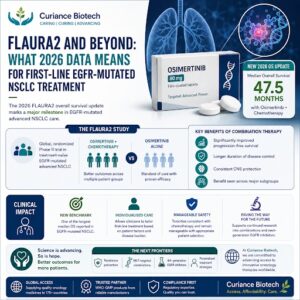
Median Overall Survival of 47.5 Months
This represents one of the longest median survival outcomes reported in advanced EGFR-mutated NSCLC.
While cross-trial comparisons should always be interpreted cautiously, these results reinforce the potential value of intensifying first-line treatment in selected patients.
Potential Impact on Long-Term Outcomes
The findings suggest that early combination therapy may:
- Delay resistance development
- Extend survival
- Improve disease control across multiple organ systems
These observations are likely to influence future treatment guidelines and clinical decision-making.
CNS Disease Remains a Major Focus
One of Osimertinib’s most important advantages remains its ability to cross the blood-brain barrier.
Brain metastases are a significant concern in EGFR-mutated NSCLC.
FLAURA2 provided additional reassurance that combining chemotherapy with Osimertinib does not compromise CNS activity.
Patients with brain metastases at baseline appeared to derive meaningful benefit from combination therapy, reinforcing Osimertinib’s central role in managing CNS disease.
For oncologists, this remains a particularly important consideration when selecting first-line treatment strategies.
Which Patients May Benefit Most?
Not every patient will necessarily require combination therapy.
Clinical decision-making remains highly individualised.
Potential candidates for intensified first-line treatment may include:
Patients with High Disease Burden
Extensive metastatic disease may justify a more aggressive initial approach.
Patients with Baseline Brain Metastases
These patients often face higher progression risks and may benefit from maximising disease control early.
Younger, Fit Patients
Individuals able to tolerate chemotherapy may be better positioned to receive combination therapy safely.
Patients Prioritising Maximum Disease Control
Some patients may accept additional short-term toxicity in exchange for the possibility of prolonged disease control.
Ultimately, treatment selection should remain a shared decision between patient and oncologist.
Balancing Benefits Against Toxicity
As expected, adding chemotherapy increased treatment-related adverse events.
Common chemotherapy-related toxicities included:
- Fatigue
- Nausea
- Myelosuppression
- Reduced blood counts
- Hair thinning or loss
Importantly, the overall safety profile remained manageable and generally consistent with known chemotherapy toxicities.
The decision to use combination therapy therefore requires careful consideration of:
- Patient fitness
- Comorbidities
- Treatment goals
- Quality-of-life priorities
For some patients, Osimertinib monotherapy may remain the preferred approach.
Implications for Clinical Practice
The FLAURA2 data are unlikely to eliminate Osimertinib monotherapy as a standard treatment option.
Instead, they expand the available treatment framework.
Clinicians now have stronger evidence supporting two evidence-based approaches:
Option 1
Osimertinib monotherapy
Option 2
Osimertinib plus platinum-based chemotherapy
This increased flexibility allows treatment plans to be tailored more closely to individual patient circumstances.
As guideline committees review the updated evidence, treatment recommendations may continue to evolve.
What Comes Next?
The future of EGFR-mutated NSCLC treatment continues to move toward combination strategies.
Areas of ongoing research include:
Resistance Prevention
Developing approaches that delay or prevent acquired resistance.
MET-Targeted Combinations
Addressing common bypass resistance pathways.
Fourth-Generation EGFR Inhibitors
Targeting resistance mutations such as C797S.
Antibody-Drug Conjugates (ADCs)
Combining targeted delivery with potent anticancer agents.
Personalised Combination Therapy
Using molecular profiling to guide individualised treatment selection.
The success of FLAURA2 may accelerate interest in these next-generation strategies.
Access Considerations
As treatment strategies become increasingly sophisticated, access remains a critical issue.
Advanced targeted therapies have transformed outcomes, but availability continues to vary significantly across healthcare systems and geographic regions.
At Curiance Biotech, we frequently observe how differences in reimbursement systems, regulatory approvals, and supply pathways can influence treatment access.
Ensuring that scientific progress translates into real-world patient benefit remains one of the oncology community’s most important challenges.
Conclusion
The 2026 FLAURA2 data represent an important milestone in the treatment of EGFR-mutated NSCLC.
By demonstrating meaningful survival benefits from combining Osimertinib with platinum-based chemotherapy, the study provides strong evidence that first-line treatment can potentially be improved beyond targeted therapy alone.
While Osimertinib remains the foundation of treatment, clinicians now have additional evidence to support more individualised treatment strategies based on patient characteristics, disease burden, and treatment goals.
As research continues to advance, FLAURA2 may ultimately be remembered as a pivotal step toward the next generation of precision oncology—one where targeted therapy remains central but increasingly works in combination with complementary approaches to maximise patient outcomes.
For healthcare professionals, procurement teams, and industry stakeholders, the message is clear:
The standard of care continues to evolve, and staying informed about emerging evidence will remain essential for delivering optimal patient care.