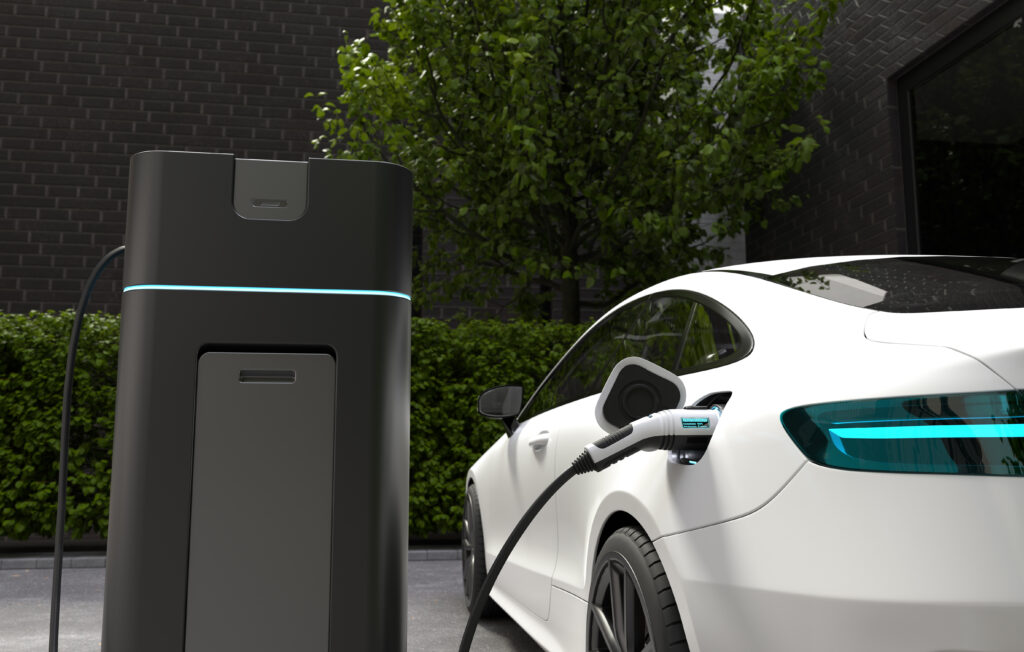
Electric car charging at home, Clean energy filling technology. 3D illustration
India’s automobile industry is undergoing a historic transformation, with electric vehicles (EVs) emerging as the future of mobility. As adoption accelerates, the spotlight has shifted to charging infrastructure — the backbone of sustainable EV growth. While India has made commendable progress, the road ahead is filled with both challenges and opportunities. For stakeholders ranging from policymakers to real estate developers like Pune Realty, understanding this landscape is crucial.
The Current State of EV Charging in India
- Rapid EV Adoption: India registered 2.3 million EVs in 2025, accounting for 8% of new vehicle registrations. This marks a sharp rise from 1.95 million in 2024.
- Charging Infrastructure Growth: Public chargers grew from ~5,000 in 2022 to nearly 39,500 by late 2025, including 8,414 fast chargers. Despite this growth, the ratio remains skewed — one charger per 235 EVs, far higher than global benchmarks.
- Government Push: Policies like FAME-II and state-level EV incentives have accelerated deployment, but fragmented planning and uneven distribution remain concerns.
Key Challenges
- Infrastructure Readiness
India’s grid capacity is under strain. EV charging requires stable electricity supply, but many regions face power shortages. Without robust grid upgrades, large-scale EV adoption could overwhelm existing systems.
- High Costs & Economics
Setting up fast-charging stations involves significant capital expenditure. Land acquisition, equipment costs, and maintenance make profitability difficult, especially in low-demand areas.
- Fragmented Planning
Different states and private players are deploying chargers without unified standards. This leads to inconsistent user experiences and interoperability issues.
- Urban vs Rural Divide
While metros like Pune, Mumbai, and Delhi see rapid charger installations, rural areas lag behind. This imbalance discourages EV adoption outside urban centers.
- Consumer Confidence
Range anxiety persists. Without visible and reliable charging networks, many potential buyers hesitate to switch from petrol/diesel vehicles.
Opportunities Ahead
- Integration with Real Estate
Developers like Pune Realty can play a pivotal role by integrating EV charging stations into residential complexes, office spaces, and malls. This not only adds value to properties but also ensures convenience for residents.
- Public-Private Partnerships (PPP)
Collaboration between government and private firms can accelerate deployment. Subsidies, tax breaks, and shared investments can make charging infrastructure financially viable.
- Smart Charging & Renewable Energy
Leveraging solar and wind energy for EV charging reduces grid dependency. Smart charging systems can balance loads, optimize energy use, and lower costs.
- Fleet & Commercial Adoption
Logistics companies, cab aggregators, and delivery services are increasingly adopting EVs. Dedicated fleet charging hubs present a lucrative opportunity for infrastructure providers.
- Technology Innovations
Wireless charging, battery swapping, and ultra-fast chargers are emerging solutions. India’s tech ecosystem can drive innovation tailored to local needs.
Pune’s Role in EV Infrastructure
Pune, being both an IT hub and a growing real estate market, is uniquely positioned to lead India’s EV revolution. With projects like World Trade Center Pune and luxury residences such as Presidential Towers, integrating EV-ready infrastructure can set new benchmarks. Pune Realty and other developers can differentiate themselves by offering:
- EV-ready parking spaces in residential complexes.
- Charging hubs in commercial zones.
- Partnerships with automobile companies for exclusive charging solutions.
This synergy between real estate and EV infrastructure ensures that Pune remains at the forefront of sustainable urban development.
The Road Ahead
India aims for 30% EV adoption by 2030. Achieving this requires:
- Policy Alignment: Unified national standards for chargers and payment systems.
- Investment Incentives: Encouraging private players through subsidies and tax benefits.
- Consumer Awareness: Campaigns to reduce range anxiety and promote EV benefits.
- Urban Planning: Mandating EV charging provisions in new real estate projects.
Conclusion
EV charging infrastructure in India is at a critical juncture. While challenges like grid readiness, costs, and uneven distribution persist, opportunities in real estate integration, renewable energy, and fleet adoption are immense. For developers such as Pune Realty, embracing EV infrastructure is not just a business opportunity but a step toward shaping India’s sustainable future.