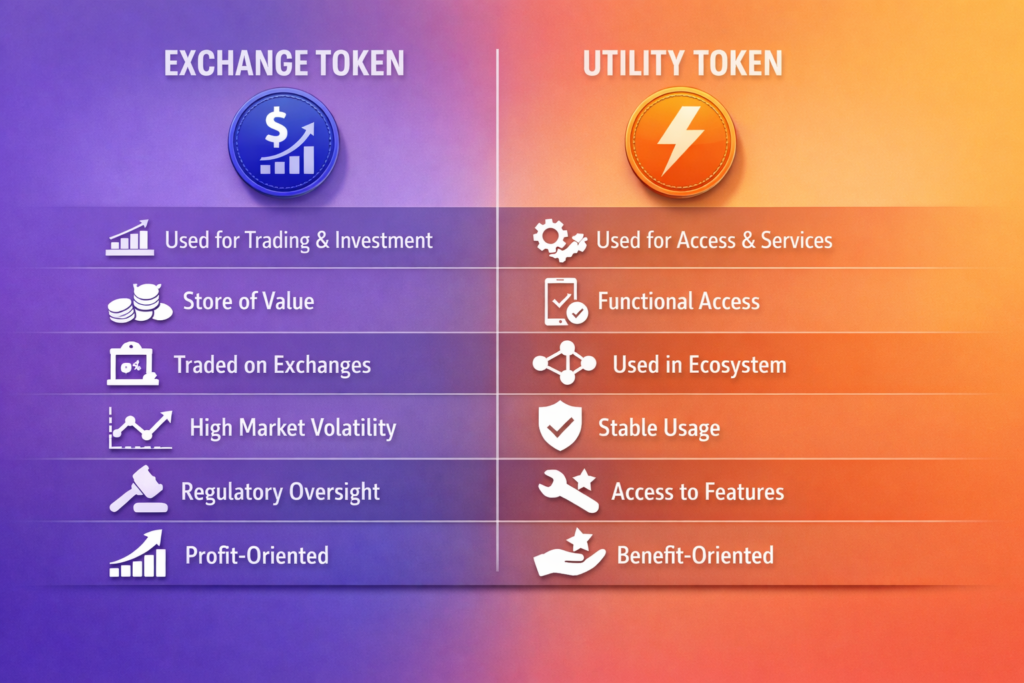
The cryptocurrency ecosystem is vast and constantly evolving, introducing new concepts that can be confusing for beginners and even experienced investors. Among the most commonly discussed digital assets are Exchange Tokens and Utility Tokens. While both serve important roles in the blockchain world, they differ significantly in purpose, functionality, and value creation.
In this comprehensive guide, we will explore Exchange Token vs Utility Token, explain how they work, how they gain value, and what the future of Exchange Tokens and Utility Tokens looks like.
What Are Exchange Tokens?
Exchange Tokens are cryptocurrencies issued by centralized or decentralized crypto exchanges. These tokens are designed to enhance the functionality of the exchange and provide benefits to users who hold them.
Key Features of Exchange Tokens
-
Used within a specific trading platform
-
Offer discounts on trading fees
-
Provide access to exclusive features or services
-
Often used for staking or rewards
-
May grant voting or governance rights
Examples of Exchange Tokens
Some popular exchange tokens include:
-
Binance Coin (BNB)
-
KuCoin Token (KCS)
-
Huobi Token (HT)
These tokens are tightly connected to the performance and popularity of the exchange that issues them.
What Are Utility Tokens?
Utility Tokens are digital assets designed to provide access to a product, service, or feature within a blockchain ecosystem. They are not primarily meant to be investments but rather tools that power decentralized platforms.
Key Features of Utility Tokens
-
Provide access to a platform or service
-
Used for transactions within an ecosystem
-
Enable participation in decentralized applications (dApps)
-
Support smart contract functionality
-
Often required for network operations
Examples of Utility Tokens
Some well-known utility tokens include:
-
Ethereum (ETH) – used for gas fees
-
Chainlink (LINK) – powers oracle networks
-
Filecoin (FIL) – used for decentralized storage
Exchange Token vs Utility Token: Key Differences
Understanding the difference between Exchange Token vs Utility Token is essential for making informed investment decisions.
1. Purpose
-
Exchange Tokens: Enhance exchange platforms and provide user benefits
-
Utility Tokens: Power blockchain ecosystems and enable functionality
2. Usage
-
Exchange Tokens: Trading fee discounts, staking, rewards
-
Utility Tokens: Access services, execute transactions, run applications
3. Value Drivers
-
Exchange Tokens: Exchange growth, trading volume, user base
-
Utility Tokens: Platform adoption, demand for services
4. Risk Factors
-
Exchange Tokens: Depend on exchange success and regulations
-
Utility Tokens: Depend on project adoption and technology
How Exchange Tokens Gain Market Value
One of the most important questions investors ask is: How Exchange Tokens Gain Market Value?
1. Increased Trading Activity
As more users trade on an exchange, demand for its native token increases. For example, users often need exchange tokens to get fee discounts.
2. Token Burns
Many exchanges implement token burn mechanisms, reducing supply over time. Lower supply with steady demand can increase price.
3. Platform Growth
The success of the exchange directly impacts token value. More users, higher liquidity, and new features can drive demand.
4. Staking and Rewards
Exchange tokens often provide staking opportunities, encouraging users to hold rather than sell.
5. Utility Expansion
As exchanges add more use cases (like launchpads, NFTs, or lending), the token becomes more valuable.
How Utility Tokens Power Blockchain Ecosystems
To understand How Utility Tokens Power Blockchain Ecosystems, it’s important to look at their core functions.
1. Fuel for Transactions
Utility tokens are often required to pay transaction fees. For example, ETH is used to pay gas fees on its network.
2. Access to Services
Many platforms require users to hold or spend tokens to access features such as storage, computing, or data.
3. Incentivizing Participation
Utility tokens reward users for contributing to the network, such as validating transactions or providing resources.
4. Governance and Voting
Some utility tokens allow holders to vote on protocol upgrades and decisions.
5. Supporting Decentralization
Utility tokens help distribute control across users, reducing reliance on centralized authorities.
Advantages of Exchange Tokens
-
Lower trading fees
-
Passive income through staking
-
Strong backing by established exchanges
-
Regular token burns
-
Exclusive platform benefits
Disadvantages of Exchange Tokens
-
Highly dependent on exchange performance
-
Regulatory risks
-
Centralization concerns
-
Limited use outside the platform
Advantages of Utility Tokens
-
Essential for blockchain functionality
-
Wide use across decentralized ecosystems
-
High growth potential
-
Promote innovation and decentralization
Disadvantages of Utility Tokens
-
Adoption uncertainty
-
Technical complexity
-
Market volatility
-
Competition from similar projects
Investment Perspective: Exchange Tokens vs Utility Tokens
When comparing Exchange Tokens vs Utility Tokens from an investment standpoint, both have unique advantages.
Exchange Tokens for Stability
Exchange tokens tend to be more stable because they are backed by established platforms with consistent revenue streams.
Utility Tokens for Growth
Utility tokens often offer higher growth potential, especially if the underlying project gains widespread adoption.
Diversification Strategy
A balanced portfolio may include both types:
-
Exchange tokens for steady returns
-
Utility tokens for long-term growth
Regulatory Considerations
Both token types face increasing scrutiny from regulators worldwide.
-
Exchange tokens may be treated as securities in some jurisdictions
-
Utility tokens must prove they are not investment contracts
Understanding regulations is crucial before investing.
Future of Exchange Tokens and Utility Tokens
The Future of Exchange Tokens and Utility Tokens looks promising, but it will evolve alongside the broader crypto industry.
1. Increased Utility
Both token types will likely expand their use cases beyond their current roles.
2. Integration with DeFi
Exchange and utility tokens will play a larger role in decentralized finance ecosystems.
3. Regulatory Clarity
Clearer regulations will bring more institutional investors into the market.
4. Cross-Platform Usage
Tokens may become more interoperable across multiple platforms and blockchains.
5. Innovation in Tokenomics
New mechanisms like dynamic supply, staking rewards, and governance models will emerge.
Which One Should You Choose?
Choosing between Exchange Tokens and Utility Tokens depends on your goals:
-
If you prefer lower risk and consistent benefits → Exchange Tokens
-
If you seek higher growth and innovation → Utility Tokens
Always research the project, team, and use case before investing.
Final Thoughts
The debate of Exchange Token vs Utility Token is not about which is better—it’s about understanding their roles in the crypto ecosystem. MetaMask failed transaction
-
Exchange Tokens thrive on platform success and user engagement
-
Utility Tokens drive innovation and power decentralized applications
As the blockchain space continues to grow, both types of tokens will remain essential. By understanding How Exchange Tokens Gain Market Value and How Utility Tokens Power Blockchain Ecosystems, you can make smarter decisions and position yourself for long-term success.