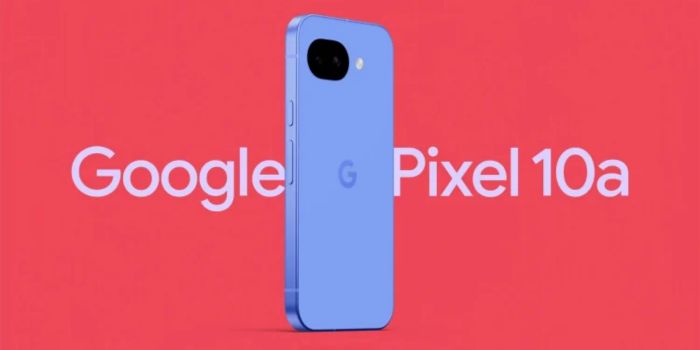
The Google pixel 10a launch has quickly become one of the most talked-about events in the smartphone world. Google has been steadily refining its approach in the mobile market, but this particular launch signals a clear strategic shift. Unlike previous mid-range Pixel releases that simply filled a product gap, the Pixel 10a represents a deeper, longer-term vision that Google seems prepared to push aggressively.
From timing and pricing to AI-driven software and long-term support, the Google pixel 10a launch is not just about introducing a new smartphone. It’s about repositioning Google in a market dominated by giants and redefining what consumers should expect from a mid-range device.
A Stronger Focus on the Mid-Range Battle
The first big takeaway from the Google pixel 10a launch is Google’s renewed focus on the mid-range category. This segment is massive, especially in price-sensitive regions like India, Southeast Asia, and Latin America, where flagship models remain too expensive for a majority of buyers. While Google’s premium Pixel devices have earned praise from tech reviewers, they’ve never truly achieved mainstream penetration.
The Pixel 10a is Google’s clearest attempt yet to capture this huge audience. The strategy is simple:
offer a premium software experience at a mid-range price.
Google understands that mid-range buyers don’t chase benchmarks — they chase stability, camera quality, and longevity. And that’s exactly what the Pixel 10a emphasizes.
A Smarter, Earlier Launch Timing
One of the most strategic moves in the Google pixel 10a launch is the timing. Instead of waiting until late Q2 or summer like previous A-series models, Google introduced the Pixel 10a much earlier in the year. This does two things:
-
It puts Google ahead of rivals like Samsung’s A-series refresh or Xiaomi’s Redmi Note lineup.
-
It captures early-year demand, when many consumers upgrade phones after the holiday period.
By getting ahead in the news cycle, Google shifts attention toward the Pixel 10a before the mid-range competition even arrives. This timing change alone may help boost its market share.
AI as the Core Differentiator
Another pillar of the Google pixel 10a launch strategy is AI — the heart of Google’s entire ecosystem. Instead of trying to win hardware spec wars, Google is leaning into something only it can do better than almost any other company: powerful AI integration.
The Pixel 10a brings features like:
-
AI-driven camera tools, including improved portrait enhancements and smarter low-light algorithms.
-
On-device intelligence for privacy-forward tasks.
-
Predictive assistance features through Gemini and Google’s broader AI ecosystem.
-
Smarter battery optimization, based on individual usage patterns.
This approach makes the Pixel 10a feel more “premium” than its actual price bracket.
Google’s message is clear:
Specs age. AI experiences evolve.
And that evolution locks users into the Google ecosystem.
Keeping Hardware Practical, Not Flashy
The Google pixel 10a launch also shows an intentional avoidance of unnecessary hardware inflation. Instead of cramming in oversized batteries or pointless megapixel counts just for marketing, Google has doubled down on balanced hardware:
-
A chipset powerful enough for AI tasks
-
A camera tuned for computational photography
-
A display with real-world quality rather than just numbers
-
A reliable battery supported by efficient AI optimization
The strategy is smart: keeping hardware controlled helps maintain costs, and Google compensates with excellent software tuning.
This balance keeps the Pixel 10a competitive without pushing it into the price bracket of so-called “mid-range flagships,” which often cost too much for the audience Google wants to target.
Long-Term Software Support: The Real Dealbreaker
Perhaps the most impactful part of the Google pixel 10a launch is the promise of long-term software updates. This has become one of Google’s strongest selling points. Where many Android manufacturers promise 3 or 4 years, Google goes beyond — offering multi-year OS upgrades and extended security patches.
For the average buyer, this is a massive value addition:
-
Your phone stays fast for longer
-
You stay protected with up-to-date security
-
You get new features every year
-
You don’t need to buy a new device frequently
In many ways, this is Google’s subtle way of challenging Apple’s longevity advantage.
Strategic Pricing to Pressure Competitors
The pricing strategy behind the Google pixel 10a launch is designed to cause pressure in the mid-range battlefield. The Pixel 10a is expected to sit around the sweet spot where upper-midrange phones start to struggle with price justification.
Google is:
-
Staying cheaper than many competing “flagship killers”
-
Offering a more refined experience than budget phones
-
Delivering unmatched software polish for the price
This positions the Pixel 10a to eat into the market share of Samsung, OnePlus, Xiaomi, and Vivo, especially in online retail channels where spec-focused buyers look for maximum value.
Impact on the Market: A New Direction
The Google pixel 10a launch could trigger significant market effects:
1. Raising expectations in the mid-range segment
AI-driven features will force competitors to rethink what counts as “must-have.”
2. Shifting competition toward software
This is a space where Google has a major advantage.
3. Changing consumer perception of Pixel devices
If the Pixel 10a becomes a hit, it will strengthen Google’s brand in markets where Pixel is still seen as niche.
4. Pushing rivals on update policies
Long-term support pricing pressure could force Android OEMs to extend their update promises.
Conclusion: A Strong, Clear Statement from Google
The Google pixel 10a launch isn’t just a new phone. It’s a strategic declaration.
Google is signaling that:
-
AI is the future of smartphones
-
Mid-range is the battleground worth fighting for
-
Long-term software support is the new customer loyalty tool
-
Hardware doesn’t need to be flashy; it needs to be smart
-
Google wants to expand its global footprint, not remain a niche player
If Google follows through consistently, the Pixel 10a could become one of the most influential mid-range phones of its generation — and a turning point in Google’s smartphone strategy.