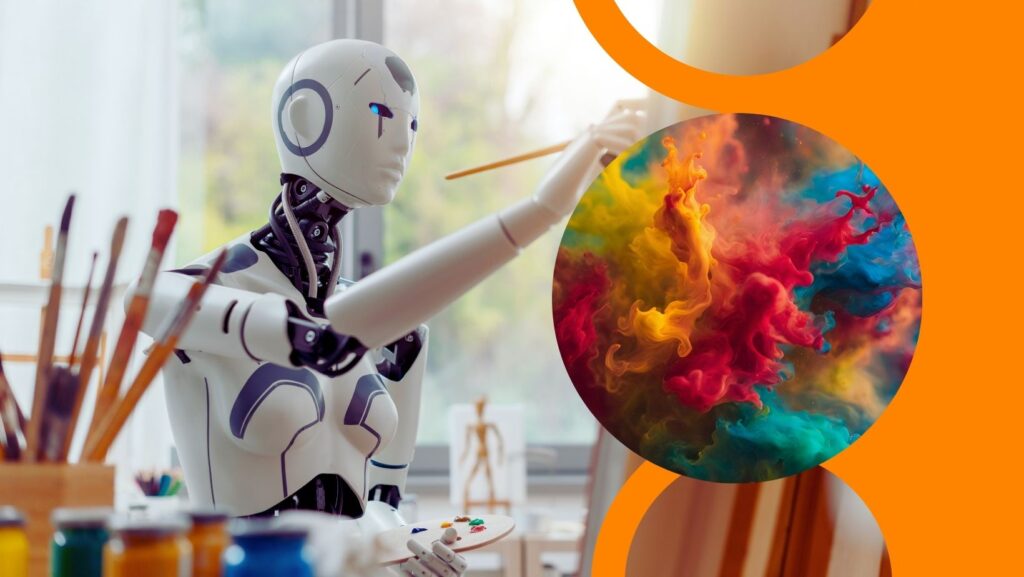
Art has always evolved alongside human innovation. From cave paintings to oil on canvas, from photography to digital illustration, every leap in technology has expanded what artists can create. Today, we’re standing at the edge of another major shift one driven not by brushes or pixels alone, but by intelligent systems capable of learning, imagining, and generating alongside us.
This new era isn’t about replacing human creativity. It’s about expanding it. And nowhere is this more evident than in the rise of AI art generation, a movement that is reshaping how artists conceptualize ideas, explore styles, and bring visions to life.
The Evolution of Artistic Tools
Throughout history, artists have embraced tools that help them express more with less friction. The camera didn’t kill painting; it pushed painters toward impressionism, surrealism, and abstraction. Digital tablets didn’t erase traditional art; they opened doors to animation, 3D modeling, and visual effects.
AI is simply the next tool in this lineage powerful, flexible, and full of possibility.
But unlike previous tools, AI doesn’t just respond to the artist’s hand. It collaborates. It interprets. It suggests. It becomes a partner in the creative process, offering new directions the artist may never have considered.
This shift is why so many modern creators are exploring AI not as a shortcut, but as a catalyst for deeper artistic exploration.
Why Artists Are Embracing AI?
At first, many artists were skeptical. Could a machine truly contribute to something as personal and emotional as art? But as creators began experimenting, they discovered something surprising: AI doesn’t limit creativity it multiplies it.
Artists are using AI to:
- Generate new concepts when inspiration runs dry
- Explore styles outside their comfort zone
- Visualize ideas faster than traditional sketching
- Blend genres, textures, and moods in unexpected ways
- Create large-scale projects that would take months by hand
AI becomes a playground — a space where imagination can run wild without the constraints of time, materials, or technical skill.
The Human Element: Why Artists Still Lead the Process?
Even with advanced tools, the heart of art remains human. AI can generate images, but it cannot feel emotion, understand symbolism, or interpret cultural nuance. It doesn’t know what it means to be moved by a memory or inspired by a moment.
That’s why the artist’s role becomes even more important in this new era.
Humans bring:
- Intention — the “why” behind the artwork
- Emotion — the depth that resonates with viewers
- Curation — choosing what aligns with the message
- Interpretation — shaping meaning from raw ideas
- Identity — the personal signature no machine can replicate
AI provides possibilities. The artist provides purpose.
The Midpoint: Where AI Becomes a Creative Partner
In the middle of the creative process, many artists use AI as a way to boost creativity with AI — not by outsourcing their vision, but by expanding it. This is where the collaboration becomes magical.
Imagine an artist exploring a theme like “dreams and memory.” They might feed a few prompts into an AI tool and receive dozens of visual interpretations — some surreal, some abstract, some unexpectedly poetic. These outputs become sparks, not final pieces.
The artist then refines, edits, paints over, or reimagines the results. AI becomes the brainstorming partner that never gets tired, never judges, and never runs out of ideas.
This synergy is what defines the modern creative workflow.
How AI Encourages Artistic Experimentation?
One of the most exciting aspects of AI‑assisted art is the freedom it gives creators to experiment without fear. Traditional mediums can be expensive, time‑consuming, or technically demanding. AI removes those barriers.
Artists can:
- Test dozens of color palettes in seconds
- Explore multiple compositions instantly
- Merge artistic styles that would be impossible by hand
- Create variations of a concept without starting from scratch
- Push boundaries without worrying about “wasting” materials
This experimentation leads to breakthroughs new aesthetics, new narratives, new forms of expression.
The Rise of Hybrid Art Forms
As AI becomes more integrated into creative workflows, we’re seeing the emergence of hybrid art forms that blend human craftsmanship with machine‑generated elements.
Examples include:
- AI‑assisted digital paintings
- Mixed‑media pieces combining hand‑drawn and AI‑generated textures
- Concept art built from AI sketches and human refinement
- 3D models inspired by AI‑generated references
- Motion graphics enhanced by AI‑driven patterns
These hybrid works challenge traditional definitions of art and invite viewers to explore the relationship between human imagination and machine intelligence.
Ethical Questions and Artistic Integrity
With any new technology, questions arise. Who owns AI‑generated art? How much credit should the artist receive? What about the datasets AI models are trained on?
These discussions are important not because AI threatens art, but because it expands it. Artists, technologists, and platforms like BeArtist are actively shaping ethical guidelines that protect creativity while encouraging innovation.
The goal is not to restrict AI, but to ensure it supports artists rather than overshadowing them.
The Future of Art: Human Vision, Enhanced by Intelligent Tools
Looking ahead, AI will continue to evolve, offering even more sophisticated ways for artists to explore their ideas. But one thing will remain constant: the human spirit behind every creation.
The future of art is not machine‑made. It’s human‑led, machine‑enhanced.
Artists will continue to:
- Use AI as a tool for exploration
- Blend traditional and digital techniques
- Push boundaries with hybrid workflows
- Create deeply personal, emotionally rich work
- Shape the cultural meaning of AI‑assisted art
This is not the end of human creativity — it’s the beginning of a new renaissance.
Final Thoughts
AI is not here to replace artists. It’s here to empower them. To give them new ways to imagine, experiment, and express. To open doors that were once closed by time, skill, or resources.
The artists who thrive in this new era will be the ones who embrace AI not as a threat, but as a collaborator — a partner in the endless pursuit of creativity.