When you first start a business, choosing an entity type often feels like a quick administrative decision. You pick what’s simple, affordable, and easy to set up. But as your revenue grows and your responsibilities expand, that early decision can quietly shape how much you pay in taxes every year.
Changing your business entity type isn’t just a legal formality; it can directly impact your annual tax bill, your cash flow, and even your long-term financial strategy. Understanding how and why entity structure matters can help you make decisions that protect your income instead of draining it.
Many business owners hesitate to revisit their structure because they fear complications or unwanted scrutiny. In reality, most issues arise from poor planning, not proactive restructuring. Clear documentation and accurate filings significantly reduce the likelihood of ever needing formal irs audit defense representation . When changes are handled properly, restructuring becomes a strategic move not a risky one.
Why Your Entity Type Matters
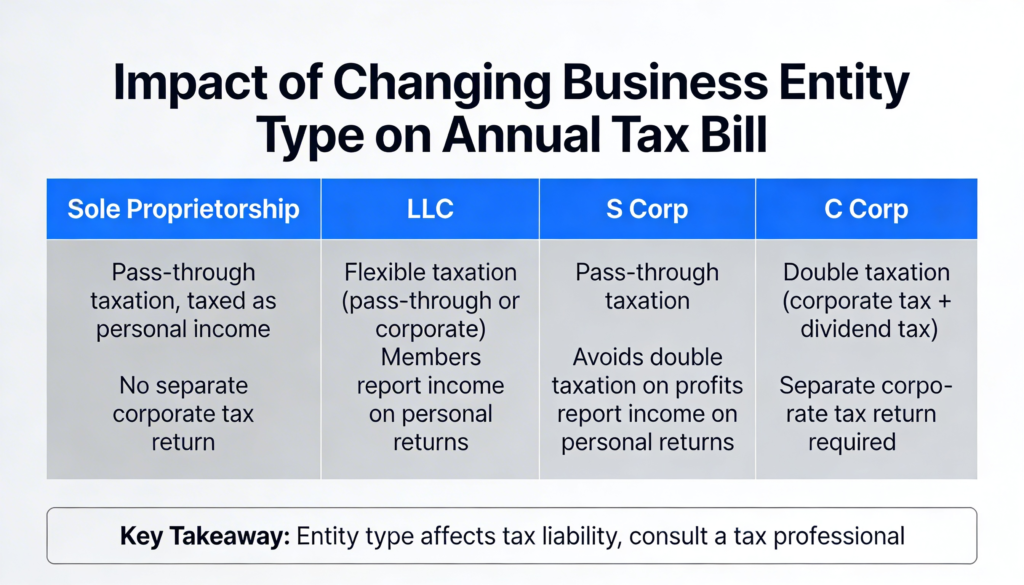
Your business entity determines how income is taxed, how profits are distributed, and how payroll taxes apply. The most common structures include:
- Sole Proprietorship
- Single-Member LLC
- Partnership or Multi-Member LLC
- S-Corporation
- C-Corporation
Each comes with its own tax treatment. What works well for a startup earning modest revenue may not be efficient once profits increase.
For example, sole proprietors and many LLC owners pay self-employment tax on all net income. That includes both the employer and employee portions of Social Security and Medicare taxes. As profits grow, this can significantly increase your overall tax liability.
The S-Corporation Shift
One of the most common entity changes occurs when a profitable LLC elects to be taxed as an S-corporation.
Under an S-corp structure, owners can pay themselves a reasonable salary (subject to payroll taxes) and take additional profits as distributions, which are not subject to self-employment tax. This shift can lower total tax liability sometimes substantially.
However, it also introduces payroll requirements, stricter compliance rules, and increased administrative responsibility. It’s not a one-size-fits-all solution. The numbers must justify the change.
This is where thoughtful analysis makes a difference. Working with experienced professionals such as wedo insurance and taxes helps ensure the savings outweigh the added compliance costs. The goal is optimization, not complication.
When a C-Corporation Makes Sense
While C-corporations are less common for small businesses, they can be beneficial in specific situations particularly for startups seeking outside investment or planning to retain significant earnings.
C-corps pay a flat corporate tax rate on profits. However, distributed dividends are taxed again at the shareholder level, creating what’s often called “double taxation.”
For businesses reinvesting profits back into growth instead of distributing them, this structure can sometimes create planning opportunities. But it requires careful forecasting and a clear understanding of long-term goals.
How Entity Changes Affect Your Annual Tax Bill
Changing your entity can impact your taxes in several ways:
1. Self-Employment Taxes
Switching to an S-corp may reduce the portion of income subject to self-employment tax.
2. Payroll Compliance
You may need to run payroll, file quarterly employment tax reports, and issue W-2s—even to yourself.
3. Deductions and Fringe Benefits
Certain benefits, such as health insurance and retirement contributions, are treated differently depending on your structure.
4. Estimated Tax Payments
Your payment schedule and withholding strategy may shift after restructuring.
These factors collectively influence not just how much you pay but when and how you pay it.
The Timing of a Change Matters
Entity changes don’t just affect future taxes; they can also create transitional considerations.
For example:
- Is the change effective at the start of the tax year?
- Are assets being transferred?
- Are there state-level tax implications?
- Does the restructuring trigger new filing deadlines?
These details matter. Rushing a structural change without understanding the timing can create unintended tax consequences.
Aligning Structure with Personal Tax Strategy
Your business structure doesn’t exist in isolation. It flows directly into your personal tax return.
That’s why personal tax planning plays a critical role in deciding whether to change your entity type. Your compensation strategy, retirement contributions, investment income, and household tax bracket should all be considered together.
For instance:
- If your personal tax bracket is already high, distributing additional profits may increase overall liability.
- If you’re planning to reinvest heavily in the business, retaining earnings may be more efficient.
- If you anticipate selling the business, the entity structure may influence capital gains treatment.
The right decision depends on your broader financial picture, not just the business alone.
Common Signs It’s Time to Reevaluate
You may want to revisit your entity type if:
- Your profits have increased significantly.
- You’re paying substantial self-employment tax.
- You’re hiring employees.
- You’re seeking investors.
- You’re planning an exit strategy.
Growth changes everything. What was simple at $40,000 in profit may be inefficient at $250,000.
It’s Not About Paying Less – It’s About Paying Smart
Some business owners approach restructuring with one goal: reduce taxes at all costs. That mindset can lead to aggressive decisions that don’t align with compliance or long-term strategy.
A better approach is sustainability. The right entity structure should:
- Reflect your current revenue level
- Support future growth
- Align with your personal income strategy
- Maintain clear and defensible documentation
When these elements work together, tax efficiency follows naturally.
Changing your business entity type isn’t something you do casually but it’s also not something you should ignore.
As your business evolves, your structure should evolve with it. Revisiting your entity isn’t a sign of failure or instability. It’s a sign of growth and maturity.
When evaluated carefully, restructuring can reduce unnecessary tax exposure, improve cash flow, and position your business for the next stage of expansion.
Taxes are not just an annual obligation, they’re a strategic component of running a successful company. And sometimes, the most impactful decision you can make isn’t about earning more revenue. It’s about choosing the structure that allows you to keep more of what you’ve already earned.