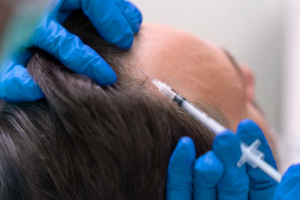
Understanding PRP and Its Role in Sports
PRP is derived from a small sample of an athlete’s own blood. Platelets are concentrated into plasma rich in growth factors and bioactive proteins that naturally promote tissue repair. These growth factors help communicate with cells in cartilage, ligaments, tendons, and other knee structures to support healing and recovery.
For athletes, PRP is often used to address overuse injuries, mild ligament strains, tendon inflammation, or early-stage joint degeneration. Unlike treatments that only mask pain, PRP works with the body’s natural repair mechanisms, making it appealing for individuals who need to maintain peak physical performance.
How PRP Supports Knee Health in Athletes
Athletic performance depends on joint stability, flexibility, and strength. PRP can contribute to all three by stimulating cellular activity in key tissues. Growth factors from PRP encourage collagen production in ligaments and tendons, support cartilage maintenance, and improve the biological environment inside the knee. By promoting tissue repair rather than just relieving symptoms, PRP may help athletes return to activity more quickly while preserving long-term joint health.
Safety Considerations for Athletes
PRP is considered safe for most athletes because it uses the individual’s own blood, reducing the risk of allergic reactions or transmission of infectious agents. It is minimally invasive, involving only an injection into the knee joint, and is typically performed under sterile conditions. Because it does not involve foreign substances or surgery, recovery is usually quicker and less disruptive than invasive procedures.
Recovery and Return to Activity
One of the key benefits of PRP for athletes is that it allows for gradual resumption of activity. Most athletes experience mild soreness after the injection, but this generally resolves within a few days. The regenerative effects of PRP develop over several weeks, and athletes can often resume light training while monitoring tissue response. Full return to high-intensity activity depends on the severity of the injury and individual healing rate.
PRP for Injury Prevention and Maintenance
In addition to recovery, PRP may support ongoing knee health in athletes. By improving tissue quality, joint balance, and soft tissue resilience, PRP can help the knee better withstand the stresses of sports. This does not replace proper training, strength conditioning, or injury prevention strategies, but it may complement them to maintain performance and reduce the risk of recurrence.
Suitability for Different Types of Athletes
PRP can benefit athletes across a wide range of sports, from runners and cyclists to basketball and football players. It is especially useful for those dealing with overuse injuries, mild tendon degeneration, or early cartilage wear. The therapy is adaptable and can be integrated into a broader training and recovery program tailored to the athlete’s needs.
Factors That Influence Safety and Effectiveness
The safety and success of PRP in athletes depend on several factors. The method of PRP preparation, the concentration of platelets, the precision of the injection, and post-injection care all influence outcomes. Additionally, individual factors such as age, overall health, and the type and severity of the knee issue play a role in how effectively PRP supports recovery and joint performance.
Frequently Asked Questions About PRP and Athletes
Is PRP safe for professional athletes
Yes, PRP is generally considered safe for athletes at all levels because it uses their own blood and is minimally invasive.
Can PRP improve performance
PRP is not a performance-enhancing treatment in the traditional sense. Its role is to support healing and joint health, which may allow athletes to train and compete more effectively after injury.
How long before athletes can return to play
Recovery varies depending on the injury and individual response. Light activity may resume within days, but full return to competitive play typically takes several weeks as tissues respond to PRP.
Does PRP carry risks of complications
PRP carries a low risk of complications, mainly minor soreness or bruising at the injection site. Serious complications are rare because the therapy uses the patient’s own blood.
Can PRP prevent future injuries
While PRP supports tissue repair and resilience, it does not replace proper training, conditioning, or injury prevention strategies. It can complement these measures to reduce the likelihood of recurring injuries.
Conclusion
PRP injections for knees are generally safe for athletes and can be an effective tool for supporting recovery, tissue repair, and long-term joint health. Because it is minimally invasive and uses the athlete’s own biological material, PRP carries a low risk of complications and allows for gradual return to activity. While it is not a substitute for training, conditioning, or rehabilitation, PRP can complement these strategies to help athletes maintain knee performance and reduce the impact of injuries over time.