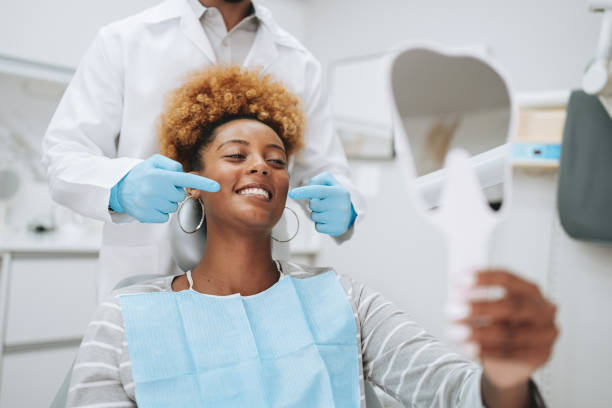
Woman at dentist holding mirror
Understanding Tooth Enamel
Enamel is the hard, outermost layer of teeth that protects the underlying dentin and pulp. It is the body’s hardest substance and is highly mineralized, primarily composed of hydroxyapatite crystals.
Enamel serves several important functions:
-
Protection: Shields teeth from physical damage and wear.
-
Barrier to bacteria: Prevents decay from affecting deeper layers.
-
Appearance: Its translucency and thickness contribute to the natural color of teeth.
Since enamel is non-living tissue, it cannot regenerate once worn down, making its preservation crucial.
How Teeth Whitening Works
Teeth whitening relies on chemical bleaching agents, usually hydrogen peroxide or carbamide peroxide, to lighten tooth color. The process works through oxidation, breaking down stain molecules on and beneath the enamel surface.
Mechanism of Action
-
Penetration: Whitening agents penetrate enamel to reach pigments in both enamel and the upper layer of dentin.
-
Oxidation of stains: Oxygen molecules released by bleaching agents break large colored molecules into smaller, less visible components.
-
Surface cleaning: Some whitening gels and pastes also help remove surface debris and plaque, contributing to brighter teeth.
Whitening improves tooth color without removing enamel material when used correctly.
Factors Affecting Enamel During Whitening
While properly formulated whitening treatments are generally safe, certain factors influence enamel’s response:
Concentration of Bleaching Agents
Higher concentrations of hydrogen or carbamide peroxide act faster and penetrate deeper. If used improperly or excessively, they can temporarily increase enamel porosity or surface roughness, which may lead to sensitivity.
Duration of Treatment
Leaving whitening gels on teeth longer than recommended does not improve results but may increase the risk of enamel irritation or mild erosion.
Frequency of Whitening
Repeated treatments with minimal rest periods can strain enamel, especially if combined with abrasive whitening pastes. Following manufacturer or professional guidelines is essential for enamel safety.
Pre-Existing Enamel Conditions
Teeth with thin enamel, enamel erosion from acidic foods, or micro-cracks may be more sensitive to whitening treatments. Such teeth require milder formulas or professional supervision.
Scientific Evidence on Whitening and Enamel
Multiple studies have examined the impact of bleaching agents on enamel:
-
Surface changes: Temporary changes in enamel surface roughness and hardness have been observed with high-concentration bleaching agents.
-
Remineralization: Fluoride, calcium, and phosphate in the oral environment help restore minor mineral changes caused by bleaching.
-
Overall safety: When used as directed, professional and at-home whitening products do not cause permanent damage to enamel.
In essence, enamel may experience temporary, reversible changes, but properly administered whitening is not harmful long-term.
Best Practices to Protect Enamel During Whitening
Use Approved Products
Select whitening products that meet safety standards. Professional or reputable at-home gels and strips are formulated to balance effectiveness with enamel protection.
Follow Instructions
Adhere to recommended application times, frequencies, and concentrations. Overuse or deviation from guidelines increases the risk of enamel stress.
Include Fluoride
Fluoride-containing gels or toothpastes help strengthen enamel and reduce temporary sensitivity during whitening treatments.
Avoid Abrasive Pastes
Highly abrasive whitening toothpastes should be used cautiously. Gentle cleaning methods preserve enamel while supporting the whitening process.
Monitor Sensitivity
Mild sensitivity may occur during whitening. Shorter application times or lower-concentration gels can help prevent enamel strain while still achieving results.
Common Misconceptions About Whitening and Enamel
Whitening “Thins” Enamel
Proper whitening does not remove enamel. It only alters the color of stains. Claims that whitening erodes enamel stem from misuse or over-application of high-strength products.
Whitening Makes Teeth Brittle
Temporary sensitivity is possible, but enamel’s structural integrity remains intact when products are used correctly. Teeth do not become brittle or more prone to breakage.
At-Home Treatments Are Unsafe
Many at-home whitening gels and strips are safe if used according to guidelines. Excessive use or homemade remedies with harsh abrasives pose more risk than commercial whitening products.
Frequently Asked Questions
Can whitening permanently damage enamel?
No. When used as directed, whitening agents do not permanently harm enamel. Temporary changes in surface roughness or sensitivity are reversible.
Are professional treatments safer for enamel than at-home gels?
Professional treatments allow controlled use of higher-strength gels with protective measures for gums and teeth, making them very safe when applied by trained professionals.
Does whitening cause sensitivity?
Some people experience temporary sensitivity, usually mild, due to the penetration of bleaching agents. Sensitivity generally resolves shortly after treatment.
Can enamel regenerate after whitening?
Enamel cannot regrow, but minor changes caused by whitening can be repaired naturally through saliva minerals or aided by fluoride and remineralizing products.
How often is it safe to whiten teeth?
Most experts recommend waiting at least 6–12 months between full whitening treatments, depending on tooth sensitivity and staining habits.
Conclusion
Teeth whitening is generally safe for enamel when used correctly. The process works by breaking down stain molecules and lightening teeth without removing enamel material. Temporary changes in surface roughness or sensitivity can occur, but they are reversible and manageable with proper precautions.
Choosing safe products, following instructions, incorporating fluoride, and avoiding overuse are key to protecting enamel while enjoying the cosmetic benefits of a brighter smile. With responsible use, whitening can enhance appearance and confidence without compromising the structural integrity of teeth.