A safari in Kenya is one of the world’s most iconic travel experiences. From the sweeping savannas of the Maasai Mara to the flamingo-filled lakes of the Rift Valley and the snow-capped peak of Mount Kenya, the country offers unmatched wildlife diversity, dramatic landscapes, and rich cultural encounters. This ultimate guide covers everything you need to know to plan a memorable and responsible Kenyan safari.
Why Choose Kenya for a Safari?
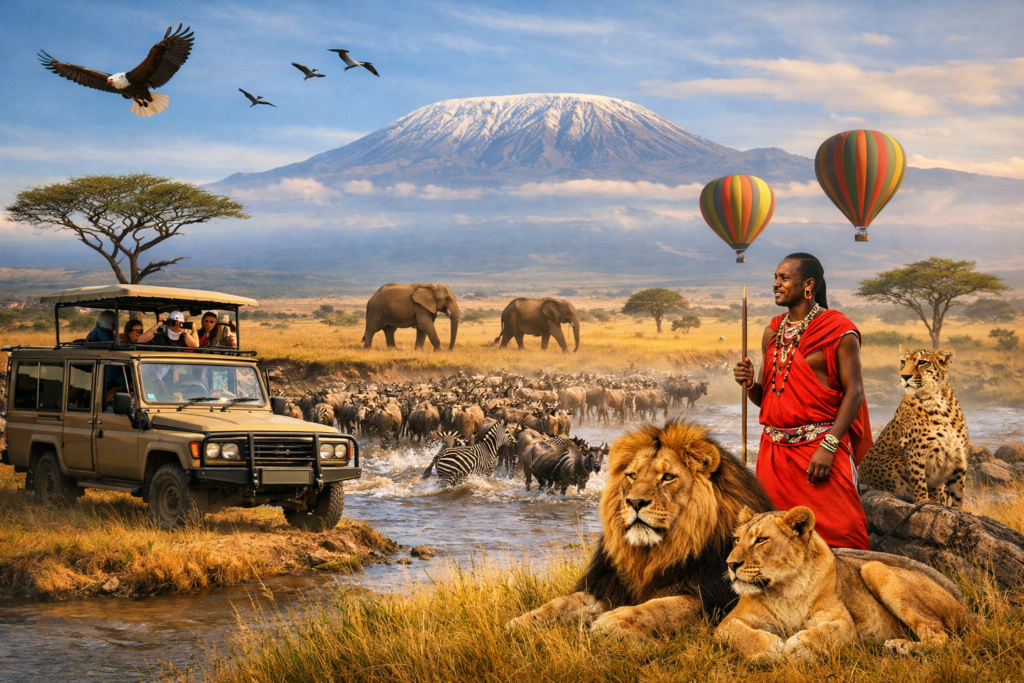
Kenya is often considered the birthplace of the modern safari. It boasts well-established national parks, excellent guiding standards, and a wide range of accommodations—from budget camps to ultra-luxury lodges—making it a top choice for travelers seeking a Kenya safari tour from India. The country is home to the Big Five (lion, leopard, elephant, buffalo, and rhino) and hosts the world-famous Great Migration, when millions of wildebeest and zebra cross the Mara River from Tanzania’s Serengeti, a highlight of many Kenya safari tour packages from India.
Beyond wildlife, Kenya offers cultural richness through communities such as the Maasai and Samburu, as well as easy access to pristine beaches along the Indian Ocean. This unique combination allows Indian travelers to enjoy both adventure and relaxation, making a Kenya safari tour from India an ideal all-in-one international travel experience.
Top Safari Destinations in Kenya
Maasai Mara National Reserve
The Maasai Mara is Kenya’s most famous reserve and a must-visit for first-time safari travelers. Known for its high density of predators, open grasslands, and the Great Migration (July–October), it offers exceptional game viewing year-round.
Amboseli National Park
Amboseli is renowned for large herds of elephants and postcard views of Mount Kilimanjaro. Its relatively compact size makes wildlife sightings frequent and rewarding, especially for photographers.
Tsavo East and Tsavo West National Parks
Together forming one of Africa’s largest protected areas, Tsavo is famous for its red elephants, rugged terrain, and fewer crowds. It’s ideal for travelers seeking a more remote, adventurous safari.
Lake Nakuru National Park
Part of the Great Rift Valley, Lake Nakuru is best known for flamingos (seasonal) and as a sanctuary for black and white rhinos. It’s also a great spot to see leopards and Rothschild’s giraffes.
Samburu National Reserve
Located in northern Kenya, Samburu offers a different ecosystem and unique species such as the Grevy’s zebra, reticulated giraffe, and gerenuk. It’s also an excellent place to experience Samburu culture.
Best Time to Go on Safari
Kenya is a year-round safari destination, but timing can enhance your experience:
- Dry season (June–October): Best for wildlife viewing, as animals gather around water sources. This period includes the Great Migration in the Maasai Mara.
- Short dry season (January–February): Excellent game viewing with fewer crowds.
- Wet seasons (March–May and November): Lush landscapes, fewer tourists, and lower prices, though some roads may be challenging.
Types of Safaris
- Game drive safaris: The most common option, conducted in 4×4 vehicles with experienced guides.
- Walking safaris: Available in select conservancies, offering a more immersive experience.
- Flying safaris: Ideal for saving time and accessing remote areas quickly.
- Private vs. group safaris: Private safaris offer flexibility and exclusivity, while group safaris are more budget-friendly.
Where to Stay
Kenya offers a wide range of accommodations:
- Luxury lodges: High-end comfort, gourmet dining, and premium guiding.
- Tented camps: Authentic safari atmosphere with varying comfort levels.
- Budget camps and lodges: Affordable options without sacrificing safety or wildlife access.
Staying in private conservancies adjacent to national parks often allows off-road driving, night game drives, and walking safaris.
What to Pack
- Neutral-colored clothing (khaki, beige, olive)
- Light layers for cool mornings and evenings
- Comfortable walking shoes
- Binoculars and camera with zoom lens
- Sunscreen, hat, and insect repellent
- Copies of travel documents
Health, Safety, and Visas
Most travelers require an eVisa to enter Kenya. It’s recommended to consult a travel clinic for vaccinations and malaria prevention. Kenya’s safari areas are generally safe, especially when traveling with reputable operators.
Responsible and Sustainable Travel
Choose eco-friendly lodges, respect wildlife by maintaining distance, and support local communities through cultural visits and locally owned businesses. Responsible tourism helps preserve Kenya’s ecosystems and benefits future generations.
Final Thoughts
A Kenya safari is more than just a vacation—it’s a journey into the heart of Africa’s wilderness. With proper planning, the right destinations, and a spirit of adventure, you’ll experience unforgettable wildlife encounters, breathtaking scenery, and deep cultural connections. Whether it’s your first safari or your fifth, Kenya never fails to inspire.