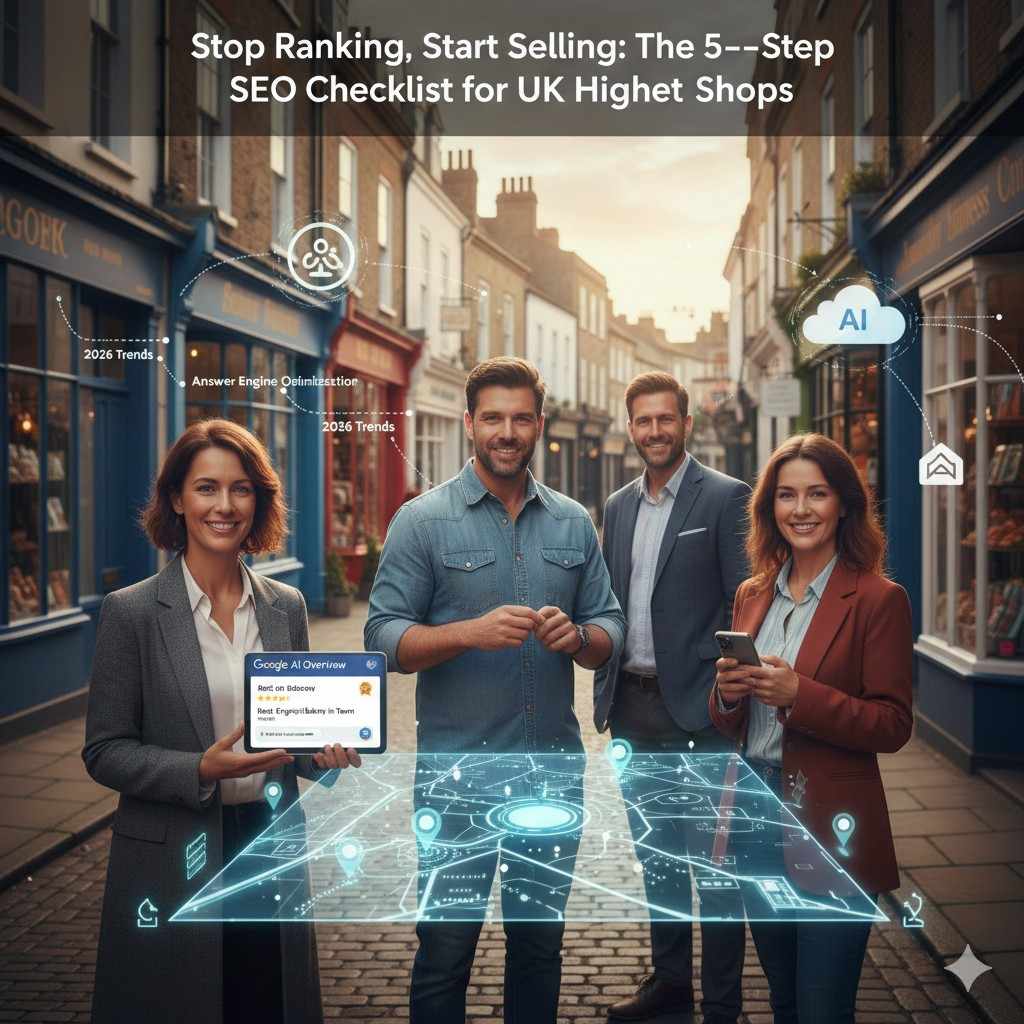
In 2026, the old SEO playbook is dead. Ranking “Number 1” on Google used to be the gold standard, but with the rise of AI Overviews and voice-activated search, being at the top of the list doesn’t always mean you get the customer.
Today, over 50% of searches are “zero-click” meaning users get their answers directly from the search page without ever visiting a website. For a UK high street shop, your goal has shifted: you don’t just need traffic; you need footfall and sales.
Here is your 5-step checklist to dominate the local market and outsmart the big-box retailers this year.
1. Claim Your “Answer Capsule” (AEO)
Google’s AI doesn’t just show links; it provides answers. To win, you must become the source it cites.
-
The Strategy: Identify the top questions your customers ask.
-
The Execution: At the top of your service pages, include a 50-word “Answer Capsule.” For example: “The best time to plant spring bulbs in the UK is between September and November to ensure the soil is still warm enough for root development.”
-
Why it works: This directness helps you secure the “AI Overview” box, putting your brand name front and center as the local expert.
2. Optimize for “Hyper-Local” Intent
In 2026, “near me” isn’t specific enough. Shoppers are searching by postcode, neighborhood, or even proximity to local landmarks.
-
The Strategy: Mention local context. Are you a 5-minute walk from the Bullring in Birmingham? Say it.
-
The Execution: Update your Google Business Profile weekly. Treat it like a social media feed—post photos of your latest window display or a “deal of the week” to show Google you are active and physically present.
3. Leverage “Proof of Life” Content
Generic, AI-generated blog posts are being de-prioritized by Google’s latest algorithm updates. What ranks now is E-E-A-T (Experience, Expertise, Authoritativeness, and Trustworthiness).
-
The Strategy: Use original photography and local case studies.
-
The Execution: Instead of a generic post about “How to Choose a Suit,” write “Three Styles London Bankers are Wearing This Season,” featuring photos of your actual team and shop floor.
-
Why it works: AI cannot replicate the “Experience” of a local shop owner. This builds instant trust with both Google and your customers.
4. Master “Interaction to Next Paint” (INP)
Technical SEO has moved beyond just “loading fast.” Google now measures how quickly your site responds to a user’s touch.
-
The Strategy: Prioritize mobile responsiveness for the “on-the-go” shopper.
-
The Execution: Ensure your “Book Now” or “Check Stock” buttons work instantly. If a customer on a London bus clicks your site and it lags, they will bounce, and your ranking will drop.
-
The Fix: Use a UK-based server to reduce latency and keep your images in the lightweight WebP format.
5. Build Local “Digital Handshakes”
High-authority backlinks from global sites are less effective for small businesses than local, relevant links.
-
The Strategy: Focus on community authority.
-
The Execution: Partner with other local businesses for cross-promotion. Get a link from your local Chamber of Commerce, the community sports team you sponsor, or a nearby café’s “local favorites” page.
-
Why it works: These “Digital Handshakes” tell Google you are a pillar of your specific UK community, making you the most relevant result for local searches.
The Bottom Line: Don’t Just Rank, Dominate Your High Street
SEO for small businesses uk in 2026 isn’t about chasing the number one spot; it’s about owning the moment a customer decides to buy. By focusing on hyper-local signals, AI-ready answers, and genuine human experience, you’re doing more than just pleasing an algorithm; you’re building a resilient UK brand that thrives where the big corporations can’t compete. The high street is evolving, and with this checklist, your business isn’t just keeping up, it’s leading the charge. Now, it’s time to stop tweaking keywords and start turning those local searches into your most loyal customers.