The Evolution of Comme des Garçons Fashion: A Journey Through Innovation and Avant-Garde Style
Since its inception in 1969, Comme des Garçons has revolutionized the fashion industry with its avant-garde designs, intellectual approach, and fearless experimentation. Founded by Japanese designer Rei Kawakubo, the brand has grown from a small Tokyo-based label into a global icon of unconventional style, influencing countless designers and reshaping perceptions of fashion itself.
The Beginnings: Challenging Conventions
Rei Kawakubo launched comme des garcons (meaning “Like Boys” in French) in Tokyo during the late 1960s. Her early work was characterized by a desire to challenge traditional notions of beauty, silhouette, and form. Unlike mainstream fashion that emphasized symmetry and conventional attractiveness, Kawakubo sought to explore asymmetry, deconstruction, and the avant-garde. Her approach was deeply intellectual, often blurring the boundaries between art and clothing.
In the 1980s, the brand gained international recognition with its provocative runway shows and innovative designs. The “Happening” collection of 1982, for instance, showcased oversized, distorted shapes and unconventional fabrics, emphasizing discomfort and imperfection as aesthetic virtues. Kawakubo’s designs often defied easy categorization, combining elements of punk, Japanese traditional garments, and futuristic concepts, creating a unique visual language.
Key Design Elements and Philosophies
Comme des Garçons’ evolution is marked by its distinctive design philosophy. Kawakubo often employs deconstruction—breaking down traditional garments and reconstructing them in unexpected ways. She experiments with volume, shape, and texture, challenging the idea of clothing as mere covering. Her use of monochrome palettes, especially black, became a signature, emphasizing form and structure over decoration.
Another hallmark is her embrace of asymmetry and irregularity, creating pieces that appear almost sculptural. Kawakubo’s work also often explores themes of identity, mortality, and societal norms, making her collections as much conceptual statements as fashion statements. This intellectual rigor set the brand apart from mainstream fashion houses.
Expansion and Diversification
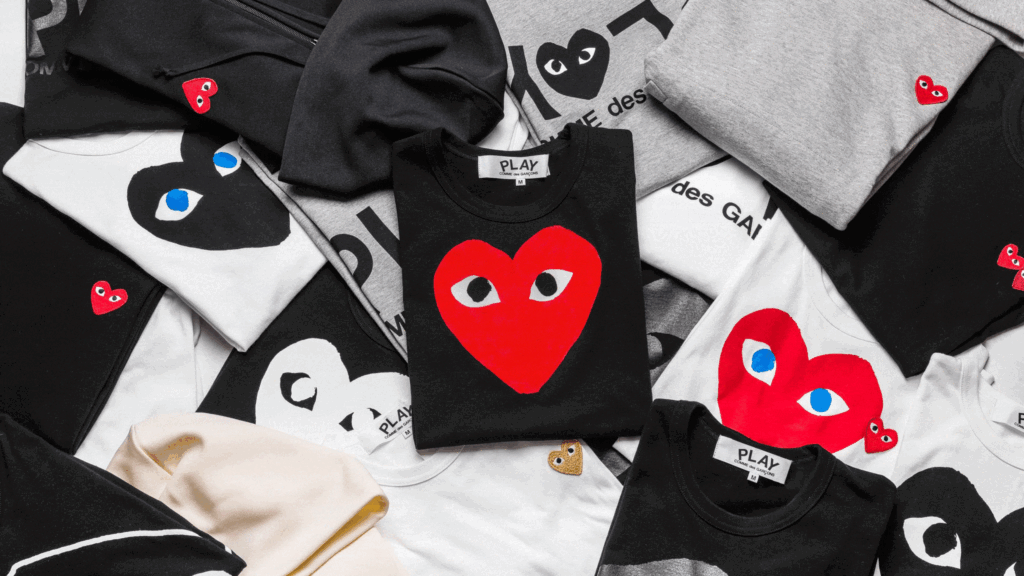
Throughout the 1990s and 2000s, Comme des Garçons expanded its influence through various diffusion lines and collaborations. Lines such as COMME des GARÇONS BLACK, SHIRT, and Play introduced more accessible options while maintaining the brand’s avant-garde spirit. The Play line, with its iconic heart logo designed by Filip Pagowski, gained popularity for its playful yet stylish approach, appealing to a broader audience without diluting the brand’s core ethos.
Collaborations also played a pivotal role in Comme des Garçons’ evolution. The brand partnered with brands like Nike, Louis Vuitton, and Supreme, blending high fashion with streetwear and sportswear. These collaborations not only expanded its reach but also reaffirmed its position as a boundary-pushing innovator.
Innovative Runway Shows and Artistic Expression
Comme des Garçons is renowned for its theatrical runway presentations, which often resemble performances or installations. Kawakubo uses her shows as platforms for conceptual exploration, often employing unconventional materials and staging. Notable examples include the 2008 “Body Meets Dress—Dress Meets Body” collection, which showcased exaggerated, sculptural forms that challenged notions of the human silhouette.
Her shows sometimes evoke feelings of discomfort or alienation, prompting viewers to question societal standards of beauty and identity. This artistic approach has influenced the broader fashion industry, encouraging designers to think beyond mere aesthetics and consider fashion as a form of cultural critique.
Legacy and Continuing Influence
Today, Comme des Garçons remains at the forefront of avant-garde fashion. Rei Kawakubo’s influence extends beyond her own collections, inspiring Comme Des Garcons Hoodie a new generation of designers who prioritize conceptual thinking, innovation, and craftsmanship. The brand’s commitment to pushing boundaries has earned it a dedicated following among fashion insiders, art collectors, and avant-garde enthusiasts.
Kawakubo’s work has also been recognized with numerous awards, including the prestigious CFDA International Award. Her influence is evident in the rise of streetwear, the acceptance of gender fluidity in fashion, and the ongoing pursuit of fashion as a form of art and activism.
Conclusion: A Continual Evolution
The evolution of Comme des Garçons is a testament to the power of innovation and intellectual curiosity in fashion. From its rebellious beginnings to its status as a global avant-garde powerhouse, the brand exemplifies how clothing can challenge societal norms, provoke thought, and inspire change. Rei Kawakubo’s visionary approach continues to shape the future of fashion, reminding us that true style often lies in the unconventional and the unexpected.