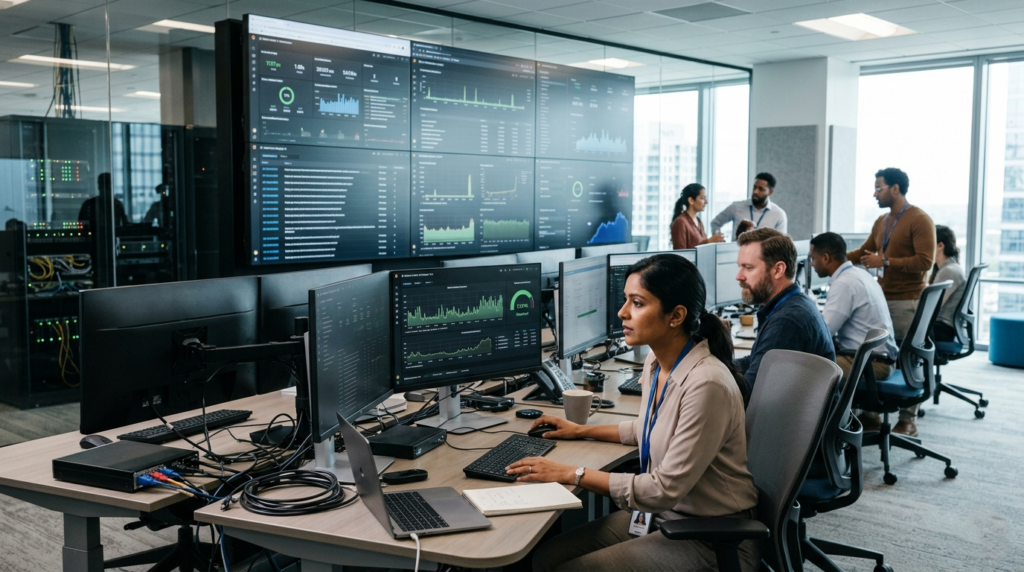
Network Monitoring and Management
Modern IT environments rely on continuous visibility and proactive control to stay stable. Effective monitoring and management systems help organizations prevent downtime, detect security threats early, resolve performance issues, and maintain smooth operations. By identifying anomalies in real time, businesses can address problems before they escalate into costly disruptions or data loss.
Why Prevention Matters More Than Fixing Problems
In today’s always connected business landscape, even a few minutes of network disruption can impact productivity, customer trust, and revenue. Organizations are no longer reacting to problems after they occur. Instead, they are shifting toward preventive strategies that ensure systems run efficiently at all times. This is where Network Monitoring and Management prevent critical risks by offering real time insights into infrastructure health. Rather than waiting for failures, businesses can detect irregularities early and resolve them before users are affected.
Understanding Network Monitoring and Management
Network monitoring involves continuously tracking the performance, availability, and security of IT systems. Management goes a step further by enabling control, configuration, and optimization of those systems.Together, these practices form a proactive approach to IT operations. They allow teams to detect issues, analyze root causes, and implement solutions without delays.
Key capabilities include:
- Real time performance tracking
- Automated alerts and notifications
- Traffic analysis and bandwidth monitoring
- Security threat detection
- Configuration management
Major Issues Prevented by Network Monitoring and Management
1. Network Downtime and Unexpected Outages
Downtime is one of the most expensive risks for any organization. According to industry estimates, even small outages can cost businesses thousands of dollars per minute.
Network Monitoring and Management prevent downtime by:
- Identifying failing hardware before breakdown
- Monitoring server health and uptime
- Detecting environmental risks such as overheating
- Alerting IT teams instantly when anomalies occur
This proactive visibility ensures that minor issues do not escalate into full system failures.
2. Security Breaches and Cyber Threats
Cybersecurity threats are becoming more sophisticated every year. Without proper monitoring, attacks can go unnoticed until damage is done.
Network Monitoring and Management prevent security risks by:
- Detecting unauthorized access attempts
- Identifying malware activity and unusual behavior
- Monitoring login patterns and anomalies
- Tracking data transfers to prevent leaks
By analyzing patterns in real time, organizations can stop threats before they compromise sensitive information.
3. Performance Bottlenecks and Slow Systems
Users often notice performance issues before IT teams do. Slow applications, lagging systems, and delayed responses can affect productivity and user experience.
Network Monitoring and Management prevent performance degradation by:
- Tracking latency, packet loss, and jitter
- Identifying overloaded servers or applications
- Monitoring system response times
- Highlighting inefficiencies in infrastructure
This allows businesses to optimize performance before complaints arise.
4. Bandwidth Congestion and Resource Misuse
Uncontrolled bandwidth usage can disrupt critical business operations. When non essential applications consume excessive resources, important systems suffer.
Network Monitoring and Management prevent bandwidth issues by:
- Analyzing traffic patterns
- Identifying high usage devices or users
- Prioritizing mission critical applications
- Preventing unauthorized consumption
This ensures that resources are allocated efficiently across the network.
5. Configuration Errors and System Mismanagement
Misconfigurations are one of the most common causes of network failures. A small error in settings can lead to significant disruptions.
Network Monitoring and Management prevent configuration related issues by:
- Tracking changes in system settings
- Detecting unauthorized modifications
- Maintaining configuration consistency
- Enabling quick rollback of incorrect changes
This reduces human error and maintains system stability.
6. Unauthorized Access and Insider Threats
Not all threats come from outside the organization. Insider risks can be equally damaging if not monitored properly.
Network Monitoring and Management prevent insider threats by:
- Monitoring unusual user behavior
- Detecting access at unusual hours
- Tracking large or suspicious data transfers
- Flagging deviations from normal activity
This ensures that both external and internal risks are addressed effectively.
The Role of Proactive IT Strategy
Prevention is not just about tools. It requires a well defined strategy that aligns with business goals. Many organizations combine monitoring solutions with expert guidance such as CTO and Strategic IT Consulting to build a long term approach to risk management.
This integration helps businesses:
- Align IT infrastructure with growth plans
- Improve decision making through data insights
- Strengthen overall technology resilience
Integration with Modern IT Ecosystems
Today’s networks are no longer limited to on premises systems. They extend across cloud platforms, remote work environments, and hybrid infrastructures.
Cloud environments
With the rise of Cloud computing services, monitoring becomes even more critical. Cloud systems require visibility across distributed environments to ensure consistent performance and security.
Collaborative IT models
Many businesses also adopt Co Managed IT Services, where internal teams work alongside external experts. Monitoring tools play a crucial role in ensuring transparency and coordination between teams.
Data Driven Insights- Why Monitoring Matters
Research shows that organizations using proactive monitoring strategies experience:
- Up to 50 percent reduction in downtime
- Faster incident resolution times
- Improved system performance and user satisfaction
- Lower long term IT costs
These outcomes highlight how prevention is not just about avoiding problems but also about improving efficiency and reliability.
Building Trust Through Visibility and Control
Trust is a critical factor in digital operations. Customers and stakeholders expect systems to be reliable and secure.
Network Monitoring and Management prevent disruptions by creating transparency across IT systems. This visibility builds confidence among users and ensures consistent service delivery. Organizations like Skyview Technology emphasize the importance of combining monitoring tools with strategic expertise to maintain a stable and secure IT environment without overcomplicating operations.
Best Practices for Effective Network Monitoring
To maximize the benefits of monitoring and management, businesses should follow these practices:
Establish clear monitoring goals
Define what needs to be monitored and why. Focus on critical systems and business priorities.
Use real time alerts
Ensure that issues are detected and communicated instantly to reduce response time.
Regularly review performance data
Analyze trends to identify recurring issues and improve long term planning.
Automate routine tasks
Automation reduces manual effort and minimizes the risk of human error.
Continuously update security protocols
Stay ahead of evolving threats by keeping monitoring systems updated.
Conclusion- Prevention as a Competitive Advantage
In a digital first world, stability and security are not optional. Businesses that prioritize prevention gain a clear advantage by avoiding disruptions and maintaining consistent performance. Network Monitoring and Management prevent a wide range of issues, from downtime and security breaches to performance inefficiencies and insider threats. By adopting a proactive approach, organizations can protect their infrastructure, improve user experience, and support long term growth.As IT environments continue to evolve, combining monitoring tools with strategic expertise from providers such as Skyview Technology ensures that businesses remain resilient, adaptable, and prepared for future challenges.
FAQs
1. What is the main purpose of network monitoring and management?
The primary purpose is to ensure network stability, security, and performance by detecting and resolving issues before they impact users.
2. How does network monitoring improve cybersecurity?
It identifies suspicious activity, unauthorized access, and potential threats in real time, allowing quick action to prevent breaches.
3. Can small businesses benefit from network monitoring?
Yes, even small businesses can prevent downtime, reduce risks, and improve efficiency through proactive monitoring.
4. How often should networks be monitored?
Networks should be monitored continuously to ensure real time detection of issues and uninterrupted operations.
5. Is network monitoring necessary for cloud environments?
Absolutely. With increasing reliance on cloud systems, monitoring is essential to maintain visibility, performance, and security across distributed infrastructures.
More Information related to the website – https://viralsocialtrends.com/