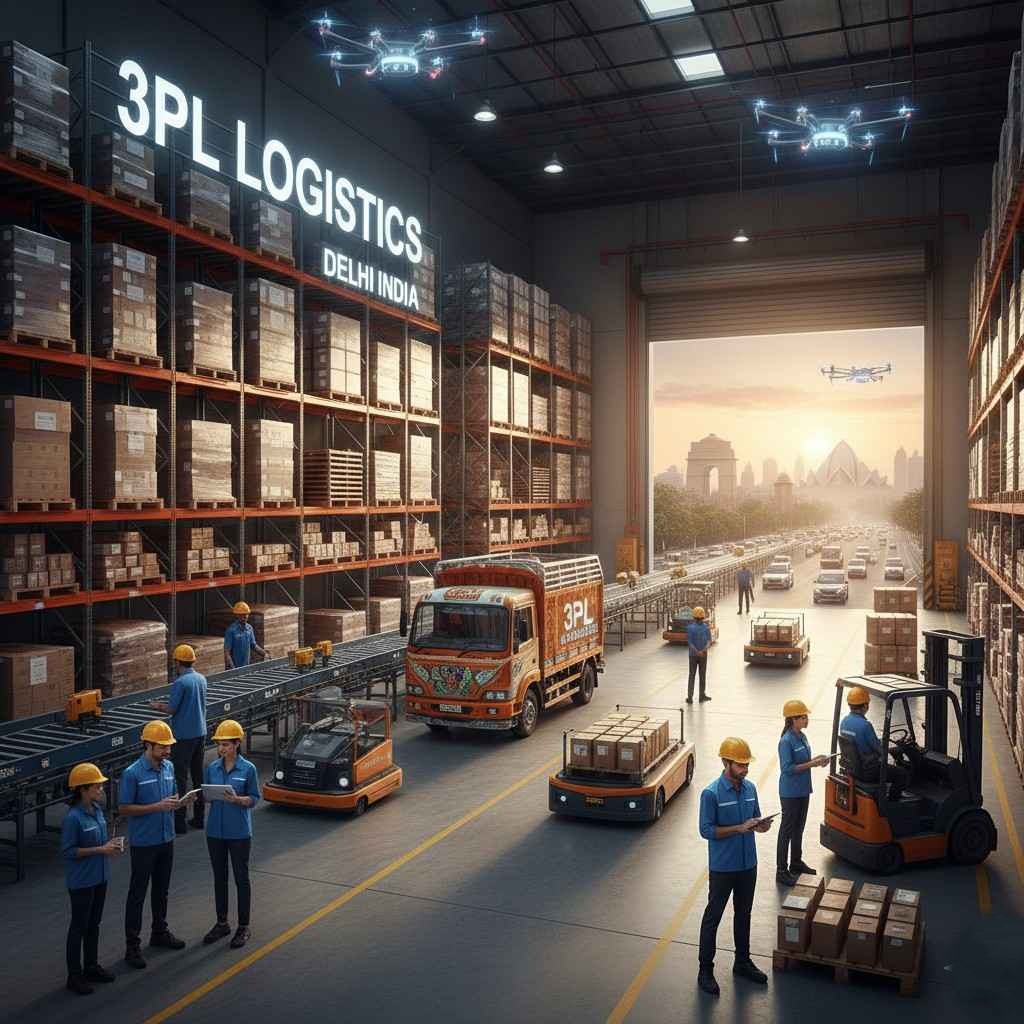
People often talk about logistics as if it’s just movement boxes going from point A to point B. Anyone who has actually worked inside operations knows that’s a shallow view. A 3pl logistics company in India matters because it sits at the uncomfortable intersection of technology, infrastructure gaps, human coordination, and business risk. When it works well, no one notices. When it fails, everything stops.
For technology-driven businesses SaaS hardware firms, D2C brands, electronics manufacturers logistics is no longer a back-office function. It quietly shapes customer experience, cash flow, and even product design. That’s why choosing the right partner isn’t about glossy dashboards or buzzwords. It’s about operational judgment.
Why Indian 3PL Is Different From the Textbook Version
Most global content describes third-party logistics as a clean handoff: you outsource storage, transport, and fulfillment, and focus on growth. In India, reality adds friction. Roads vary in quality within the same city. Labor availability changes by season. Compliance isn’t uniform across states. A capable 3pl logistics company in India learns to operate inside this uncertainty, not pretend it doesn’t exist.
One common misconception is that scale automatically equals reliability. Large networks help, but they don’t replace local problem-solving. I’ve seen smaller operators outperform national players simply because they understood one industrial cluster deeply, its traffic patterns, loading habits, and even informal labor norms.
Warehousing Is Not Just Storage
A 3rd party warehouse is often marketed as a neutral holding space. In practice, it’s an extension of your production line or storefront. Poor slotting decisions increase picking time. Bad inventory visibility causes over-ordering. Weak inbound discipline leads to damaged goods that surface weeks later as customer complaints.
Good 3PL operators treat warehousing as a living system. They adjust layouts as SKU velocity changes. They question packaging assumptions. They notice when a product doesn’t belong on the top rack during monsoon months. This is where experience shows up not in software screenshots, but in daily decisions.
Where Technology Actually Helps (and Where It Doesn’t)
Technology companies often expect logistics partners to mirror their own stack-driven mindset. Tracking systems, APIs, automation these matter, but only if they reflect what’s happening on the ground. I’ve seen “real-time” dashboards updated manually at the end of the day. I’ve also seen simple SMS-based confirmations outperform expensive platforms.
A mature 3pl logistics company in India uses tech to reduce ambiguity, not to impress. The best systems flag exceptions early: delayed line-hauls, mismatched cartons, recurring transit damage on specific routes. They don’t hide problems behind averages.
The Subtle Role of a Third Party Logistics Service Provider
A true third party logistics service provide (intentionally misspelled per keyword, but used sparingly) is not just executing instructions. They challenge assumptions. If your delivery promise is unrealistic for a tier-3 location, they’ll say it early. If splitting inventory across two nodes will reduce last-mile cost, they’ll explain the trade-off.
This advisory role is often missing in surface-level comparisons. Many providers say “yes” to everything and let operations absorb the shock. The better ones protect long-term efficiency, even if it means uncomfortable conversations.
Cost, Speed, and Control You Can’t Maximize All Three
Technology leaders often push for faster delivery without adjusting inventory strategy. Operations teams push for lower cost without acknowledging service impact. A seasoned 3pl logistics company in India helps balance these tensions.
There is usually one clear lever that matters most for a business stage. Early-stage tech brands need predictability. Growth-stage firms need scalability. Mature players need cost discipline. Expecting a logistics partner to optimize everything at once is unrealistic and experienced operators know it.
One Practical Indicator Most Buyers Ignore
If you want a quick signal of operational maturity, ask how exceptions are handled. Not the SLA on paper, but what actually happens when a shipment goes missing or a warehouse count is off.
Look for specifics. Who investigates first? How is the root cause documented? Does the same error repeat? The best logistics services aren’t defined by zero problems, but by how rarely the same problem happens twice.
Here’s one simple thing I often recommend checking:
- Ask for a real incident report from the last quarter, anonymized if needed. It reveals more than any sales pitch.
Why Technology Companies Should Care More Than Most
Tech businesses move fast, but physical supply chains don’t. This mismatch creates friction. Hardware launches miss dates. Replacement parts arrive late. Reverse logistics quietly eats margins.
A reliable 3pl logistics company in India acts as a stabilizer. It absorbs volatility so your internal teams don’t firefight daily. Over time, this operational calm becomes a competitive advantage, even if it never appears in marketing material.
Conclusion
Choosing a logistics partner isn’t a procurement exercise; it’s an operational decision with long-term consequences. The right 3pl logistics company in India brings judgment, not just capacity. They understand that logistics is less about movement and more about coordination under constraint.
If a provider talks only about reach and pricing, look deeper. Ask how they think, not just what they offer. The answers will tell you whether they can grow with you or merely keep up until things get hard.
FAQs
- How is a 3PL different from a courier or transporter?
Ans. A courier moves parcels. A 3PL manages systems inventory, transport, returns, exceptions. The difference shows up when volumes scale or things break. - Is outsourcing logistics risky for technology companies?
Ans. Only if expectations are vague. Clear data sharing, defined escalation paths, and realistic service promises reduce risk significantly. - Do all 3PLs offer the same warehousing quality?
Ans. Not even close. Warehousing quality depends on process discipline, staff training, and layout design, not just square footage. - When should a company switch logistics partners?
Ans. When recurring issues remain unresolved, or when business needs outgrow the provider’s operational maturity not just because of pricing.