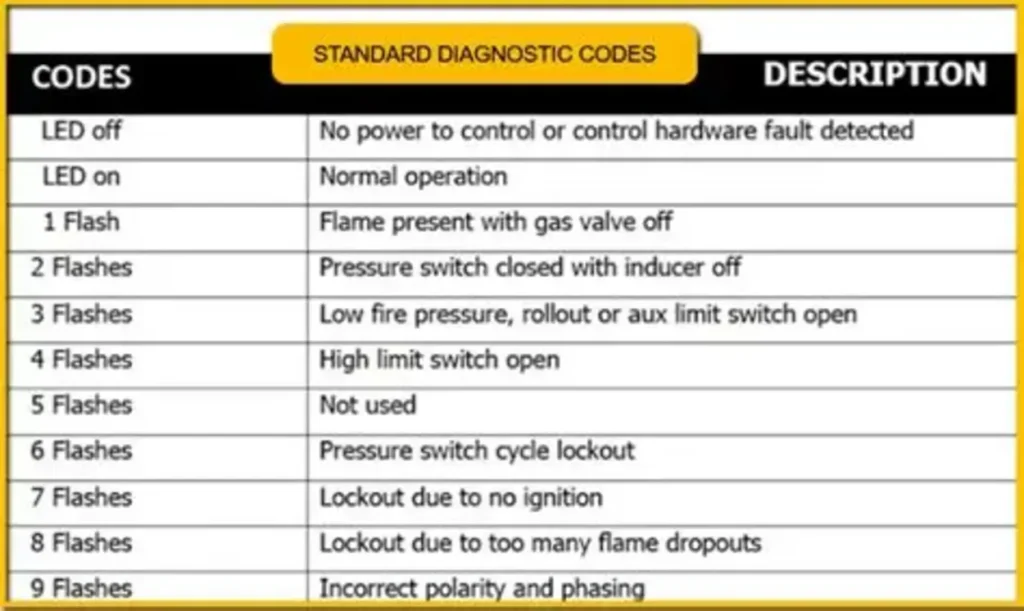
11 Common Furnace Error Codes and How to Fix Them – A modern furnace is designed to provide reliable heating while monitoring its own operation through sensors, switches, and electronic controls. When something goes wrong, many furnaces display an error code through a flashing LED light, digital thermostat, or control panel. These codes can help homeowners and HVAC professionals identify the source of a problem more quickly.
Although error codes vary by furnace manufacturer and model, many systems report similar types of problems. Understanding what these codes generally indicate can help you decide whether a simple troubleshooting step is appropriate or whether professional service is required – acjakarta.com.
1. Ignition Failure
An ignition failure code indicates that the furnace attempted to start but could not establish a flame. Common causes include a dirty igniter, faulty ignition system, inadequate gas supply, or problems with the control board.
Start by checking whether the gas supply is turned on and whether the furnace receives power. If the igniter appears damaged or the furnace repeatedly fails to light, professional inspection is recommended. Avoid attempting to repair gas or ignition components without the appropriate training.
2. Flame Sensor Failure
A furnace may ignite normally but shut down shortly afterward if its flame sensor cannot confirm the presence of a flame. This safety feature prevents unburned gas from continuing to enter the combustion chamber.
A dirty flame sensor is a common cause. An HVAC technician can inspect and clean the sensor and test its operation. If cleaning does not resolve the issue, the sensor or another component in the ignition system may need replacement.
3. Pressure Switch Error
A pressure switch monitors the furnace’s venting and combustion-air system. A pressure switch error may occur when the furnace detects insufficient airflow through the combustion system.
Blocked intake or exhaust pipes, restricted venting, condensate drainage problems, or a malfunctioning pressure switch can contribute to this code. Check that exterior vents are not visibly blocked by debris, snow, or other obstructions. Persistent errors require professional diagnosis because combustion and venting problems can present safety risks.
4. Limit Switch Error
A high-limit or limit switch protects the furnace from excessive temperatures. When the furnace becomes too hot, the switch can shut the system down.
Restricted airflow is one of the most common reasons for overheating. A dirty air filter, blocked return vent, closed supply registers, or a dirty blower assembly may reduce airflow. Replacing a severely clogged filter and ensuring vents are open may help. If the error continues, the blower, heat exchanger, ductwork, or limit switch should be inspected.
5. Blower Motor Fault
A blower motor error means the furnace is having difficulty circulating heated air. Depending on the system, the problem may involve the motor, capacitor, wiring, control board, or airflow system.
Listen for unusual humming, grinding, or buzzing sounds. If the blower does not operate after the furnace ignites, turn off the system and arrange for professional service. Continuing to operate a furnace with inadequate airflow can lead to overheating and additional damage.
6. Flame Proving Error
Some furnaces use a specific code when the control board cannot confirm stable flame operation. This can be related to the flame sensor, burner assembly, gas pressure, ignition system, or combustion conditions.
Because several components can produce similar symptoms, repeatedly resetting the furnace is not a long-term solution. A qualified technician can test the flame signal and determine whether cleaning, adjustment, or component replacement is necessary.
7. Ventilation or Exhaust Error
Ventilation-related codes indicate that the furnace has detected a problem with exhaust gases or combustion airflow. Condensing furnaces can be particularly sensitive to blocked intake and exhaust pipes or clogged condensate drains.
Inspect accessible exterior vents for obvious obstructions, but do not disassemble the combustion or venting system yourself. If the error returns, professional service is important to ensure that combustion gases are being safely removed from the home.
8. Overheating Error
An overheating code usually means the furnace temperature has exceeded its safe operating range. This can happen because of restricted airflow, a dirty filter, blower problems, excessive duct resistance, or other mechanical issues.
Begin with the air filter. If it is heavily clogged, replace it with the correct size and type recommended for the system. Also check that return-air openings are unobstructed. If overheating continues, stop relying on repeated resets and have the furnace professionally inspected.
9. Control Board Error
The furnace control board acts as the system’s central electronic controller. A control board error can indicate an internal malfunction, communication problem, wiring issue, or abnormal signal from another component.
Before assuming the board itself has failed, technicians typically test connected sensors, switches, motors, and wiring. This is important because replacing an expensive control board will not solve the problem if another component caused the error.
10. Rollout Switch Error
A rollout switch is an important safety device that detects abnormal flame or combustion conditions. If it trips, the furnace may shut down to prevent potentially dangerous heat or flame from reaching areas outside the combustion chamber.
A rollout switch should never simply be reset repeatedly without identifying the underlying cause. Problems such as blocked venting, burner issues, or heat exchanger damage can potentially trigger rollout protection. Professional HVAC service is strongly recommended when this error occurs.
11. Communication Error
Modern furnaces and thermostats may communicate electronically with one another. A communication error can occur because of wiring problems, loose connections, incompatible controls, power interruptions, or electronic component failures.
A basic power cycle may sometimes clear a temporary electronic fault, but persistent communication errors require further testing. An HVAC professional can inspect wiring, terminals, control boards, and thermostat compatibility.
How to Troubleshoot a Furnace Error Code Safely
When an error code appears, begin by recording the exact code or LED flash pattern. Furnace manufacturers use different coding systems, so the owner’s manual is the best reference for determining its specific meaning.
Next, check simple external factors such as the thermostat setting, electrical power, air filter, and visible airflow restrictions. Do not repeatedly reset the furnace if the same error returns. Frequent shutdowns are often a warning that an underlying problem remains unresolved.
Most importantly, never ignore unusual gas odors, signs of combustion problems, damaged electrical wiring, or repeated safety-switch trips. These situations require qualified professional attention.
Final Thoughts
Furnace error codes are valuable diagnostic tools rather than simple warning messages. Ignition failures, flame sensor problems, pressure switch faults, airflow restrictions, blower issues, overheating, and control problems are among the issues commonly identified by modern furnace systems.
Knowing what an error code generally means can help homeowners respond appropriately, but the exact interpretation depends on the furnace’s manufacturer and model. Simple maintenance, including regular filter replacement and keeping vents unobstructed, can reduce common problems. For gas, combustion, electrical, and safety-related faults, professional HVAC diagnosis is the safest solution.