Modern vehicles are far more dependent on electronics than many drivers realise. Engine management systems, sensors, braking technology, emissions equipment, transmission controls and safety systems all communicate through the vehicle’s onboard computer. When something goes wrong, the symptoms may be subtle at first — or may appear as a warning light on the dashboard.
This is where a car diagnostic test UK drivers can rely on becomes valuable. Diagnostic equipment can retrieve electronic fault codes and provide technicians with important information about what may be happening inside the vehicle. However, effective diagnostics are about more than simply connecting a scanner and reading a code. The results need to be interpreted alongside the vehicle’s symptoms, service history and physical condition.
For motorists in Wiltshire and surrounding areas, professional diagnostic testing can be particularly useful when a vehicle develops unexplained performance problems or warning lights.

What Is a Car Diagnostic Test?
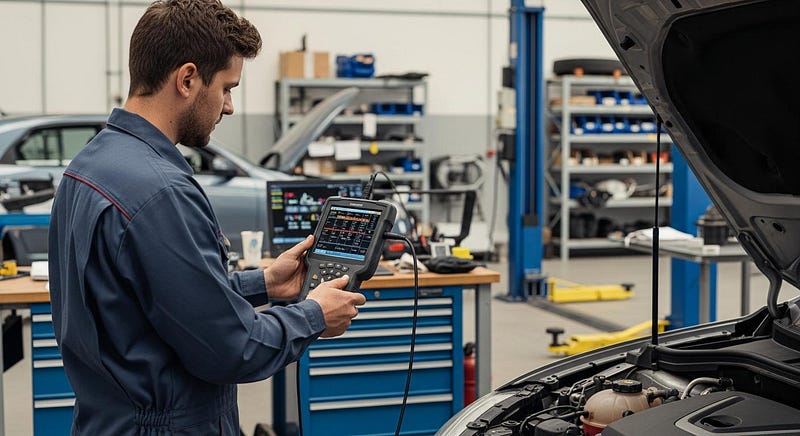
A car diagnostic test involves connecting specialised equipment to a vehicle’s onboard diagnostic system, commonly through the OBD port. The equipment communicates with electronic control units and retrieves information that can help identify potential faults.
Depending on the vehicle, diagnostic testing can provide information relating to:
- Engine management
- Transmission and gearbox systems
- ABS and braking electronics
- Airbag and safety systems
- Emissions equipment
- Battery and charging systems
- Sensors and electrical components
- Diesel particulate filters and related systems
A diagnostic code does not always mean that the component named by the code needs replacing. For example, a sensor-related code may result from wiring problems, poor connections or another underlying fault. This is why professional interpretation is an important part of the process.
A competent technician uses diagnostic information as one part of a wider investigation rather than treating the fault-code result as a complete diagnosis.
Why Modern Cars Need More Advanced Diagnostics
Vehicle technology has developed rapidly over the last two decades. Features that were once found mainly in premium vehicles are now common across many everyday cars. Electronic throttle control, parking sensors, traction control, turbocharging, diesel emissions systems and sophisticated driver-assistance features all increase the number of electronic components that can require investigation.
This development has changed the way vehicle problems should be approached.
A mechanical inspection remains important, but electronic diagnostics can provide additional information that may not be visible during a basic visual check. For example, a vehicle may experience intermittent loss of power without obvious external damage. Diagnostic data can help technicians investigate whether the problem could involve a sensor, ignition component, fuel system, turbocharger control or another electronic system.
The same principle applies to dashboard warning lights. Rather than assuming that a warning light will disappear on its own, drivers should treat it as an indication that further investigation may be necessary.
Common Signs That Your Vehicle May Need Diagnostics
Not every vehicle fault produces an obvious breakdown. Some problems develop gradually, giving drivers several opportunities to investigate them before they become more serious.
Consider arranging a diagnostic inspection if you notice:
1. Persistent Dashboard Warning Lights
An engine management, ABS, airbag, battery or emissions warning light should not automatically be ignored. The importance of the warning depends on the vehicle and the circumstances, but persistent warning indicators deserve attention.

2. Reduced Engine Performance
Poor acceleration, hesitation, rough idling or unexpected loss of power can have numerous causes. Electronic diagnostics can help narrow down potential sources.
3. Increased Fuel Consumption
A noticeable change in fuel economy may be associated with engine performance, sensors, emissions equipment, tyre condition or other mechanical factors. Diagnostics can help identify electronically monitored issues.
4. Difficult Starting
Starting problems may involve the battery, charging system, ignition, fuel delivery, sensors or engine-management components. A diagnostic test can provide useful information alongside conventional testing.
5. Unusual Gear Changes
Modern automatic transmissions contain electronic control systems that monitor and manage gear changes. Rough shifting, delayed engagement or transmission warning lights may justify diagnostic investigation.
6. Problems After a Repair
If a warning light appears after mechanical or electrical work, a diagnostic scan can help determine whether a fault remains or whether another issue has developed.
When Is a Diagnostic Test Particularly Useful?
A diagnostic inspection is not limited to situations where a vehicle has already broken down. There are several circumstances where proactive testing can make practical sense.

Before a long journey, for example, drivers may want additional reassurance that there are no obvious electronically monitored faults. Similarly, someone considering a used vehicle can benefit from having its systems checked as part of a broader pre-purchase inspection.
Diagnostics can also complement routine maintenance and pre-MOT preparation. A diagnostic scan does not guarantee an MOT pass because an MOT assesses specific legal and safety requirements, but identifying relevant electronic faults beforehand may help prevent avoidable problems.
For motorists searching for car diagnostic Trowbridge, a local professional service can also provide the advantage of combining electronic testing with practical vehicle knowledge.
How Professional Diagnostics Should Work
A quality diagnostic process normally involves several stages rather than simply scanning and printing fault codes.
First, the technician should understand the symptoms.
Drivers can provide valuable information about when the problem occurs, whether it happens when the engine is cold or warm, and whether any warning lights appear.
Next, diagnostic equipment is connected.
The technician can scan relevant control modules and retrieve stored or current fault information.
The results then need interpretation.
Fault codes are clues rather than automatic repair instructions. A trained technician may perform additional checks to establish the actual cause.
Finally, the findings should be explained clearly.
Drivers should understand what has been identified, what further testing may be required and which repairs are recommended.
This approach reduces the risk of replacing expensive components unnecessarily.

The Importance of Choosing the Right Diagnostic Service
The quality of a diagnostic investigation depends on more than the scanner itself. Equipment capability, technician experience and the diagnostic process all matter.
When comparing providers, motorists should consider whether the service offers:
- Appropriate equipment for the vehicle’s make and model
- Experienced technicians
- Clear explanations of diagnostic findings
- Additional testing when fault codes are inconclusive
- Transparent communication about recommended repairs
- The ability to investigate electrical as well as mechanical symptoms
A basic code reader may provide limited information, whereas professional equipment can often communicate with a wider range of vehicle control systems.
For local motorists, S&M Auto Service provides an example of a Trowbridge-based garage offering vehicle diagnostic services and other automotive maintenance support. Its published diagnostic information explains that testing involves scanning vehicle systems and interpreting fault information rather than relying solely on the displayed code.

Diagnostics and the Future of Vehicle Maintenance
Vehicle diagnostics are becoming increasingly important as cars become more connected and electronically controlled. Hybrid and electric vehicles are adding further layers of electronic systems, while conventional petrol and diesel vehicles continue to incorporate advanced emissions, safety and driver-assistance technologies.
This means diagnostic expertise is likely to remain an important part of modern vehicle maintenance.
At the same time, drivers should understand the limitations of electronic testing. A diagnostic scanner cannot replace a physical inspection, road test or specialist mechanical assessment where these are necessary. The most reliable approach combines digital information with practical automotive expertise.
For anyone researching a car diagnostic test Near Me service, this distinction is important. The goal should not simply be to obtain a list of codes; it should be to understand what those codes mean in the context of the vehicle.
Practical Tips for UK Drivers
A few simple habits can make diagnostic investigations more effective:
- Take note of when a warning light first appears.
- Record unusual noises, smells or changes in performance.
- Tell the technician whether the issue occurs intermittently or continuously.
- Keep service and repair records available where possible.
- Do not assume that clearing a warning light has solved the underlying problem.
- Seek professional advice when safety-related warning lights appear.
- Consider diagnostics when unexplained symptoms persist.

These steps can give technicians more useful information and may help reduce the time needed to identify a fault.
Conclusion
Modern vehicle problems are increasingly influenced by electronics, making professional diagnostic testing an important part of responsible car maintenance. A diagnostic scan can reveal stored fault information, identify areas requiring further investigation and help technicians make better-informed repair decisions.
The key takeaway is that diagnostics should be viewed as an investigative tool rather than a simple code-reading exercise. When combined with experienced interpretation and appropriate physical testing, it can help identify problems earlier and reduce unnecessary component replacement.
Whether a driver is dealing with a warning light, unexplained performance changes, electrical symptoms or preparing for a long journey, a professional car diagnostic test can provide valuable insight into the vehicle’s condition. For drivers specifically looking for car diagnostic Trowbridge services, local expertise can make the process more convenient while ensuring that electronic information is considered alongside the vehicle’s wider mechanical condition.