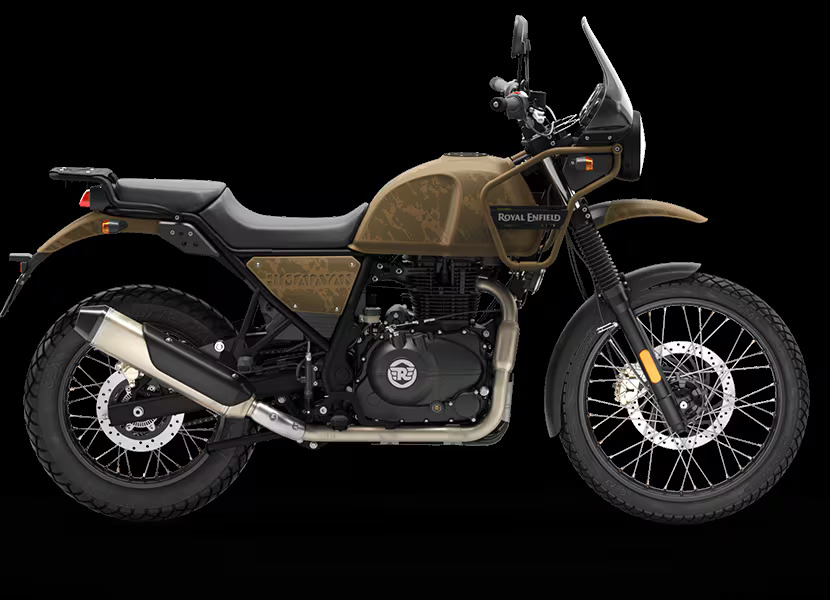
The Royal Enfield Bullet 350 occupies an unusual position in the Indian motorcycle market. It is one of the country’s most recognisable motorcycle nameplates, yet the current version is not merely an old design kept alive for nostalgia. Underneath its traditional silhouette is Royal Enfield’s modern J-series platform, a fuel-injected 349cc engine, an updated frame and equipment intended to make the motorcycle easier to live with every day.
That combination makes the buying question more interesting in 2026. Riders are no longer choosing between heritage and modernity in absolute terms. The Bullet 350 now offers much of the refinement expected from a contemporary 350cc motorcycle while maintaining a visual identity that is deliberately conservative. Whether it is still worth buying therefore depends on what the rider values most: relaxed performance, road presence and traditional styling, or lighter weight and a more urban personality such as that offered by the Royal Enfield Hunter 350.
What the Current Bullet 350 Offers
The Bullet 350 is powered by a 349cc single-cylinder, four-stroke, air-oil-cooled engine. It produces 20.2 bhp at 6,100 rpm and 27 Nm at 4,000 rpm, paired with a five-speed gearbox. These numbers are familiar because the same basic engine architecture is used across several Royal Enfield 350cc models.
The character of the engine suits the Bullet’s purpose. It is tuned for strong low- and mid-range response rather than aggressive high-rpm performance. In city traffic, the engine can pull cleanly without constant shifting. On open roads, it encourages steady cruising rather than repeated hard acceleration. This makes the Bullet 350 particularly appealing to riders who prefer an unhurried riding style.
Royal Enfield’s current platform also addresses one of the biggest criticisms associated with older generations: vibration. The modern engine uses counterbalancing and feels significantly more refined across normal riding speeds. The exhaust note and long-stroke feel remain part of the experience, but the motorcycle is more polished mechanically.
The Classic Design Is Still the Main Attraction
It is difficult to separate the Bullet 350 from its design. The long mudguards, teardrop-shaped fuel tank, round headlamp, bench-style seat and traditional proportions are central to why buyers consider it among bikes. Some motorcycles use retro cues as styling accessories. The Bullet feels more deeply rooted in that visual language because the nameplate has carried similar design themes for decades.
The current motorcycle updates the formula without making it visually busy. The instrument cluster mixes analogue and digital information, while a USB charging port adds everyday convenience. Selected variants also provide dual-channel ABS, and the braking hardware can include a 300 mm front disc and a 270 mm rear disc depending on configuration.
For buyers who want a motorcycle that looks traditional even when parked, the Bullet has a stronger identity than many newer roadsters. That is a legitimate value proposition because motorcycles are often purchased as much for emotional satisfaction as transportation.
Comfort Is Better Suited to Relaxed Riding Than Aggressive Commuting
The Bullet 350 uses a long single bench seat designed to provide good support for rider and pillion. The upright handlebar position and neutral footpeg placement create a relaxed triangle. This is useful for daily rides where comfort matters more than rapid direction changes.
At the same time, the Bullet is a substantial motorcycle. Its kerb weight is around 195 kg, which is considerably more than many 150cc-class commuters and also heavier than the Hunter 350. That weight contributes to a planted feel on open roads, but it can be noticeable in dense city traffic, tight parking areas and low-speed manoeuvres.
Shorter or less experienced riders should pay particular attention to this during a test ride. The issue is not whether the motorcycle can be managed; many riders adapt quickly. The point is that physical ease is part of everyday ownership, and the Bullet’s mass is one of its clearest trade-offs.
Bullet 350 Versus Royal Enfield Hunter 350
Although both motorcycles use a 349cc engine with broadly similar output, they target different riders. The Hunter 350 has 17-inch wheels, a shorter wheelbase, a lower and more compact visual stance and a kerb weight of roughly 181 kg in current specification. It feels quicker to steer and easier to place through traffic.
The Bullet 350, by comparison, is designed to feel more substantial and traditional. Its longer visual proportions, bench seat and calmer steering character favour riders who enjoy a relaxed pace and a classic motorcycle experience.
| Area | Bullet 350 | Hunter 350 |
| Engine | 349cc single-cylinder | 349cc single-cylinder |
| Peak power | 20.2 bhp | 20.2 bhp |
| Peak torque | 27 Nm | 27 Nm |
| Character | Traditional, relaxed, substantial | Compact, urban, more agile |
| Kerb weight | About 195 kg | About 181 kg |
| Best suited to | Classic styling and laid-back riding | City use and easier manoeuvrability |
The comparison shows why engine displacement alone should not decide the purchase. A rider commuting through crowded urban roads may find the Hunter easier. Someone who prioritises the traditional Royal Enfield experience may find the Bullet more satisfying despite the added weight.
Highway Use Is Comfortable Within Its Intended Pace
The Bullet 350 is capable of regular highway use, but its appeal is not high-speed performance. The engine works best when allowed to build speed smoothly and settle into a steady cruise. The upright posture, substantial chassis and 13-litre fuel tank make longer rides practical, while the broad torque spread reduces the need for frequent downshifts.
Riders planning extensive highway touring should still consider wind protection, cruising expectations and luggage requirements. A screen and touring accessories can improve comfort, but those who routinely want stronger overtaking performance at higher speeds may prefer a larger-capacity motorcycle.
Ownership Costs Need to Be Viewed in Context
The Bullet 350’s ex-showroom price varies by variant and colour. Current official listings place the starting figure in the mid-₹1.6 lakh range, with higher trims crossing ₹2 lakh ex-showroom. On-road pricing differs by state because registration, insurance and other charges vary.
Fuel economy under ideal conditions is officially quoted at around 36.2 km/l. Real-world results depend on traffic, throttle use, tyre pressure, load and riding speed. The figure is reasonable for a 349cc motorcycle, but buyers moving from a 100cc or 125cc commuter should expect higher fuel expenditure.
Maintenance access is one of the brand’s practical strengths. Royal Enfield has a widespread sales and service network, and the J-series platform is now used across several high-volume models. Genuine accessories are also widely available, allowing owners to add engine protection, luggage, seat upgrades and touring equipment.
Who Should Still Buy the Bullet 350?
The Bullet 350 makes the most sense for riders who specifically appreciate its visual heritage, slower-paced riding character and substantial road presence. It works well for mixed city and highway use when outright agility is not the top priority. It is also suitable for buyers who want a motorcycle with a strong identity without accepting the mechanical roughness associated with much older generations.
It is less ideal for riders who want the lightest possible 350cc motorcycle, regularly fight tight traffic or prioritise rapid acceleration and sporty handling. Those buyers should compare alternatives such as the Hunter 350 or motorcycles from other categories before deciding.
So, Is the Bullet 350 Still Worth Buying?
Yes, provided the reason for buying it aligns with what the motorcycle actually does well. The current Royal Enfield Bullet 350 is no longer compelling only because of its name. Its modern 349cc engine, improved refinement, updated chassis, usable braking hardware and everyday conveniences make it a credible contemporary motorcycle.
Its greatest strength remains the experience it delivers: relaxed torque, an upright riding position and one of the most recognisable silhouettes on Indian roads. Riders who value those qualities are unlikely to see the Bullet as outdated. Riders who prioritise lightness and city agility may be better served by the Royal Enfield Hunter 350. A back-to-back test ride is therefore the most useful final step before purchase.