Online videos have become an essential part of modern digital life. From educational tutorials and product demonstrations to entertainment and social media content, people watch videos every day. However, streaming is not always convenient when internet connectivity is limited or when users need to work with content they are authorized to save.
A URL To MP4 Converter can help transform a supported online video URL into an MP4 file. MP4 is widely compatible with smartphones, tablets, computers, and many media players, making it a convenient format for legitimate offline use.
In this guide, we explore how these tools work, what features to consider, their advantages and limitations, and important safety and copyright considerations.
What Is a URL To MP4 Converter?
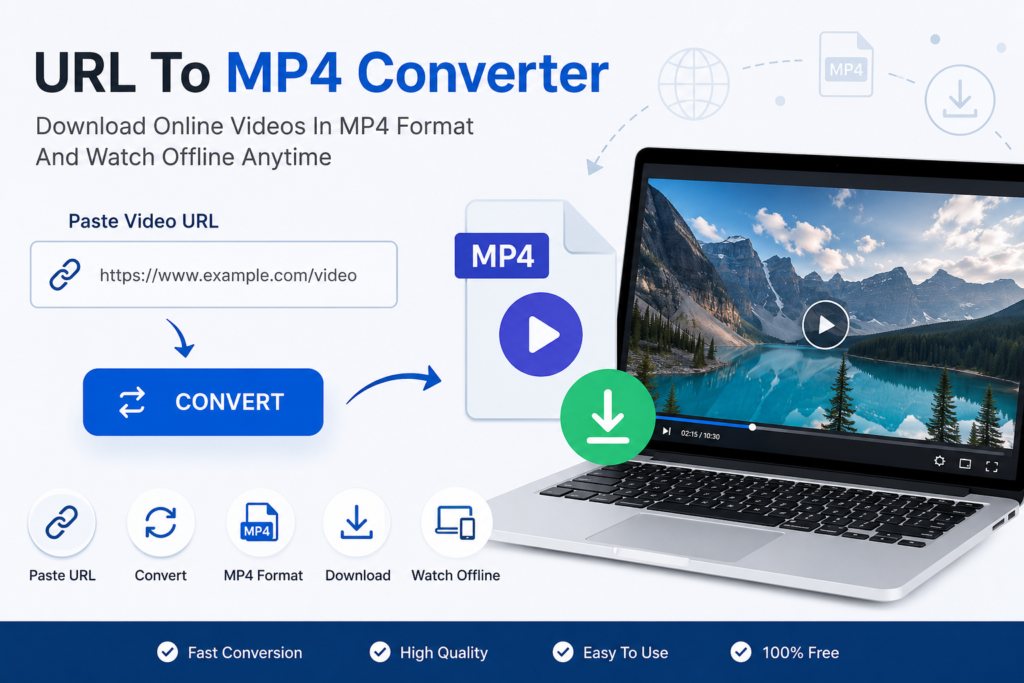
A URL To MP4 Converter is an online service or software application that processes a supported video URL and converts the available video into an MP4-compatible file. The basic process usually involves copying a video URL, entering it into the converter, selecting available quality settings, and starting the conversion.
The exact process can vary depending on the service and source website. Some platforms may support several video-hosting websites, while others may work only with specific sources.
An online video converter offers convenience because users can generally access it through a web browser without installing dedicated software. However, users should make sure the source permits downloading or conversion before processing any video.
Why Is MP4 a Popular Video Format?
MP4 is one of the most commonly supported video formats. It can be played on many smartphones, laptops, desktop computers, tablets, smart TVs, and media players.
One of the biggest advantages of MP4 is its balance between quality and file size. Depending on the selected resolution and encoding, an MP4 file can provide good visual quality without becoming unnecessarily large.
This makes MP4 useful for authorized video files that users want to store or transfer between compatible devices.
How Does an Online Video Converter Work?
An online video converter generally follows a simple workflow. First, a user copies the URL of supported content. The URL is then entered into the converter’s input field.
The service processes the URL and checks whether the source is supported. If conversion is available, users may be offered different quality or output options.
After selecting the preferred settings, the conversion begins. Processing time can depend on the video’s duration, resolution, server capacity, and internet connection.
However, not every video URL can be processed. Websites may use technical restrictions, encryption, authentication requirements, or download limitations that prevent conversion.
Important Features to Consider
When selecting a URL To MP4 Converter, users should consider several important features.
1. Output Quality
A reliable converter may provide different resolution choices, depending on the source. Options can include standard definition, HD, or Full HD. Higher resolution generally requires more storage space.
2. Format Compatibility
MP4 is useful because of its broad compatibility. Before converting, check whether the resulting file will work properly with your intended smartphone, computer, television, or media player.
3. Easy Interface
A clean interface makes an online video converter easier to use. Users should be able to locate the URL field, choose available settings, and access the resulting file without unnecessary complications.
4. Conversion Speed
Conversion speed can vary significantly between services. Video length, resolution, server traffic, and connection speed can all affect how quickly a conversion is completed.
5. Device Compatibility
The best option depends on where you intend to use the converted file. A format that works well on a laptop may also work on smartphones and tablets, but checking compatibility beforehand can prevent playback problems.
Benefits of Using a URL To MP4 Converter
A URL To MP4 Converter can be useful when users need to work with online content they are legally permitted to download or convert.
One major benefit is convenience. Instead of relying entirely on browser-based streaming, users can potentially create a compatible local file for permitted offline use.
Another advantage is flexibility. MP4 files can often be transferred between different compatible devices, making them practical for personal projects, education, presentations, and other authorized applications.
For example, a content creator may need to convert their own uploaded video for editing. Similarly, an educator may need to work with appropriately licensed educational material.
Choosing a Safe Online Video Converter
Safety should be an important consideration when using an online video converter. Not every website offering conversion services is trustworthy.
Some websites may display excessive advertisements, misleading download buttons, unexpected redirects, or suspicious notifications. Others may encourage users to install unknown browser extensions or software.
To reduce risks, use reputable services and avoid websites that request unnecessary personal information. Never enter passwords, banking information, or other sensitive credentials into an unfamiliar conversion website.
Keeping your browser, operating system, and security software updated can also help improve protection against potentially harmful websites.
Copyright and Legal Considerations
Using a URL To MP4 Converter does not automatically give users permission to download copyrighted material.
Copyright owners may control how their videos are copied, distributed, or downloaded. Therefore, users should only convert content when they own it, have permission to use it, or when downloading is explicitly allowed under the applicable license or platform terms.
Public-domain content and videos created by the user are examples of material that may be suitable for conversion, depending on the circumstances.
Before using an online video converter, always check the source platform’s rules and applicable copyright laws.
Online Converter vs Desktop Software
Users generally have two options when they need video conversion: browser-based services and desktop applications.
An online video converter is convenient because it typically requires no installation. Users can access the service through a browser and process supported URLs.
Desktop software may be preferable for people who frequently work with videos. Dedicated applications can offer additional controls for formats, resolution, encoding, and file management.
The better choice depends on how frequently you convert videos and what features you require.
Common Problems During Conversion
A URL To MP4 Converter may occasionally fail to process a video. One common reason is that the source website is not supported. Changes to a website’s technology can also cause previously compatible URLs to stop working.
Other problems may include slow processing, incomplete files, poor output quality, or playback issues.
If conversion fails, check whether the URL is correct and whether the source allows downloading. You can also verify that your internet connection is stable and that your device has enough storage space.
Avoid repeatedly trying suspicious websites simply because one conversion attempt failed.
Tips for Better Results
For a smoother experience, choose an appropriate resolution instead of automatically selecting the highest available quality. Higher-resolution videos consume more storage and may take longer to process.
You should also organize downloaded files carefully and scan unfamiliar files before opening them. When using an online video converter, avoid clicking advertisements or pop-ups that imitate legitimate download controls.
Most importantly, convert only content that you are legally allowed to save or modify.
Final Thoughts
A URL To MP4 Converter can be a practical solution for converting supported online videos into a widely compatible format. Its usefulness depends on the source, available quality options, device compatibility, and whether the content can legally be downloaded.
An online video converter can provide convenience without requiring software installation, but users should pay attention to website security and avoid suspicious services.
Tech to Review helps readers explore technology tools, understand their features, and make informed decisions. Whether you are working with educational material, personal videos, or other authorized content, choosing a reliable conversion method and respecting copyright can make the process safer and more useful.