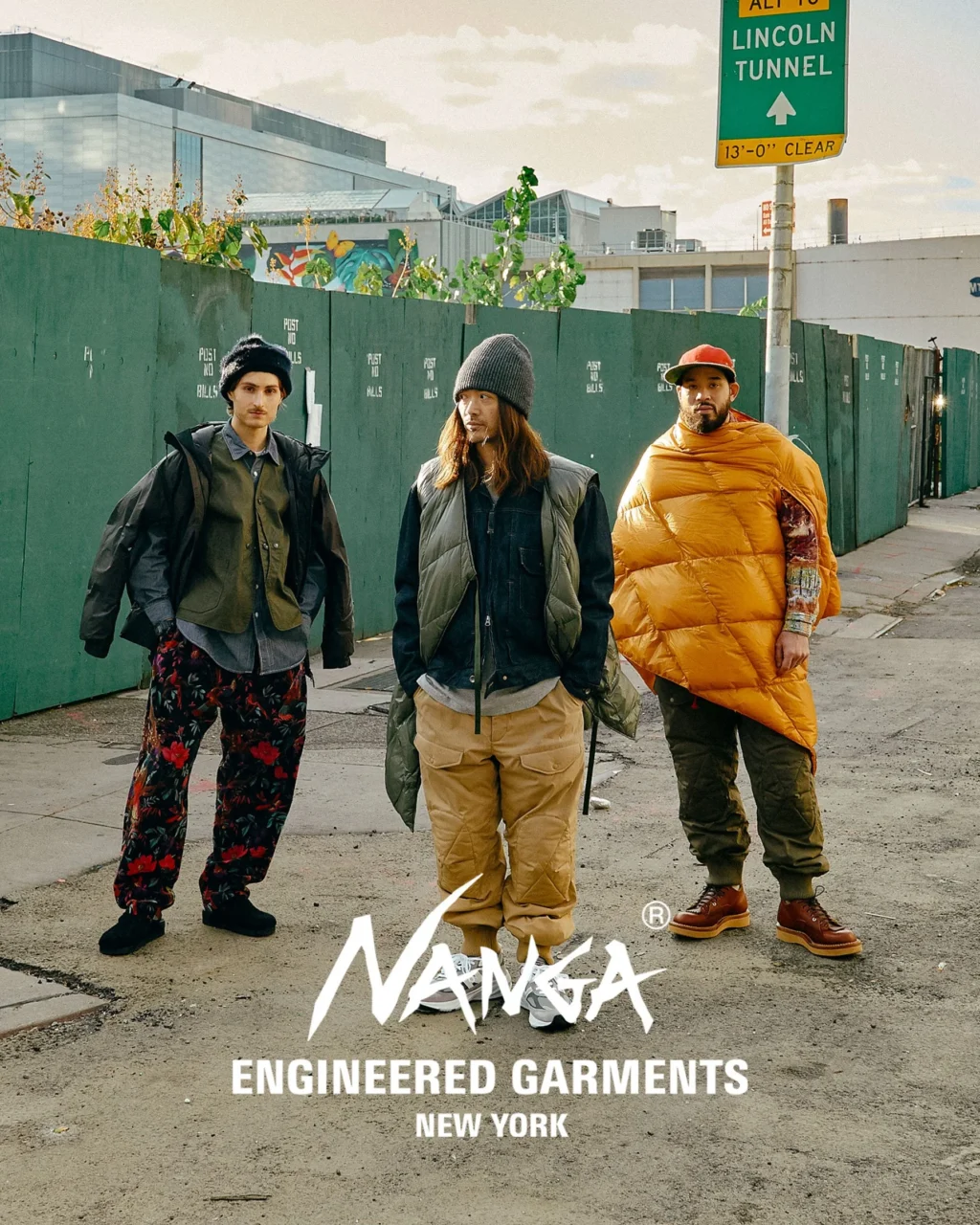
Engineered Garments Clothing has built a loyal audience by making familiar menswear feel fresh without losing the charm of older clothing. The label takes ideas from American workwear, military uniforms, outdoor clothing, sportswear, and classic tailoring, then gives them a Japanese point of view. Roomy shapes, useful pockets, rich fabrics, and small details give the clothes character. A field jacket can fit a city outfit, while fatigue pants work well with sneakers and a simple T-shirt. Each piece can be mixed with denim, knitwear, shirts, boots, or sneakers.
The New York Story Behind the Label
Daiki Suzuki created Engineered Garments through Nepenthes in New York. Suzuki studied clothing made for workers, soldiers, outdoor activities, and daily use. He changed proportions, pocket placement, fabrics, stitching, collars, and closures, giving familiar forms a different personality. New York connected the label with American menswear, while his Japanese background shaped its attention to garment details. This mix became a defining part of the label’s identity.
Details That Give Engineered Garments Its Look
Engineered Garments is known for multiple pockets, unusual pocket positions, layered panels, textured cotton, canvas, military-style closures, and relaxed cuts. Olive, army green, khaki, navy, black, white, and oxford shades are easy to mix with denim, knitwear, sweatshirts, and casual footwear. One garment may lean toward workwear, while another can draw from outdoor clothing or traditional menswear. The pieces stay connected to clothing history while fitting present-day outfits.
Easy Ways to Style Engineered Garments Jackets
Engineered Garments US Jackets can become the center of an outfit while keeping the rest simple. Start with a white T-shirt, straight denim, and low-profile sneakers, then add an olive or navy jacket. Bedford, Loiter, and Andover Jackets can work with Oxford shirts, sweatshirts, knit sweaters, and field vests. A bold jacket works well with plain pants and a simple top. Boots give a rugged feel; sneakers create a lighter city look.
Making Engineered Garments Shirts Work All Year
Engineered Garments Shirts can be worn alone, under outerwear, or open over a T-shirt. A white or oxford button-down works well with dark denim and sneakers for a clean casual outfit. Olive and army green shirts pair naturally with fatigue pants and field jackets. Camp shirts suit warm days and can be worn with simple trousers or shorts. A patterned shirt can become the main feature, while a plain shirt leaves room for a detailed jacket or vest. Rolled sleeves create a relaxed feel.
Building Looks With Engineered Garments Pants
Engineered Garment Pants are a natural choice for relaxed workwear outfits. Fatigue pants are especially popular because they bring military clothing references into everyday menswear. Army green pants look good with a white tee and navy overshirt. Khaki pants can be paired with an Oxford shirt and dark outerwear. Black pants can work with a gray sweatshirt, white shirt, or olive jacket. Roomier pants often look best with tops that have some space. They also work well with clothing from other labels, keeping the outfit personal.
Tips for Buying Authentic Engineered Clothing
When buying Engineered Garments Clothing, check the exact model, fabric, color, measurements, labels, buttons, stitching, and pocket layout. Different releases can look similar while having changes in fit or fabric. Clear product photos should show several angles. Check size measurements and compare them with a garment that fits you well. A trusted retailer with clear product information is a sensible place to shop. For resale, review the seller’s history and check labels, stitching, hardware, and fabric.
The Place of Engineered Garments in Modern Fashion
Engineered Garment has helped keep workwear, military clothing, and outdoor references popular within modern menswear. Its clothes show how older garments can become part of new outfits without losing the details that made their original styles appealing. Field jackets, utility shirts, fatigue pants, work coats, vests, and relaxed button-downs appeal to people who enjoy heritage menswear. The label also speaks to fans of Japanese fashion, American workwear, and casual city dressing.
FAQs About Engineered Garments
What is Engineered Garment known for? Engineered Garments is known for American workwear, military-inspired clothing, outdoor garments, and classic menswear shaped through Japanese design.
Who created Engineered Garments? Daiki Suzuki created the label through Nepenthes in New York.
What colors are common in Engineered Garment Clothing? Olive, army green, khaki, navy, black, white, and oxford shades are common across many pieces.
Are Engineered Garments Jackets suitable for casual outfits? Yes. They work well with T-shirts, denim, sweatshirts, shirts, fatigue pants, sneakers, and boots.
How should I choose Engineered Garments Pants? Check the garment measurements, preferred fit, fabric, color, and rise before buying. Roomier styles work well with relaxed shirts and jackets.
Why Engineered Garments Remains Relevant
Engineered Garments Clothing continues to appeal to people who enjoy clothing with history, character, and practical details. Its New York roots connect it with American workwear, while its Japanese design background gives familiar garments a different feel. Engineered Garments Jackets, Engineered Garment Shirts, and Engineered Garments Pants each bring useful choices to a modern wardrobe. They can be worn with simple pieces or combined into a heritage-inspired outfit. For anyone drawn to relaxed menswear, utility clothing, military details, and Japanese fashion, Engineered Garments offers plenty of room for personal style.