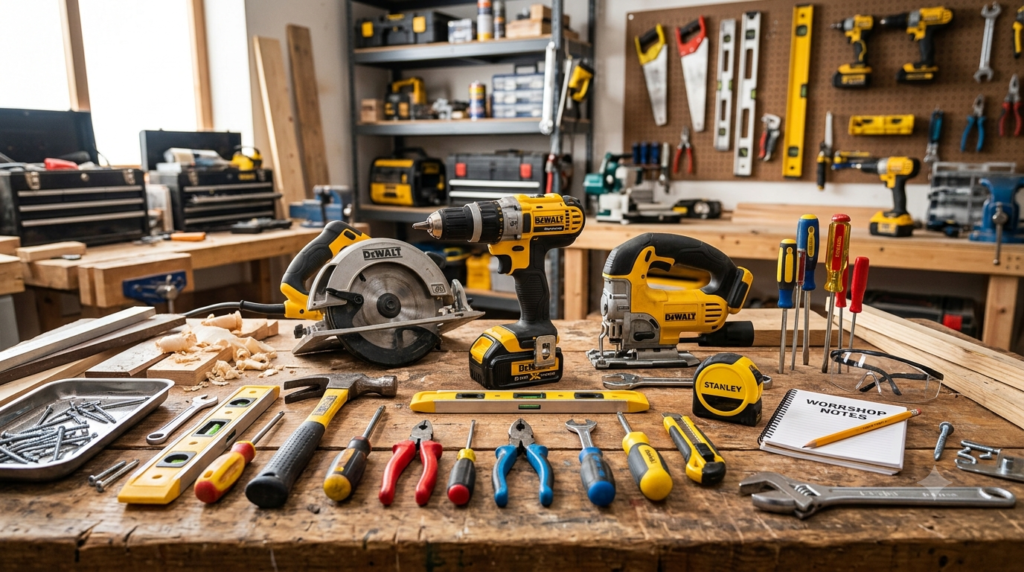
Walk into a hardware store looking for one tool and it is easy to come out with three. There are different sizes, handle styles, power options, accessories, and specialized versions of tools that may appear almost identical at first glance. The real challenge is not finding something that can do the job. It is finding something that can do it comfortably, safely, and efficiently.
A good collection of Hand and power tools should be built around the work you actually do. A homeowner repairing a cabinet has different needs from someone installing flooring, maintaining a workshop, or handling construction projects every day. Starting with the task rather than the tool makes it much easier to decide what belongs in the toolbox.
Think About the Task Before the Tool
Before buying anything, describe the job as specifically as possible.
Are you driving screws into wood? Cutting pipe? Drilling through masonry? Sanding a large surface? Tightening fasteners in a confined space?
The answer immediately narrows down the options.
For example, a basic screwdriver may be perfectly suitable for occasional household repairs, while a cordless drill-driver can make repetitive fastening work much quicker. Similarly, a standard handsaw may be appropriate for a small cutting job, while a powered saw could make more sense when numerous cuts are required.
OSHA emphasizes using the appropriate tool for the job and recognizing that improper use or maintenance can create significant hazards.
Build Around Your Most Common Projects
You do not need every tool available.
Instead, look at the jobs you regularly perform and identify the tools that solve those problems repeatedly.
For a general home workshop, that might include screwdrivers, pliers, adjustable wrenches, a hammer, measuring tools, a utility knife, a drill, and a selection of bits. Someone who frequently works with wood may gradually add clamps, saws, sanders, and other woodworking equipment.
This approach has two advantages. First, it avoids spending money on equipment that rarely gets used. Second, it makes the tools you own easier to organize and maintain.
A smaller collection of dependable tools can be more useful than a crowded toolbox full of items you cannot remember the last time you used.
Hand Tools Still Have Their Place
Power tools can save time, but they do not replace hand tools.
A screwdriver gives you precise control. Pliers can handle awkward gripping jobs. A wrench can provide a feel that is difficult to replicate with a powered tool. For delicate adjustments or quick repairs, reaching for a hand tool may actually be faster than setting up a power tool.
Ergonomics should also be considered. NIOSH recommends choosing hand tools that can be used with less force, less repetition, and less awkward positioning. Handle shape, grip requirements, wrist position, and the amount of force needed can all affect how comfortable a tool is during extended use.
That matters more than it may seem. A tool that feels comfortable for five minutes may become tiring when used continuously for an hour.
When a Power Tool Makes More Sense
There are jobs where a powered option can make a noticeable difference.
Repeated drilling is one obvious example. Sanding a large surface is another. Cutting multiple pieces of material manually can also become unnecessarily tiring when a suitable powered tool is available.
The key is matching the power tool to the material and workload.
A compact cordless drill might be convenient for light household work, while a heavier-duty drill may be better suited to demanding applications. Likewise, a small sander can be useful for occasional finishing work, but a different model may be more appropriate for larger surfaces or longer sessions.
Do not choose a tool simply because it has the highest power rating. Consider the actual application, frequency of use, size, weight, control, and available accessories.
Don’t Ignore the Feel of the Tool
Specifications tell only part of the story.
If possible, pay attention to how a tool feels in your hand. Is the grip comfortable? Can you reach the controls without changing your hand position? Does the tool feel balanced? Is it too heavy for the work you intend to do?
NIOSH guidance highlights neutral wrist positions, suitable handle dimensions, reduced grip force, and appropriate support for heavier tools as important considerations in tool selection.
This becomes particularly relevant for professionals and serious DIY users who may spend hours using the same equipment.
A slightly more comfortable tool can make a long project much less tiring.
Accessories Can Change What a Tool Can Do
Sometimes the tool itself is only half of the purchase.
Bits, blades, sanding discs, sockets, driver heads, and other accessories determine what many tools can actually accomplish.
Before buying a tool, check which accessories it accepts and whether the ones you need are readily available. A tool that requires unusual or difficult-to-find accessories may be less convenient over time.
Compatibility also matters when replacing accessories. OSHA advises disconnecting power tools before servicing them or changing accessories such as blades and bits.
Never assume that an accessory is suitable simply because it physically fits. Follow the manufacturer’s instructions and use accessories intended for the specific tool and application.
Inspect Before You Start
Even a high-quality tool needs a quick inspection before use.
For hand tools, look for damaged handles, loose components, excessive wear, or cutting edges that are no longer in good condition.
For powered equipment, inspect cords, plugs, housings, guards, switches, batteries, and accessories as applicable. A damaged tool should not simply be put back into the toolbox and forgotten.
OSHA identifies inspection and proper maintenance as important parts of controlling hand and power tool hazards. Portable electric tools with damage should be removed from use rather than continued in service.
That quick inspection can take less than a minute. It is a worthwhile habit.
Match the Tool to Your Workspace
The same tool can behave very differently depending on where you use it.
A cordless tool can be convenient in areas without easy access to an electrical outlet. A corded tool may be useful for longer jobs where continuous power is more important than portability.
Space matters too.
A large tool may have excellent performance but be awkward to use in a cramped cabinet, attic, crawl space, or other restricted area. In those situations, a compact design can be more useful than additional power.
Think about where the work will actually happen, not just what the tool can do under ideal conditions.
Safety Should Be Part of Tool Selection
Safety should not be something you think about after buying the tool.
Read the manufacturer’s instructions before operating unfamiliar equipment. Understand the controls, guards, recommended accessories, and intended applications.
Use appropriate personal protective equipment for the task. Eye protection can be particularly important when cutting, drilling, grinding, or working with materials that may produce flying particles.
Power tools also require attention to electrical hazards. OSHA recommends disconnecting tools when they are not in use and before servicing or changing accessories, keeping cords away from heat, oil, and sharp edges, and removing damaged portable electric tools from use.
For workplace applications, employers and workers should also follow the applicable safety requirements for the industry and equipment being used.
Know When a Tool Is Not the Right Tool
One of the most common mistakes in DIY work is trying to make one tool perform a job it was never designed to handle.
A screwdriver is not a pry bar. Pliers are not a substitute for every type of wrench. A general-purpose blade is not automatically suitable for every material.
Improvisation may seem convenient when the correct tool is not nearby, but it can damage the tool, damage the material, or create unnecessary risk.
If you repeatedly encounter the same type of job, that may be a sign that investing in the correct tool is worthwhile.
Maintain the Tools You Already Own
Buying better tools is only part of the equation. Taking care of them can extend their useful life.
Keep hand tools clean and dry. Store cutting tools so their edges are protected. Keep batteries maintained according to manufacturer instructions. Clean dust and debris from power equipment as recommended. Replace worn accessories instead of continuing to use them beyond their useful condition.
OSHA’s guidance stresses keeping tools maintained and in good working condition.
Good storage also makes a difference. When every tool has a designated place, it becomes easier to notice when something is missing or damaged.
A Better Toolbox Is Built Over Time
There is no perfect toolbox that works for everyone.
The right collection develops naturally as you learn which projects you tackle most often. Start with versatile tools, pay attention to the jobs that take the most time, and add specialized equipment when there is a genuine need for it.
When choosing Hand and power tools, look beyond the brand name or a long list of features. Consider the task, material, frequency of use, comfort, accessories, workspace, maintenance requirements, and safety considerations.
That approach helps you spend money where it will actually improve your work. More importantly, it turns your toolbox into something practical — a collection of tools selected because you use them, not simply because they happen to be there.
