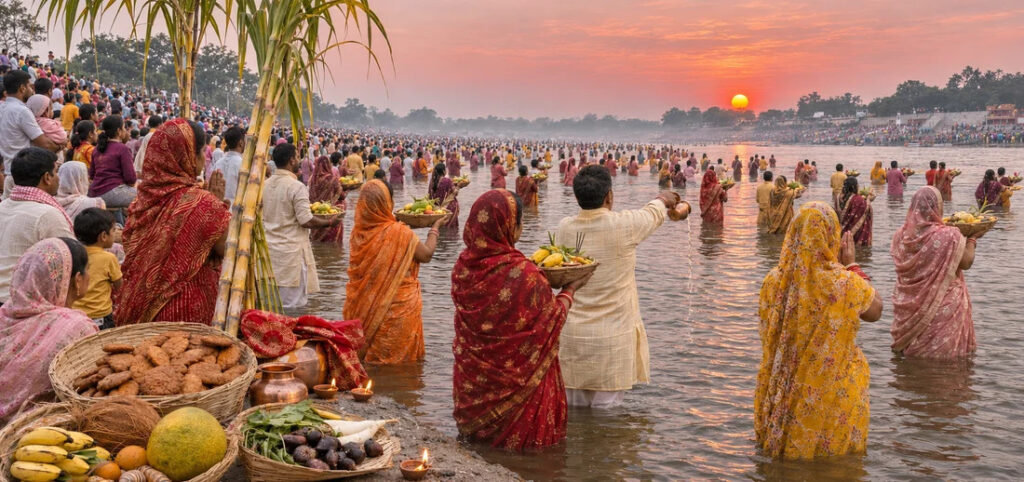
Chhath Puja is one of the most sacred Hindu festivals, celebrated with deep devotion, discipline and purity. During this festival, devotees follow strict dietary rules and avoid certain foods, including garlic and onion. The tradition of avoiding garlic and onion during Chhath Puja 2026 is connected with Hindu beliefs about sattvic food, spiritual cleanliness and self-discipline.
Garlic and onion are commonly used in everyday cooking, but they are traditionally excluded from food prepared for Chhath Puja and its offerings. Understanding the religious and cultural significance of this practice helps devotees appreciate the deeper meaning behind the festival. At Sadhana Shop, we believe that understanding devotional traditions makes every religious celebration more meaningful.
By Sadhana Shop Editorial Team | Published: 15 November 2026 | Last Updated: 15 November 2026
Why Are Garlic and Onion Avoided During Chhath Puja 2026?
Garlic and onion are avoided during Chhath Puja 2026 because traditional Hindu beliefs classify them as rajasic and tamasic foods, which are believed to stimulate the senses and disturb mental calmness. Devotees prefer sattvic food during the festival because it represents purity, simplicity and spiritual discipline.
Chhath Puja is not just about fasting and offering prayers to the Sun God. It is also about controlling desires, maintaining cleanliness and following a disciplined lifestyle. Every part of the celebration, from preparing prasad to offering Arghya, is performed with devotion and care.
What Is the Religious Significance of Avoiding Garlic and Onion?
In traditional Hindu food philosophy, food is often divided into three categories: Sattvic, Rajasic and Tamasic. These categories describe the qualities that different foods are traditionally believed to encourage in the body and mind.
Understanding Sattvic, Rajasic and Tamasic Foods
Sattvic Foods: These foods are associated with purity, peace and spiritual awareness. Fresh fruits, milk, rice, wheat, nuts and certain vegetables are commonly included in sattvic diets.
Rajasic Foods: These foods are traditionally believed to increase activity, passion and stimulation. Some Hindu dietary traditions place onion and strongly stimulating foods in this category.
Tamasic Foods: These foods are associated with heaviness, dullness and inactivity in traditional Hindu philosophy. Garlic is commonly classified as tamasic in many religious dietary practices.
During Chhath Puja, devotees generally prefer sattvic meals to maintain a peaceful and focused state of mind. Avoiding garlic and onion is therefore considered a way of supporting spiritual discipline.
How Does Sattvic Food Support Chhath Puja Rituals?
Sattvic food plays an important role in maintaining the traditional purity associated with Chhath Puja. Devotees prepare meals with simple ingredients and avoid foods that are prohibited according to their family and regional customs.
The preparation of Chhath prasad requires particular attention because the offerings are considered sacred. Ingredients, cooking utensils and the preparation area are kept clean. Food is traditionally prepared without garlic and onion to maintain the sattvic nature of the offerings.
What Foods Are Allowed During Chhath Puja 2026?
During Chhath Puja 2026, devotees generally consume simple vegetarian and sattvic foods according to their family traditions. The ingredients used for fasting meals and prasad are selected carefully to maintain religious purity.
Some commonly used foods include:
- Fruits: Bananas, apples, coconuts and seasonal fruits are commonly offered to the Sun God.
- Rice: Rice is used in several traditional preparations.
- Wheat Flour: It is commonly used to prepare thekua, an important Chhath prasad.
- Jaggery: Traditional sweets are often prepared using jaggery instead of refined sugar.
- Milk and Ghee: These ingredients are used in various traditional preparations.
- Dry Fruits: Almonds, cashews and other dry fruits may be included in devotional offerings.
Why Is Thekua Prepared Without Garlic and Onion?
Thekua is one of the most recognised traditional offerings of Chhath Puja. It is generally prepared using wheat flour, jaggery or sugar, ghee and other permitted ingredients.
Since thekua is prepared as sacred prasad, garlic and onion are not included in its preparation. Devotees give special attention to cleanliness and traditional cooking practices while preparing this offering.
Why Is Chhath Prasad Considered So Sacred?
Chhath prasad represents devotion, gratitude and purity. It is prepared with dedication and offered to Surya Dev and Chhathi Maiya before being distributed among family members and other devotees.
The preparation process is also considered an important part of the religious observance. Maintaining cleanliness, using suitable ingredients and following traditional rules are essential aspects of preparing prasad.
What Is the Connection Between Chhath Puja, Dev Uthani Ekadashi and Hindu Traditions?
Chhath Puja and Dev Uthani Ekadashi are important Hindu religious observances celebrated during the Kartik month. Both festivals highlight devotion, religious discipline and the importance of spiritual practices, although their rituals and purposes are different.
Dev Uthani Ekadashi marks the traditional awakening of Lord Vishnu from his four-month yogic sleep, known as Chaturmas. It is considered an auspicious occasion for beginning many religious and ceremonial activities.
Chhath Puja, on the other hand, is dedicated to Surya Dev and Chhathi Maiya. Devotees observe fasting, prepare sacred offerings and worship the rising and setting Sun.
How Are These Festivals Different?
Dev Uthani Ekadashi mainly focuses on the worship of Lord Vishnu through fasting, prayers and devotional activities. Chhath Puja focuses on expressing gratitude to the Sun God, who is traditionally worshipped as the source of life and energy.
Despite their differences, both festivals encourage self-control, devotion, cleanliness and a connection with traditional Hindu values.
How Can Devotees Maintain Religious Purity During Chhath Puja?
Following traditional rules during Chhath Puja requires preparation, dedication and attention to detail. Devotees generally follow specific practices to maintain cleanliness and spiritual discipline throughout the festival.
Here are some important practices:
- Avoid Garlic and Onion: Prepare meals and prasad without garlic and onion according to traditional dietary rules.
- Maintain Kitchen Cleanliness: Clean the cooking area, utensils and ingredients before preparing food.
- Use Fresh Ingredients: Select fresh fruits, vegetables, grains and other permitted ingredients for prasad.
- Follow Fasting Rules: Observe the prescribed fasting practices according to family and regional traditions.
- Prepare Prasad Carefully: Prepare thekua and other offerings with devotion and cleanliness.
- Maintain Mental Peace: Avoid unnecessary arguments and focus on prayers, discipline and positive thoughts.
Why Is Cleanliness Important During Chhath Puja?
Cleanliness is an essential part of Chhath Puja because the festival involves strict fasting and the preparation of sacred offerings. Devotees traditionally maintain personal hygiene, clean surroundings and separate utensils for preparing prasad.
These practices reflect the belief that devotion should be expressed through both thoughts and actions.
How Does Shiv Chalisa Connect With Hindu Devotional Practices?
Shiv Chalisa is a popular devotional prayer dedicated to Lord Shiva. It consists of forty verses that describe the qualities, greatness and blessings of Lord Shiva.
Although Shiv Chalisa is not a specific Chhath Puja ritual, devotees may recite it as part of their regular spiritual practices. Reading devotional prayers helps many people maintain faith, concentration and a peaceful mindset.
During important Hindu festivals, some families also include prayers to Lord Shiva and other deities in their daily worship routines.
Can You Recite Shiv Chalisa During Chhath Puja?
Yes, devotees can generally recite Shiv Chalisa during Chhath Puja as a personal devotional practice. However, the main rituals of Chhath Puja remain dedicated to Surya Dev and Chhathi Maiya.
The recitation of Shiv Chalisa is a separate form of worship and does not replace the traditional Chhath rituals. Devotees can follow their family customs while maintaining the main observances of the festival.
Conclusion
Avoiding garlic and onion during Chhath Puja 2026 is a traditional practice connected with the Hindu concept of sattvic food, spiritual purity and self-discipline. Devotees follow these dietary restrictions to maintain a peaceful environment and prepare sacred prasad with devotion.
Whether observing Chhath Puja, celebrating Dev Uthani Ekadashi or reciting Shiv Chalisa, every religious practice carries its own spiritual significance.
At Sadhana Shop, we encourage devotees to understand and celebrate Hindu traditions with faith and devotion. Explore devotional essentials at Sadhana Shop and make your spiritual celebrations more meaningful.
Frequently Asked Questions (FAQs)
1. Why are garlic and onion prohibited during Chhath Puja?
Garlic and onion are traditionally avoided because they are classified as rajasic and tamasic foods in many Hindu dietary traditions. Devotees prefer sattvic food during Chhath Puja because it represents purity, simplicity and spiritual discipline.
2. Can we eat garlic and onion before Chhath Puja?
Dietary practices may vary between families. However, many devotees begin avoiding garlic and onion before the main rituals to maintain the traditional sattvic diet and prepare themselves spiritually for the festival.
3. What foods are allowed during Chhath Puja 2026?
Commonly used foods include fresh fruits, rice, wheat flour, jaggery, milk, ghee and dry fruits. The exact food restrictions depend on family traditions and regional practices followed during the festival.
4. Why is thekua prepared during Chhath Puja?
Thekua is a traditional sweet offered to Surya Dev and Chhathi Maiya. It is commonly prepared using wheat flour, jaggery or sugar and ghee. It is considered an important part of Chhath Puja prasad.
5. Is Dev Uthani Ekadashi related to Chhath Puja?
Both are important Hindu observances celebrated during the Kartik month. Dev Uthani Ekadashi is dedicated to Lord Vishnu, while Chhath Puja focuses on the worship of Surya Dev and Chhathi Maiya.
6. Can we read Shiv Chalisa during Chhath Puja?
Yes, devotees can recite Shiv Chalisa as part of their personal prayers during Chhath Puja. However, the main Chhath rituals are dedicated to Surya Dev and Chhathi Maiya.
7. Why is cleanliness important during Chhath Puja?
Cleanliness represents purity and devotion during Chhath Puja. Devotees traditionally keep their homes, kitchens, utensils and surroundings clean while preparing prasad and performing religious rituals.